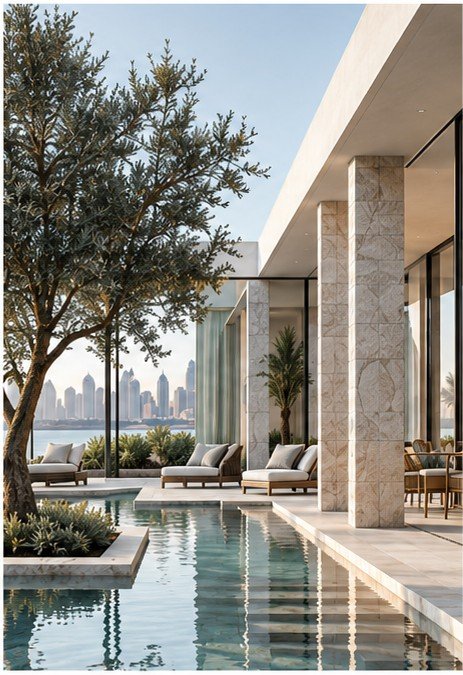
Classic interior design takes its visual discipline from long-established ideas of proportion, symmetry, hierarchy and craftsmanship. In practical terms, that means doors, wall panels, ceiling centres, furniture groups, rugs, chandeliers and focal points should relate to one another rather than being selected independently. Mouldings, cornices, wainscoting, framed wall panels, natural stone, timber and tailored textiles can all belong to the style, but they work only when the underlying room is composed correctly.
Classical interior design does not require a dark palette, heavy carved furniture or a museum-like atmosphere. A current Abu Dhabi interpretation can use ivory walls, simplified mouldings, warm walnut, limestone or marble, brushed brass, linen, wool, velvet and contemporary art. This is where new classic interior design becomes useful: it keeps the order and architectural refinement of classic design while reducing unnecessary ornament and making storage, lighting, technology and daily comfort more discreet.
We also distinguish classic from traditional and luxury as commercial design decisions, not just labels. Traditional interiors may feel more collected and historical; luxury can be modern, contemporary or classic; and classic design is primarily about proportion, symmetry, architectural detail and enduring material relationships. Bella uses those principles to create a clear brief, then adjusts the level of formality to your property, family routines, hosting needs, budget and maintenance expectations.
If you want the style translated into drawings, specifications, sourcing and delivery rather than a mood board alone, Bella works as an Interior Design Company in Abu Dhabi that can connect the classic direction to space planning, interior architecture, joinery, lighting, fit-out coordination and final installation.