
Hospitality shapes the plan
The majlis, formal reception, dining and guest arrival should work as a sequence. Seating geometry, coffee tables, serving routes, washroom access and guest circulation are planned around how people are actually received.
Meet the studio, understand our process and discover how we move from first conversation to finished space.
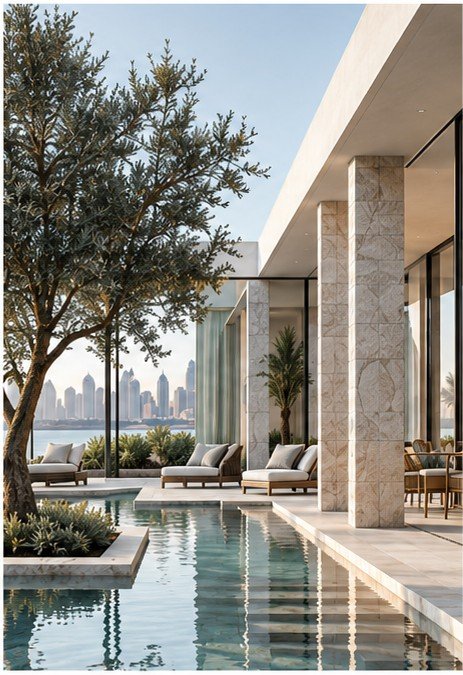
Majlis, Filtered Light, Craft and Contemporary Comfort
Arabic interior design is strongest when it begins with how people gather, host, move and maintain privacy—not with ornament alone. Bella adapts regional design principles for Abu Dhabi through majlis planning, layered guest and family zones, arches, mashrabiya-inspired screening, warm stone, timber, brass, tactile textiles and carefully controlled pattern, creating interiors that feel culturally grounded while remaining comfortable, practical and contemporary.
Your project can lean contemporary Emirati, softly traditional, desert-modern, majlis-led or more luxurious. We decide how much regional character belongs in the architecture, joinery, furniture, lighting and art so the result feels authentic to the property and household rather than like a themed hotel set.
What Arabic Interior Design Really Means
Arabic interior design can include arches, lattice screens, geometric pattern, carved timber, brass, stone, rich textiles and calligraphic or regionally relevant art, but those visible features are only part of the story. The deeper logic is spatial: welcoming guests properly, protecting family privacy, filtering strong light, creating comfortable social seating and using materials that feel connected to the region. Bella starts with those functions first, then decides how strongly the decorative Arabic language should appear.
For a current Abu Dhabi project, we usually avoid literal repetition of every traditional motif. Contemporary Arabic interiors can reinterpret mashrabiya as a laser-cut or timber screen, express a pointed or horseshoe arch through one doorway rather than every opening, use warm travertine instead of heavy polished marble everywhere, and bring majlis seating into a cleaner, more relaxed arrangement while preserving the social logic of generous face-to-face conversation.
That distinction matters because Arabic interior design can range from contemporary Emirati minimalism to a richly detailed traditional majlis. A Saadiyat Island villa might use teak screening, clay-toned plaster and quiet craft references; a Khalifa City family home may need a formal majlis separated from private family living; an Al Reem Island apartment may use one mashrabiya-inspired divider, warm timber and regional art without changing the entire architectural shell.
If you want regional character translated into a complete home or commercial brief rather than added as decoration at the end, our Interior Designers Abu Dhabi approach can connect Arabic design to planning, privacy, materials, joinery, lighting, fit-out and the way the property is actually used.
The Arabic Design Logic
We use Arabic design as a system of relationships—guest and family zones, light and shade, solid and screen, craft and restraint—then apply the visible motifs where they solve a spatial or atmospheric problem.
The majlis, formal reception, dining and guest arrival should work as a sequence. Seating geometry, coffee tables, serving routes, washroom access and guest circulation are planned around how people are actually received.
Entrance sightlines, screening, vestibules, separate guest routes and carefully placed doors can protect family areas without making the home feel closed. Privacy should be resolved in the plan before decorative screens are specified.
Mashrabiya and perforated screens historically control view, sun and airflow. In a contemporary interior, their geometry can be reinterpreted through timber, metal, glass, curtains or layered partitions that still perform a real function.
Islamic geometry, arabesque and regional motifs are powerful because repetition is controlled. We normally choose one primary pattern family and use it selectively in a screen, rug, ceiling detail, tile or artwork rather than across every surface.
Warm limestone, travertine, plaster, timber, woven fibre, leather and aged metal often communicate regional character more convincingly than applied gold ornament. Their texture also helps the room age gracefully.
Custom timber, metalwork, woven rugs, ceramics, locally made furniture or art can make the project specific to place. One meaningful crafted element usually carries more authenticity than a collection of generic themed accessories.
Arabic Interior Design Directions
The same regional principles can produce very different interiors. We establish the level of ornament, formality and craft before selecting finishes.

Warm stone, walnut, brushed metal and one mashrabiya-inspired screen or arch are combined with contemporary furniture and clean lighting. This direction keeps the regional identity without making the home visually heavy.

Perimeter seating, stronger symmetry, patterned rugs, carved timber, ornate light and richer fabric can create a more ceremonial majlis. We keep guest flow and comfort central so tradition remains functional rather than decorative only.
Sand, clay, bone, raw timber, woven fibre and warm plaster create a quieter regional interior. The Arabic character comes through filtered light, courtyards, crafted screens and natural material rather than heavy ornament.

Curved low-profile seating, pale stone, quiet timber, soft sage or sand accents and restrained screening create a majlis that supports contemporary family hosting while retaining the generous social layout associated with the tradition.
Arabic Interior Design Layouts
Arabic interiors often become more successful when guest circulation, family zones and service movement are clearly understood. We use that social planning to decide where screening, formal symmetry and more intimate spaces belong.
Generous seating can run along two or three sides so guests face one another naturally. Coffee tables, side tables and serving clearances are positioned so hospitality works without staff or family repeatedly crossing the social zone.
A large U-shaped sofa or sectional preserves the traditional social geometry while using contemporary furniture and fewer individual pieces. This works well in newer villas where a softer, less ceremonial majlis is preferred.
A vestibule, angled corridor, screen or carefully placed door can stop the main entrance from looking directly into family living. The intervention should feel architectural rather than like an afterthought.
Formal dining can sit close enough to the majlis for hosting but with enough separation that one room can operate without disturbing the other. Sliding panels or wide openings can make the relationship flexible.
Where the property allows it, a courtyard, planted void, skylit zone or water element can become an inward-facing social anchor. This contemporary interpretation has strong roots in regional architecture.
Larger villas may benefit from pantry, prep kitchen, laundry and staff routes that connect to dining and hospitality spaces without cutting through formal guest seating.
Arabic Interior Materials
We use a controlled family of stone, timber, plaster, metal and textile, then introduce pattern through craft rather than treating every finish as decorative.
Stone gives Arabic interiors permanence and works especially well in entries, majlis floors, vanities and feature walls. Honed, textured and low-sheen finishes often feel more contemporary than highly polished surfaces everywhere.
Timber can appear in mashrabiya-inspired screens, doors, ceilings, wall panels and furniture. The grain and craft can carry regional identity even when the overall room is visually quiet.
Warm metal works well in lanterns, door hardware, inlay, furniture bases and decorative screens. We choose one main metal family to avoid turning the space into a mix of unrelated gold tones.
Soft plaster and mineral texture can evoke sun-baked architecture without literal decoration. In more traditional rooms, carved or relief plaster can be concentrated around an arch, niche or ceiling focal area.
Majlis and family seating rely on comfort. Rugs and cushions can carry stronger colour or geometry while large upholstered pieces stay calmer and easier to coordinate.
Screens are most successful when they divide a room, protect a sightline or filter light. We avoid using them as a purely applied motif where they serve no spatial purpose.
Arabic Interior Design Colours
These HEX values are digital design references, not paint specifications. Arabic interiors can be richly coloured, but contemporary Gulf schemes often use sand, clay, warm stone and walnut as the base, with green, blue, burgundy or brass introduced in controlled areas.
A light warm base for walls, plaster and large upholstery surfaces.
A mid-neutral for rugs, curtains, upholstery and textured wall finishes.
A regional earth tone for cushions, ceramics, art or secondary joinery.
A warm timber and leather reference for furniture, joinery and doors.
A deep green for velvet, art or one quieter lounge zone.
A restrained blue for textiles, rugs, cabinetry or regional artwork.
A richer accent for cushions, occasional chairs or a traditional-inspired room.
A metal-reference tone for lanterns, trims, handles and furniture accents.
A deep grounding neutral for frames, metalwork and selected dark joinery.
Arabic Interior Design Room by Room
We carry one material and craft language through the property while adjusting the intensity of pattern and formality to the room's actual function.
The seating geometry, entry sequence, serving surfaces, lighting and guest washroom access are resolved first. Screens, arches, rugs and art then reinforce the cultural character without compromising comfort.
Family living can use warm stone, timber, regional art, one screen or curved arch and comfortable contemporary furniture rather than the stronger formality of the majlis.
A strong pendant or lantern composition, crafted timber, a stone table and one geometric rug or screen can create identity while chair clearance and serving access stay practical.
An arched headboard niche, carved or slatted timber detail, linen curtains, warm neutral bedding and soft brass lighting can create Arabic character without making the bedroom feel formal.
A pointed or horseshoe-arch mirror, hammered-metal basin, warm marble or a small patterned tile zone can establish the look while waterproofing, drainage and maintenance remain straightforward.
Reception areas, offices, restaurants and hospitality spaces can use screens, stone, crafted lighting, local art and warm timber as a regional design language without relying on cliché decoration.
Arabic Interior Design Across Abu Dhabi
These are design scenarios rather than packages. We use the property type, view, household and level of formality to decide how Arabic design should be expressed.
A Saadiyat villa can take a quiet regional direction through warm stone, raw timber, clay-toned plaster, slatted or mashrabiya-inspired screens and an inward-facing gathering point. A real Saadiyat courtyard home documented by AD Middle East uses privacy, filtered light and desert material cues in exactly this contemporary way.
Best suited to: premium villas and residences where regional identity should feel subtle, architectural and art-friendly.A larger Khalifa City villa can use a clear guest entrance, formal majlis, nearby dining and guest washroom, while family living and bedrooms stay private. The majlis can carry richer timber, rug, lantern and patterned detail than the everyday family rooms.
Best suited to: multi-bedroom villas, multi-generational homes and properties with frequent formal hosting.In an Al Bateen renovation, existing stone, parquet, carved doors or good joinery can remain while new lighting, furniture and regional craft are introduced around them. This creates continuity rather than a complete stylistic reset.
Best suited to: established villas and selective high-quality renovation.For an MBZ City villa, locally made timber screens, storage, majlis joinery and durable porcelain can deliver a strong Arabic character without requiring imported bespoke finishes throughout the house. Budget can be concentrated in the formal rooms.
Best suited to: family villas, renovation and budget-controlled whole-home projects.A Yas Island home can use pale stone, warm oak or walnut, curved seating, a simplified arch and soft patterned textiles. The social spaces stay flexible for everyday family life while regional identity appears through the details rather than a heavily formal plan.
Best suited to: villas, townhouses and apartments with active family use and contemporary architecture.In an Al Reem apartment, a full traditional treatment can feel heavy. One laser-cut or timber divider, an arched mirror, warm timber media storage, woven rug and regional art can create identity while skyline views and floor area remain open.
Best suited to: one-to-three-bedroom apartments and penthouses where the style must remain visually light.Warm ivory, sand, muted blue and brushed brass work naturally beside water views. Sheers, low furniture and a light mashrabiya-inspired screen can provide privacy and regional character without blocking the glazing.
Best suited to: waterfront apartments, duplexes and homes with large windows.A Corniche apartment can use a crafted entry console, regional artwork, brass lantern-style lighting, a geometric rug and restrained arches or niches, keeping furniture low enough to preserve the city and sea views.
Best suited to: city apartments, penthouses and formal entertaining interiors with strong views.Arabic Interior Design for Smaller Spaces
Arabic design can work beautifully in apartments when screening, pattern and furniture scale are controlled. One meaningful feature should solve more than one problem whenever possible.
A slim mashrabiya-inspired panel can separate dining from living or shield an entry sightline without building a solid wall that blocks light.
An arched mirror, niche or doorway can establish the regional language in a small room. Repeating arches on every wall can quickly reduce visual clarity.
Low-profile seating, slim side tables and one appropriately scaled rug can preserve the social layout without overfilling the room.
Tea, coffee, serving pieces, AV equipment and household items can sit behind fluted or patterned cabinet fronts so hospitality remains practical and the room stays composed.
A screen, artwork, cushion group or one wallpaper/tile zone can introduce geometry without occupying floor area or competing with the furniture layout.
A perforated pendant or wall light can cast pattern and create regional character after dark without adding another decorative surface.
Arabic Interior Design Cost in Abu Dhabi
The cost depends less on the label 'Arabic' and more on how much is custom. A furniture-led contemporary Arabic refresh can work within a moderate budget, while carved timber doors, mashrabiya screens, custom majlis seating, marble, brass work and specialist ceilings move the project into higher fit-out brackets. Bella separates professional design fees from construction and procurement so you can see where the budget is actually going.
The figures below are external 2026 Abu Dhabi planning references, not Bella fixed prices. Confirm whether custom seating, screens, carved timber, stone, lighting, MEP changes, approvals, furniture, delivery and VAT are included before comparing quotations.
Space planning, Arabic design direction, majlis/family zoning, materials and concept development without full implementation management.
Adds developed visuals and more resolved screens, arches, joinery, furniture and lighting direction for agreed rooms.
A broader appointment from concept toward implementation coordination. Exact drawings, procurement and site services still need to be defined.
Paint/plaster, rugs, curtains, selected lighting, furniture and light joinery with the existing layout and main services largely retained.
New finishes, fitted joinery, lighting, screens and some layout change using relatively straightforward local fabrication.
Natural stone, veneered or carved joinery, custom majlis, specialist screens, feature ceilings, altered layouts and upgraded services.
Planning example using AED 200–300/m² before construction, furniture, approvals or VAT.
Planning example where the existing layout stays and the regional identity comes mainly through lighting, furniture, textile, screens and selected joinery.
Planning example using AED 800–1,800/m² before loose furniture, appliances and any especially bespoke carved or made-throughout work.
Current Abu Dhabi fit-out guidance places made-throughout work from AED 3,500/m² upward. Custom screens, carved timber, inlaid stone, tailored majlis seating and specialist metalwork can move an Arabic project into this range.
Arabic Design Built for Abu Dhabi
The strongest Arabic interiors are practical precisely because many of their underlying ideas developed around light, shade, privacy and social use. We reinterpret those ideas for current building systems and lifestyles.
Use screening to protect a view, filter strong daylight or separate zones. AD Middle East continues to document mashrabiya as a relevant regional strategy for privacy, shade and natural cooling rather than only decoration.
The formal guest path, washroom access and family sightlines should be understood before furniture is placed. A beautiful screen cannot fix a poorly planned privacy relationship.
Veneer, carved wood, rugs and rich fabrics can fade beside intense glazing. Window treatment, UV performance and furniture position should be coordinated early.
Lanterns, coffers and patterned ceilings still need proper supply/return air, detectors, sprinklers and access panels. The decorative geometry should coordinate services rather than conceal them unsafely.
Complex screens, carved panels and patterned metalwork should be sampled and dimensioned before fabrication. Small errors become very visible when geometric repeats meet corners or doors.
Joinery, rugs, ceramics, metalwork and custom furniture can often be sourced or fabricated within the UAE and wider region, allowing the project to carry real craft rather than relying entirely on imported themed pieces.
Arabic Interior Design Timeline
Programme depends on property size, approvals, the amount of custom work and whether you are refreshing an existing room or completing a full villa fit-out.
We establish who uses the property, how guests are received, which areas must remain private, what is retained and which rooms need regional character.
Majlis layout, guest/family relationships, screens, arches, material palette, furniture character and lighting atmosphere are developed into a clear direction.
Key rooms, patterned elements, carved/slatted work, ceilings, lighting and material transitions are developed far enough for pricing and fabrication.
Timber samples, screen prototypes, rug/fabric selection, stone review, shop drawings and custom lighting can become programme-critical decisions.
A majlis refresh can be relatively quick; a large villa with custom craft, major MEP work or imported materials takes longer. The final programme should follow actual scope and procurement.
Arabic Interior Design References
Each reference demonstrates a different Arabic-design principle: contemporary majlis planning, carved screening, desert material, ornate dining, regional bedroom detail or a marble-and-brass bathroom. Replace them later with Bella-owned or properly licensed project photography while keeping the descriptive image metadata structure.
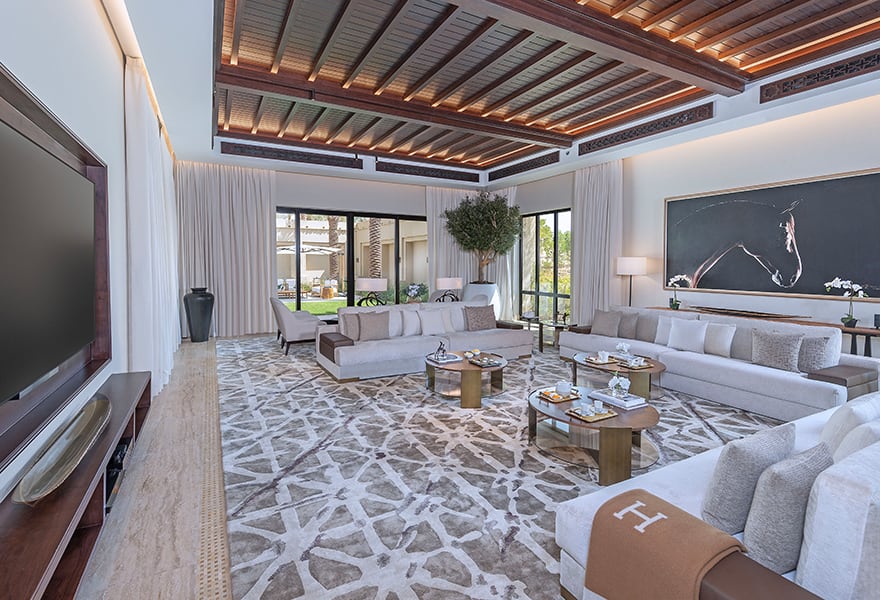
Neutral perimeter seating, patterned rug and a timber coffered ceiling create hospitality without relying on heavy ornament.
Carved timber screens filter the view between living and dining while the furniture remains contemporary and visually light.
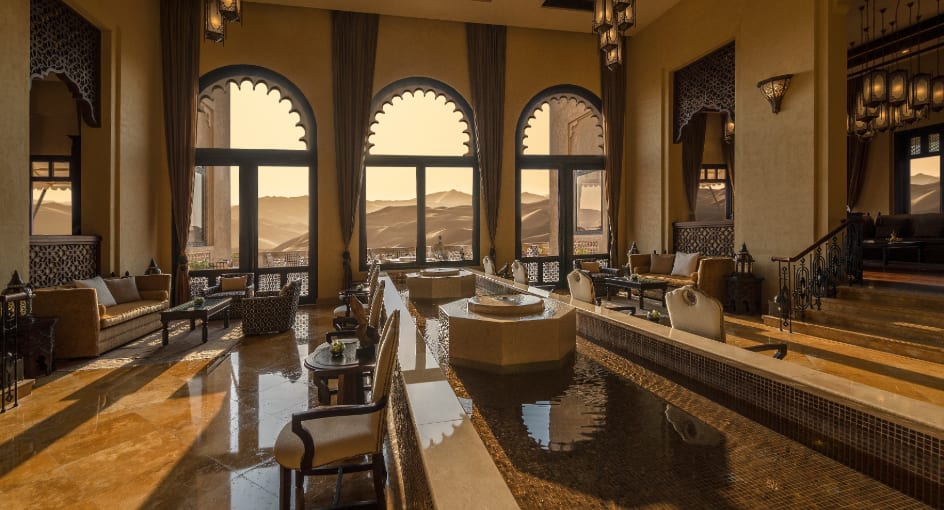
Arched windows, timber lattice and lanterns show how regional form and light can create atmosphere without excessive pattern.

Carved arches, geometric relief and lantern-style lighting demonstrate the richer end of the Arabic interior spectrum.

A horseshoe-style arch, warm timber, neutral linens and brass lighting show how regional form can be used more quietly in a private room.

An arched opening, arabesque pattern, marble and a hammered-metal basin create regional identity inside a compact wet-area composition.
Temporary external reference images are included for design direction only. Replace them with Bella-owned or appropriately licensed photography before using them as permanent portfolio proof.
Compare Related Interior Design Styles
These related directions share formality, material richness or regional-natural character with Arabic design but create different priorities.

Choose Classic when symmetry, moulding, traditional furniture and European proportion should lead more strongly than regional screens, majlis planning and Arab craft.
Explore style →
Choose Luxury when craftsmanship and specification level matter more than one particular cultural style, while still allowing Arabic references where appropriate.
Explore style →
Choose Contemporary when clean current furniture, softer forms and trend-aware material should dominate, with Arabic elements used only as selected references.
Explore style →
Choose Art Deco when symmetry, geometric motifs, velvet, marble and polished metal should become a stronger decorative language than regional privacy and hospitality planning.
Explore style →
Choose Traditional when heritage, established furnishing conventions and richer historical detailing should remain more literal rather than being simplified into a contemporary Arabic language.
Explore style →
Choose Biophilic when courtyard planting, natural light, greenery and indoor-outdoor connection should become more visible than ornament or formal regional detailing.
Explore style →Turn Arabic Style Into a Real Project
Arabic interior design can be concentrated in one formal room or carried through an entire villa, apartment, restaurant or hospitality project. These services let us match the appointment to the actual scope.
For formal guest planning, seating geometry, privacy, lighting, rugs, serving surfaces and regional craft in the majlis.
For apartments, villas and private homes where Arabic materials, privacy and hospitality need to remain coherent beyond one room.
For majlis, family zones, show/prep kitchens, bedroom suites, service circulation and whole-villa regional material continuity.
For entrance sequencing, arches, openings, screens, partitions, courtyards and spatial changes where Arabic design becomes part of the architecture.
For mashrabiya-inspired screens, carved timber, majlis furniture, cabinets, doors and specialist pieces made for the property.
For sofas, rugs, lamps, art, curtains and accessories where the Arabic identity sits mainly in the furnishing layer.
For lantern-inspired fixtures, decorative pendants, wall light, concealed lighting and scenes that reveal screens and material after dark.
For projects involving partitions, ceilings, MEP, stone, screens, joinery, metalwork and specialist installation where regional detailing needs precise execution.
Arabic Interior Design Questions
These answers focus on the decisions clients actually make: what the style means, how majlis and mashrabiya should work, what it costs, how it can feel current and how Bella adapts it to Abu Dhabi properties.
Arabic interior design is a regional design language shaped by hospitality, privacy, filtered light, geometry, craft and natural material. Visible elements can include arches, mashrabiya-inspired screens, carved timber, patterned rugs, brass, stone and calligraphic or regional art, but the strongest projects begin with how the space is used.
People use the phrase in two ways: to look for Arabic-language interior-design information, or to describe an Arabic/Arabian interior style. On this page we are discussing the design style and how its regional spatial and material principles can be applied to a real property.
A majlis is a social and hospitality space used for receiving guests and gathering. Its design is shaped by conversation, generous seating, serving, privacy and cultural expectations. Contemporary majlis interiors can retain that social logic while using modern furniture and materials.
Mashrabiya refers to traditional lattice screening used for privacy, shade and airflow. Contemporary interiors reinterpret it through timber, metal, composite or patterned glass panels that can divide rooms, filter sunlight or protect sightlines while adding geometric character.
No. Contemporary Arabic design can be very restrained. Warm stone, walnut, one arch, a crafted screen, regional art and low majlis-style seating may communicate the identity more effectively than covering every wall in pattern and gold.
Sand, bone, clay, warm brown and natural stone create a strong regional base. Green, indigo, burgundy and aged brass can add richness. The right balance depends on whether you want a contemporary desert palette or a more traditional majlis.
Travertine, limestone, marble, walnut, teak, oak, carved or slatted timber, plaster, brass, bronze, wool rugs, linen, velvet and woven fibre all work. We select them according to budget, maintenance and how traditional or contemporary the scheme should feel.
Yes. In an Al Reem or Corniche apartment, use one functional screen, an arched mirror or niche, warm timber, a regional rug and selected art rather than applying heavy motifs throughout. The apartment can remain light and contemporary.
Yes. A current Saadiyat project can reinterpret regional architecture through courtyard planning, privacy, filtered light, warm natural materials and simplified timber screens. AD Middle East has documented a Saadiyat courtyard house using precisely this kind of contemporary regional approach.
Current 2026 Abu Dhabi references place concept design around AED 150–250/m², concept plus 3D around AED 200–300/m² and broader full-service design around AED 300–500/m². Built work can range from about AED 400–800/m² for a refresh to AED 800–1,800/m² standard and AED 1,800–3,500+/m² for higher-spec work.
Custom perimeter seating, carved timber, mashrabiya screens, patterned rugs, stone, specialist ceiling details, metalwork and bespoke lighting all increase fabrication and installation time. The room can become a made-throughout interior even when the rest of the home is simpler.
Yes. We can keep the social geometry, guest circulation and privacy of a majlis while using cleaner furniture, lighter materials, simplified pattern and contemporary lighting. The level of formality is set around your household rather than a fixed template.
Yes. Lighting scenes, curtain motors, climate controls, AV and security can be integrated discreetly behind screens, ceilings and joinery. Technology should support the hospitality experience without visually dominating the regional design.
It depends on the work, not the style. DMT's simplified minor-works process includes qualifying non-structural interior modifications, maintenance and interior finishes, while structural, MEP, fire/life-safety, common-property or developer-controlled changes can require additional approvals.
Yes. Regional screens, stone, crafted lighting, local art and hospitality-led planning can give restaurants, offices and hotels a strong sense of place. The design should still respond to brand, circulation, acoustics, durability and fire/life-safety requirements.
Send the Abu Dhabi area, property type, floor plan or dimensions, current photos, rooms involved, majlis/guest requirements, privacy concerns, references you like, approximate budget and target date. Also tell us whether you need design only, FF&E, renovation, bespoke work or full fit-out.
Create Arabic Design That Belongs to the Property
Share your Abu Dhabi location, floor plan, photos, majlis requirements, family/guest relationships, materials you like, regional references, approximate budget and target date. We can then decide whether the right route is a majlis-only commission, selected-room Arabic design, full residential design or design and fit-out with custom screens, joinery, stone and lighting.