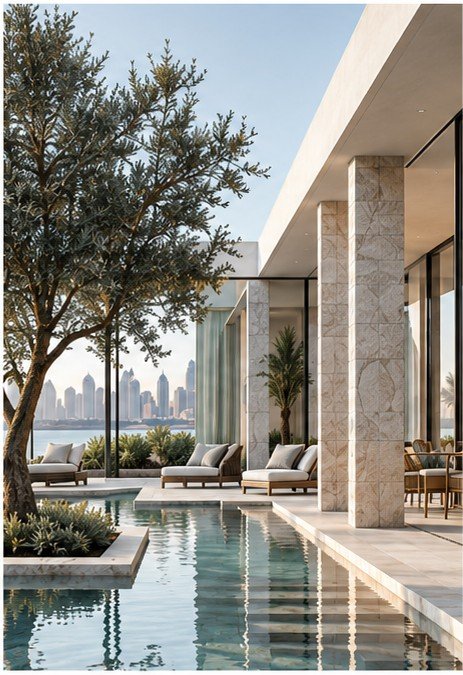
Milanese Proportion, Italian Craft, Designed for Abu Dhabi Living

Italian Interior Design in Abu Dhabi

Italian interior design combines disciplined space planning, precise proportion, tactile materials, sculptural furniture and a strong tradition of craftsmanship. Bella translates that approach for Abu Dhabi villas, apartments, penthouses, majlis spaces and commercial interiors—from contemporary Milanese restraint to richer Italian classic schemes—while coordinating layout, marble and stone, walnut or oak joinery, lighting, kitchens, wardrobes, furniture and final installation. As a 2026 planning reference, Abu Dhabi design-only fees commonly sit around AED 10–50 per sq ft depending on scope, while construction fit-out can range from roughly AED 400–800/m² for a refresh to AED 1,800–3,500+/m² for high-spec work; projects with made-throughout joinery, imported Italian furniture, specialist stone and long-lead pieces can move above those bands.

You do not need to turn your home into an Italian showroom. We first decide how the rooms should work, what should be built in, what deserves to be a focal piece and where imported specification actually adds value. Your direction can be warm Milanese contemporary, modern Italian, classic Italian, Mediterranean Italian or a carefully blended scheme that keeps the Italian priorities of proportion, material quality and furniture scale.

Italian interior design living room and kitchen with warm timber, contemporary furniture, open planning and refined material detailing
11 craft-led Italian style direction

What Italian Interior Design Actually Means

Italian interior design is less about one look and more about how space, material and furniture are composed.

Italian interior design is not one fixed historical style. Milanese apartments, contemporary Italian villas, mid-century modernism, classical palazzi and Mediterranean coastal homes can look very different, yet the strongest examples share the same discipline: proportion is deliberate, materials are allowed to read clearly, furniture has presence without filling every gap, and craftsmanship is visible in the junctions rather than added as surface decoration. That makes the style particularly useful for clients who want a premium interior that feels considered instead of over-decorated.

In a contemporary Italian interior, we might use Canaletto-style walnut, oak, travertine, Calacatta-inspired stone, leather, bouclé, brushed metal, lacquer and glass, then give one or two pieces enough negative space to become architectural. A Milanese scheme can be quiet and tailored, while an Italian classic scheme may introduce panelled walls, herringbone timber, marble, brass and more formal furniture. The common thread is control: the palette, joins, furniture scale, lighting and circulation are resolved as one composition.

For Abu Dhabi, that Italian logic has to respond to the property you actually own. A Saadiyat Island residence may suit gallery-like rooms with travertine, walnut and sculptural seating; an Al Reem Island apartment may need compact Italian furniture and wall-to-wall millwork; a Khalifa City villa can use warm contemporary Italian planning across the majlis, family living and kitchen; and an Al Bateen villa may support richer marble, custom boiserie, bronze details and formal reception spaces. We adapt the style to climate, family life, hosting, storage, maintenance and budget rather than importing a Milan photograph unchanged.

Italian Interior Design Principles

The room should feel designed as a whole before any individual Italian piece is selected.

We use these principles to prevent an expensive interior from becoming a collection of unrelated marble, furniture and brand names.

01

Proportion before product

We establish furniture scale, sightlines, wall lengths, ceiling heights and clearances before specifying a sofa, dining table or statement light. Italian furniture often has strong proportions, so the room must be planned around the actual piece rather than hoping it fits after purchase.

02

Material hierarchy

Italian interiors usually feel richer because a few materials are repeated with discipline. Walnut may connect wall panelling, a bar and bedroom joinery; one stone family may appear in the entrance, kitchen and bathrooms; one metal finish may repeat through lighting and hardware. This gives coherence without matching everything.

03

Craft is visible in junctions

The premium effect often sits at the edge: a stone return, shadow gap, mitred corner, flush door, veneer grain direction, brass inlay or concealed handle. We draw these interfaces because quality is lost quickly when different contractors improvise them independently.

04

Furniture as architecture

A low sculptural sofa, a Gio Ponti-inspired chair, a marble dining table or a refined modular wall system can define the room as strongly as a built wall. We give important pieces enough space and lighting to read clearly instead of surrounding them with decorative clutter.

05

Contrast without visual noise

Walnut against pale stone, polished marble against matte plaster, leather against bouclé, or bronze beside glass creates depth. The contrast is controlled so the room feels layered, not busy. We normally choose one dominant warm/cool balance and repeat it through the property.

06

Comfort remains part of Italian elegance

A beautiful chair that is uncomfortable or a kitchen island that blocks circulation is not successful design. We test seat depths, dining clearances, bed access, kitchen workflow, storage reach and family routines so the interior works after the photography is finished.

Italian Interior Design Styles

Italian design can be Milanese and restrained, modern and sculptural, classical and formal, or relaxed and Mediterranean.

These four directions help us decide how much warmth, history, polish and decorative detail belongs in your project before we start specifying brands and finishes.

Contemporary Italian interior with open living and kitchen zones, warm timber, modern furniture and integrated lighting
Milanese Contemporary

Contemporary Italian Interior Design

This is the strongest fit when you want quiet luxury rather than visible ornament. Think warm walnut, pale stone, architectural lighting, low-profile furniture, sophisticated upholstery and one or two sculptural pieces. The room feels composed through scale, material contrast and precise joinery rather than decorative layers.

Milan Design Week interior with Italian modernist furniture, warm colours, sculptural seating and layered lighting
Italian Modernism

Modern Italian & Mid-Century Influence

Choose this direction when furniture and design history should be more visible. We can combine clean architectural backgrounds with pieces influenced by Gio Ponti, Scarpa-era material thinking, 1960s and 1970s Italian forms, lacquer, glass, walnut, leather and stronger colour accents without turning the home into a retro set.

Classic Milan residence interior with traditional furniture, large windows, warm timber and composed formal proportions
Italian Classic

Classic Italian Interior Design

For clients who prefer more formality, Italian classic design can combine herringbone or stone flooring, panelled walls, marble, bronze, tailored curtains and refined furniture while keeping the room lighter than a heavily ornamental palace interior. It works especially well in generous villas, formal living rooms and majlis-adjacent reception spaces.

Mediterranean inspired living room with textured beige sofas, warm natural materials and relaxed neutral styling
Mediterranean Italian

Relaxed Italian Coastal Interior

This direction is lighter and less urban: limestone, textured plaster, pale timber, linen, woven details, muted terracotta and a stronger indoor-outdoor relationship. We use it selectively for waterfront homes where the goal is Italian warmth and material honesty without the dark walnut and polished finishes associated with metropolitan Milanese interiors.

Italian Interior Design Layouts

A strong Italian interior gives furniture, circulation and architecture enough room to relate to each other.

Before sourcing furniture or stone, we establish the room logic. This is particularly important when using large modular sofas, marble tables, statement lighting, fitted wall systems and bespoke kitchens.

ProportionNegative spaceFurniture scaleVisual axesIntegrated storageHosting flow
01

Create one clear visual hierarchy

We decide what the eye should meet first when you enter: the view, an artwork, a stone wall, a sculptural sofa, a dining composition or a joinery feature. Secondary pieces support that hierarchy rather than competing with it.

02

Plan around actual furniture dimensions

Italian sofas, dining tables and armchairs can be deeper, wider or more sculptural than standard catalogue furniture. We place real dimensions into the plan, including side tables and circulation gaps, before procurement is approved.

03

Use built-in storage to protect visual calm

A Milanese-looking room quickly loses its clarity when everyday storage is unresolved. We integrate media, books, bar functions, display, wardrobes and service access into wall systems or millwork so loose objects do not dominate the room.

04

Connect kitchen and dining as one composition

Italian kitchens often read as architecture. We align islands, tall units, dining tables, pendant lighting and stone grain so the kitchen can sit comfortably inside an open living environment instead of looking like a separate appliance zone.

05

Let important pieces breathe

A beautiful chair or marble table needs negative space. We avoid filling corners automatically and use lighting, rugs or wall composition to give fewer pieces more impact. This also makes the room easier to move through and maintain.

06

Adapt formality to Abu Dhabi hosting

Where a villa has a formal majlis, family living, dining and guest reception, we can make the formal rooms richer while keeping family areas softer and more durable. One material language can connect the whole home without forcing every room into the same level of luxury.

Italian Interior Design Materials

Italian character comes from material quality and detailing—but every premium surface needs a practical reason to be there.

We specify each material according to location, use, maintenance, fabrication method and budget. Imported Italian products can be worthwhile, but local fabrication can also deliver the right aesthetic when the detail and quality are controlled.

Timber & Millwork

Walnut, Canaletto tones, oak and refined veneer

Walnut is strongly associated with sophisticated Italian furniture and millwork because it adds warmth without heavy ornament. We may use it for panelling, wardrobes, libraries, bars, kitchen fronts or furniture, with grain direction, panel matching and edge treatment specified in the drawings.

  • Veneer species and stain sample approved
  • Grain direction shown on elevations
  • Hardware and service access coordinated
Stone

Travertine, Carrara, Calacatta and expressive marble

Stone can define an Italian scheme through floors, islands, vanities, tables and statement walls. Natural variation, slab yield, book-matching, edge thickness, sealing and reinforcement all affect appearance and cost, so we select stone by application rather than only by photograph.

  • Actual slab selection where natural stone is used
  • Sealing and maintenance explained
  • Joint locations and vein direction coordinated
Leather & Textiles

Leather, bouclé, wool, linen and tailored upholstery

Italian interiors often balance hard architectural materials with highly tactile upholstery. We specify fabric by use: family sofas need durability and cleanability, formal chairs can carry richer texture, and leather works best when colour, finish and exposure are chosen for Abu Dhabi conditions.

  • Performance suitable for daily use
  • UV exposure considered near large glazing
  • Colour checked under warm and daylight conditions
Metal & Glass

Bronze, brushed brass, steel, smoked glass and clear glazing

Metal is used as a precise accent rather than a blanket finish. Bronze, brass or steel can repeat through table bases, trims, lighting and hardware; glass can keep partitions visually light. We coordinate finish samples so metals do not shift randomly from room to room.

  • Finish code defined, not only colour name
  • Fingerprints and maintenance considered
  • Glass thickness and safety requirements confirmed
Lacquer & Plaster

Matte lacquer, gloss accents and mineral-textured walls

Lacquer gives Italian cabinetry a clean architectural finish, while plaster or mineral textures soften large walls. We use gloss selectively because reflective surfaces magnify imperfections and fingerprints; matte finishes often work better for large Abu Dhabi family spaces.

  • Sheen level signed off on sample
  • Touch-up strategy considered
  • Substrate preparation included in scope
Kitchens & Wardrobes

Italian-style integrated cabinetry and concealed function

The strongest Italian kitchens and wardrobes feel built into the architecture. Flush fronts, integrated appliances, concealed lighting, internal organisation and precise handles or channels make the system work visually and practically. We compare imported systems with bespoke local options based on budget, lead time and required detailing.

  • Appliance models fixed before fabrication
  • Internal storage planned around actual use
  • Ventilation, lighting and services coordinated

Italian Interior Design Colour Palette

Start with warm architectural neutrals, then use walnut, stone, metal and one controlled colour to create depth.

Italian interiors can be pale or dramatic. This palette is a practical Abu Dhabi starting point that works with walnut, travertine, marble and contemporary Italian furniture without locking the project into beige alone.

#F1EEE8

Warm Plaster

A soft architectural base for walls and ceilings that keeps stone and timber visually warmer than stark white.

#D8D0C4

Travertine Beige

Useful for stone, rugs, large upholstery and floors where a calm neutral needs more mineral depth.

#B9A58C

Taupe Leather

A sophisticated mid-tone for leather, upholstery, joinery accents and soft furnishings.

#6F4E3B

Canaletto Walnut

The principal warm timber note for wall systems, kitchens, wardrobes, bars and furniture.

#8A745F

Bronze Stone

A transition tone between warm metals, darker stone and timber.

#7B806C

Sage Olive

A natural accent for upholstery, bedrooms, art and cabinetry when the scheme needs quiet colour.

#6C3742

Burgundy

A Milanese accent for occasional chairs, art, rugs or lacquer where the room needs richer personality.

#223A45

Petrol Blue

Works in studies, dining spaces and statement upholstery against walnut, marble and brass.

#292927

Graphite

Adds definition to metal frames, lighting, kitchen details and selected furniture without forcing pure black everywhere.

Italian Interior Design Room by Room

The Italian language should change with the function of each room while the material family remains connected.

We do not repeat the same stone, walnut panel and designer chair in every space. Each room receives the amount of detail it can support.

Living Room

Italian Living Room Interior Design

We start with the sofa composition, view and circulation. A low modular sofa, sculptural lounge chair, generous rug, marble or timber tables and one well-scaled wall system can create a convincing Italian living room without decorative clutter. Lighting is layered so the room feels equally resolved during the day and at night.

Majlis & Reception

Italian-Inspired Formal Majlis

For Abu Dhabi hospitality, we can combine Italian furniture proportion with majlis seating capacity, privacy and serving requirements. Walnut, stone, bronze and tailored upholstery can create formality while regional artwork, screens or local craft keep the room connected to its setting rather than looking imported wholesale.

Dining

Italian Dining Room Interior Design

The dining table should be sized for real hosting, not just the photograph. We coordinate chair pull-out, sideboard storage, chandelier or pendant positions, table material, rug size and the view from adjacent rooms. A statement marble table can work beautifully when the lighting and circulation give it enough space.

Kitchen

Italian Kitchen Interior Design

Italian-style kitchens benefit from flush cabinetry, disciplined handle lines, integrated appliances, strong worktops and precise lighting. Walnut with Calacatta-style stone is one direction; lacquer, stainless steel or darker stone can make the room sharper. The planning still follows workflow, ventilation, appliance requirements and family use first.

Bedroom

Italian Bedroom Interior Design

Bedrooms are quieter: upholstered or timber headboards, integrated bedside lighting, refined wardrobes, a bench or lounge chair and fewer materials. In larger master suites we can connect the bedroom, dressing room and bathroom through one timber and stone palette while protecting privacy and storage.

Bathroom

Italian Bathroom & Marble Detailing

A high-end Italian bathroom may use large-format stone, a custom vanity, bronze or brushed metal fixtures, integrated mirrors and controlled lighting. We focus on falls, waterproofing, access panels and maintenance because the most expensive marble still fails if the technical substrate is weak.

Study

Italian Home Office & Library

Walnut shelving, a precise desk, leather seating, task lighting and concealed technology create a strong Milanese study. We plan cable routes, document storage, display, video calls and acoustic comfort so the room functions professionally rather than becoming a decorative library.

Entrance

Italian Entrance & Foyer Design

The entrance can establish the whole interior with fewer moves: one stone or timber plane, a sculptural console, art, concealed storage and controlled lighting. In villas, the floor pattern and stair relationship matter; in apartments, the priority is to create identity without narrowing circulation.

Italian Interior Design Across Abu Dhabi

The same Italian style should look different in Saadiyat, Al Bateen, Reem or Khalifa City because the property, light and lifestyle are different.

These examples show how we would adapt Italian design principles to real Abu Dhabi contexts instead of repeating one generic luxury formula.

Saadiyat Island

Gallery-like Italian refinement for art-led residences

For a Saadiyat Island villa or apartment, we would keep sightlines open and use pale travertine or limestone tones, warm walnut, large-format art, sculptural seating and controlled bronze details. The Italian influence would come from proportion and collectible furniture rather than heavy decoration, allowing daylight and artwork to remain central.

Best suited to premium apartments, villas and residences with strong natural light and art-focused interiors.
Al Bateen

Richer Milanese materials for established villas

An Al Bateen villa can support deeper walnut, marble entrances, custom boiserie, bronze details, formal reception furniture and a stronger classic Italian influence. We would separate formal guest spaces from family living so the premium detailing is concentrated where it creates the most value and impact.

Works well for larger villas, formal majlis/reception suites and renovation projects with generous room proportions.
Khalifa City

Warm contemporary Italian design for family villas

In Khalifa City, the Italian direction can be more family-focused: durable stone or premium porcelain, walnut joinery, integrated TV/storage walls, a practical show kitchen, comfortable modular sofas and layered lighting. The result keeps Italian refinement while remaining easy to live with across larger family zones.

Ideal for whole-villa planning where storage, family circulation, kitchens and bedroom suites need one connected language.
Yas Island

Relaxed Italian contemporary with indoor-outdoor flow

For Yas Island villas and apartments, we would typically lighten the palette with oak or medium walnut, travertine tones, linen-textured upholstery and more relaxed furniture. Glass, terraces and garden or water views should stay visually open, so heavy wall architecture is used selectively.

Suitable for newer villas, townhouses and apartments where lifestyle, entertaining and outdoor connection matter.
Al Raha Beach

Waterfront Italian interiors with softer stone and textile layers

An Al Raha Beach home can use pale stone, soft taupe leather, woven or linen textures and a cleaner walnut line. We would avoid excessive gloss near strong daylight, control window treatments carefully and use one deeper accent—petrol blue, olive or burgundy—to prevent the scheme from becoming generic beige.

Strong fit for waterfront apartments, duplexes and family residences with large glazing.
Al Reem Island

Compact Milanese planning for apartments

In an Al Reem Island apartment, the Italian effect comes from millimetres rather than scale: a wall-to-wall media/storage system, correct sofa depth, slim dining table, integrated lighting and one premium stone or timber move. We would keep circulation clear and avoid oversized imported pieces that make the apartment feel smaller.

Best for apartments where storage, furniture scale and open-plan zoning need to be solved precisely.
Al Maryah Island

Sharper hospitality-led Italian luxury

Premium apartments near Al Maryah can carry darker walnut, lacquer, polished or honed stone, bronze, leather and more dramatic lighting. The scheme can borrow from Milanese hospitality and executive interiors while still keeping storage, kitchens and everyday comfort discreetly integrated.

Suitable for high-end apartments, executive residences and client-facing commercial interiors.
Corniche & Al Khalidiyah

Italian renovation for larger established apartments

Older generous apartments near the Corniche or Al Khalidiyah can suit herringbone timber, refined wall panelling, a stronger furniture collection and statement lighting, but the first priority is usually the existing plan, AC distribution, kitchens and storage. We use Italian materials to elevate the retained structure rather than covering technical problems with finishes.

Useful for renovation projects where older floor plans and services need to be coordinated with a premium new interior.
Al Mushrif

New-classic Italian warmth for private villas

In Al Mushrif, we can blend classical Italian proportion with cleaner contemporary furniture—panelled walls, walnut, marble, tailored curtains and modern lighting rather than ornate reproductions. This works especially well when a family wants formality in reception rooms but a lighter everyday character elsewhere.

Good for existing villas that need renovation, formal hospitality zones and a softer family interpretation.
Mohammed Bin Zayed City

Large-scale Italian planning with practical fabrication choices

For MBZ City villas, the budget is often better spent on strong kitchens, wardrobes, wall systems, stair/entrance materials and a few premium furniture pieces than importing every item. We can use an Italian design language while combining carefully specified local fabrication with selected imported lighting, furniture or stone.

Strong option for larger villas where scale makes procurement strategy and value engineering particularly important.

Italian Interior Design for Apartments & Smaller Spaces

A smaller home needs Italian discipline more than Italian excess.

Milan itself provides useful lessons for compact living: custom storage, flexible furniture, strong circulation and carefully chosen pieces can create refinement without needing a villa-sized footprint.

Use one continuous millwork idea

A single walnut or lacquer wall system can combine television, books, display, storage and a work zone. This is often more effective than adding separate cabinets, consoles and shelves around a compact apartment.

Choose furniture by depth, not brand name

A 110 cm-deep sofa may look beautiful online but can destroy circulation in a smaller living room. We compare seat depth, arm width, table diameter and clearances before choosing a model or specifying a custom alternative.

Keep the premium stone concentrated

Instead of wrapping every surface in marble, use one kitchen island, coffee table, vanity or entrance plane as the stone moment. This protects budget and keeps the apartment visually lighter.

Let lighting replace decorative clutter

Wall washing, integrated shelf light, a focused pendant and good dimming can add sophistication without reducing floor area. In compact spaces, the lighting plan often gives more perceived value than extra furniture.

Use sliding or concealed functions where appropriate

Pocket doors, sliding glass, concealed desks, integrated bars and hidden storage can help a smaller property perform multiple roles. The detailing must be coordinated early so the mechanism does not consume more space than it saves.

Mix imported pieces with bespoke local fabrication

You do not need every item to come from Italy. One authentic statement sofa, chair or light can sit beside locally fabricated joinery designed to the same material and proportion standards, giving stronger value and easier site coordination.

Italian Interior Design Cost in Abu Dhabi

Price Italian design by scope, fabrication and sourcing—not by the nationality of the look.

An Italian-inspired interior can use locally fabricated joinery and a few imported pieces, or it can become a fully bespoke project using European furniture, specialist stone, branded kitchens, wardrobes and lighting. Those are completely different commercial scopes. We therefore separate design fees, construction fit-out and loose FF&E so you can understand what you are actually buying.

Important

These figures are 2026 external market planning references, not fixed Bella prices. One Abu Dhabi market guide places design-only fees around AED 10–50 per sq ft (approximately AED 108–538/m²) depending on scope. A separate local fit-out guide places refresh work around AED 400–800/m², standard fit-out around AED 800–1,800/m², high specification around AED 1,800–3,500/m² and made-throughout work from AED 3,500/m² upward. These figures are not directly interchangeable because design-only, fit-out and full turnkey scopes include different items. Imported Italian furniture, kitchens, lighting and stone should be priced from an actual specification and supplier quotation. Standard-rated UAE supplies are generally subject to 5% VAT; confirm whether every quotation is VAT-inclusive or VAT-exclusive.

Design-only / planning appointment

Space planning, Italian style direction, layouts, finishes, furniture strategy and the agreed level of drawings/visualisation. Suitable when you will manage procurement and execution separately.

Approx. AED 10–50 / sq ft market reference
Focused refresh

Existing layout largely retained; paint, flooring, lighting adjustments, limited joinery, selected furniture and styling. Italian character comes mainly from proportion, materials and furniture rather than major construction.

Approx. AED 400–800 / m² fit-out reference
Standard full fit-out

Replacement finishes, fitted joinery, lighting and some layout changes. A practical route for apartments and family homes where Italian-style detailing is required without extensive specialist fabrication.

Approx. AED 800–1,800 / m² fit-out reference
High-spec Italian-inspired fit-out

Natural stone, veneered joinery, feature ceilings, refined lighting, stronger kitchen/wardrobe specification and more bespoke details. Selected imported furniture or lighting may sit outside the construction rate.

Approx. AED 1,800–3,500 / m² fit-out reference
Made-throughout / fully bespoke

Custom pieces, specialist stone, curved or inlaid work, complex wall systems, premium kitchens, long-lead items and a higher level of sample/shop-drawing control. Imported branded FF&E can add substantially beyond the base fit-out.

From approx. AED 3,500 / m² upward
Imported Italian FF&E package

Sofas, dining, beds, lighting, rugs, accessories and collectible pieces sourced from Italian brands or dealers. This should be priced as a named schedule because brand, upholstery, finish, freight, warehousing and installation vary too widely for a credible square-metre rate.

Quoted from the approved furniture schedule
Italian kitchen / wardrobe systems

Imported kitchen or wardrobe systems can be specified when their engineering, finish and internal organisation justify the investment. We compare them against custom local manufacture and price appliances, worktops, delivery and installation explicitly.

Project-specific supplier quotation
Al Reem Island 2-bedroom apartmentExample: 110 m²

At a design-only market reference of roughly AED 10–50/sq ft, 110 m² (about 1,184 sq ft) equates to an indicative design-fee conversation of about AED 11,800–59,200 before confirming deliverables. Construction, furniture and procurement are separate.

Saadiyat Island 3-bedroom residenceExample: 180 m²

A high-spec construction fit-out benchmark of AED 1,800–3,500/m² gives roughly AED 324,000–630,000 before loose furniture, appliances, imported branded items, major structural/MEP work, approvals and VAT. The actual design may sit above or below depending on retained finishes.

Khalifa City family villaExample: 500 m²

At AED 1,800–3,500/m², a 500 m² high-spec fit-out planning band is roughly AED 900,000–1.75 million before major imported FF&E and other exclusions. A made-throughout scheme can move above AED 1.75 million because the rate starts from AED 3,500/m² upward.

Why branded Italian furniture changes the totalFit-out ≠ FF&E

Two homes can have the same walls, stone and joinery budget but radically different total costs if one uses local furniture and the other specifies multiple imported Italian design brands. We therefore maintain a separate FF&E schedule so you can approve, defer or substitute items without losing visibility of the construction budget.

Italian Design Adapted for Abu Dhabi

A Made-in-Italy reference still has to work with Abu Dhabi climate, approvals, family life and procurement realities.

The best result comes from preserving the Italian design logic while adapting specifications to local conditions and responsibilities.

01

Imported furniture needs lead-time planning

European furniture, kitchens and lighting may involve production windows, consolidation, freight, customs/clearance handling, local delivery and installation. We identify long-lead pieces early and avoid finalising site dimensions after an order has already been released.

02

Strong sun affects leather, timber and fabric

Large Abu Dhabi glazing can expose materials to intense UV and heat. We coordinate window treatments, fabric performance, timber finishing and furniture placement so the premium finish is not positioned for avoidable fading or thermal discomfort.

03

Natural stone needs local maintenance thinking

Marble and travertine can stain, etch or require sealing depending on finish and use. We explain where natural stone makes sense, where porcelain or engineered alternatives are more practical, and how cleaning expectations affect selection.

04

AC grilles and access panels must be integrated

A refined wall or ceiling loses credibility when service access is added as an afterthought. We coordinate linear grilles, access panels, thermostats, sprinklers and detectors with the interior geometry where project scope and regulations allow.

05

Abu Dhabi hospitality changes furniture planning

Formal hosting, family privacy, majlis use and larger dining occasions may require more seats and different circulation than a compact Milan apartment. We use Italian furniture language but plan it around your actual guest numbers and serving patterns.

06

Approvals depend on what you change

Loose furniture and decorative styling are different from moving walls, wet areas, MEP systems or structure. DMT has simplified procedures for qualifying minor works, including certain non-structural modifications and interior finishes, but the actual approval route depends on the property and scope.

07

Value engineering should protect the visible idea

If budget needs to come down, we first protect layout, lighting and the most important material/furniture moments. Secondary surfaces, hidden internal finishes or imported items can often be substituted without destroying the Italian character of the project.

08

Local fabrication can support an Italian design language

A well-made Abu Dhabi joinery package using the correct veneer, edge detail and hardware can sit beside imported Italian furniture convincingly. The key is to specify proportions and interfaces precisely instead of treating local fabrication as a visual compromise.

Abu Dhabi DMT states that its simplified permit process can apply to qualifying minor works such as non-structural interior/exterior modifications, maintenance and interior finishes. Structural, building-services, fire/life-safety, developer or common-property changes can require additional reviews. Confirm the route for your specific property before starting work.

Italian Interior Design Timeline

Imported products make early decisions more important because fabrication and delivery cannot be compressed at the end.

A furniture-led apartment can move quickly; a villa with bespoke joinery, natural stone, Italian kitchens and imported furniture needs more design and procurement time. These are planning ranges, not guarantees.

013–7 days

Brief, survey and property review

We record the rooms, dimensions, existing finishes, what you want to retain, storage, hosting, furniture preferences, target budget and whether you want an Italian-inspired look, specific brands or a broader contemporary Italian direction.

022–4 weeks

Space planning and Italian design concept

We establish furniture layouts, key axes, joinery zones, material family, palette and the chosen direction—Milanese contemporary, modern Italian, classic Italian or Mediterranean—before procurement decisions begin.

033–6 weeks

3D, materials and technical development

Key rooms are visualised and the kitchen, wardrobes, wall systems, stone, lighting, ceilings and furniture interfaces are developed to the agreed appointment. More bespoke work means more drawings, samples and coordination.

044–12+ weeks

Sourcing, supplier quotes and approvals

We confirm local versus imported selections, finishes, lead times, samples, shop drawings and property approvals. Italian furniture or systems may require longer procurement windows, so dimensions and finishes should be frozen before ordering.

058–28+ weeks

Fit-out, fabrication, delivery and installation

Selective apartment work can sit toward the shorter end; whole villas and made-throughout schemes may exceed this range. Imported furniture can be installed toward the end only when the site is clean, conditioned and ready for final positioning and styling.

Turn Italian Style Into a Real Project

Choose the Bella service that matches the amount of planning, sourcing and execution your property actually needs.

The style defines the visual direction. The service scope defines who measures, draws, specifies, sources, coordinates, obtains approvals where required, manages fit-out and completes installation.

Italian Interior Design FAQs

Questions clients usually ask before committing to an Italian-style interior.

These answers are intended to help you decide what you actually need before requesting a proposal.

01What is Italian interior design?

Italian interior design is a broad design tradition rather than one single look. Contemporary Italian interiors often combine disciplined planning, refined proportions, natural stone, timber, leather, lacquer, metal, glass and sculptural furniture, while classic Italian interiors may use richer architectural details. The common themes are craftsmanship, material quality and careful composition.

02What makes Italian interior design different from modern interior design?

Modern interior design is a wider style category focused on clean forms and function. Italian modern interiors often add a stronger furniture-design tradition, richer material relationships and more emphasis on craft, proportion and collectible pieces. An interior can be both modern and Italian, but the labels are not identical.

03Is Italian interior design always expensive?

No. The look can be achieved with strong planning, carefully specified local joinery, quality stone or porcelain, and a few important furniture pieces. Cost rises when the project uses extensive natural stone, bespoke fabrication, imported Italian kitchens/wardrobes, collectible furniture and long-lead lighting throughout.

04Do I need to buy all furniture from Italy?

No. We can mix selected imported Italian pieces with locally sourced or custom-made furniture and joinery. The important part is keeping proportions, material tones, upholstery quality and detailing coherent so the room reads as one design rather than a mix of price points.

05What colours are used in Italian interior design?

Warm white, greige, taupe, travertine, walnut and stone neutrals are common bases, but Italian interiors also use deeper green, burgundy, petrol blue, ochre, terracotta and black. We normally keep the fixed architecture quieter and place stronger colour in upholstery, art, lacquer or selected rooms.

06Which materials create an Italian interior?

Walnut, oak, marble, travertine, leather, wool, linen, bouclé, lacquer, glass, bronze and steel are common. No material is compulsory. We choose them according to the room, budget, maintenance, climate exposure and whether the project needs local fabrication or imported supply.

07Can Italian interior design work in an Abu Dhabi villa?

Yes. Villas give enough scale for formal reception, family living, majlis, dining, kitchens, stairs and master suites to each carry a different level of Italian detail while sharing one material and lighting language. The plan should still respond to Abu Dhabi hosting, privacy and family use.

08Can Italian design work in an Al Reem Island apartment?

Yes, but the furniture scale becomes critical. We usually prioritise integrated storage, a correctly sized sofa, a slim dining composition, one premium material focal point and layered lighting instead of filling a smaller apartment with large imported pieces.

09What does Milanese interior design look like?

Milanese interiors often feel tailored, architectural and understated. Warm timber, stone, refined furniture, art, sophisticated colour and precise details are common, while older Milan apartments may combine heritage floors or panelling with modern Italian furniture. The result is usually layered but controlled rather than flashy.

10What is the difference between Italian classic and contemporary Italian design?

Italian classic uses stronger historical proportion, herringbone or stone floors, panelling, marble, formal furniture and richer decorative references. Contemporary Italian design simplifies the architecture and relies more on sculptural furniture, clean millwork, tactile materials and subtle lighting. We can also combine the two in a new-classic direction.

11How much does Italian interior design cost in Abu Dhabi in 2026?

The style has no fixed tariff. Current Abu Dhabi market references place design-only work around AED 10–50 per sq ft depending on scope. Construction fit-out references range from about AED 400–800/m² for a refresh, AED 800–1,800/m² for standard work, AED 1,800–3,500/m² for high specification and AED 3,500+/m² for made-throughout work. Imported Italian furniture and systems should be quoted separately.

12Why can imported Italian furniture change the budget so much?

Brand, model, finish, upholstery, size, production lead time, freight, warehousing, installation and exchange rates all affect the delivered cost. A single collectible sofa or dining table can cost more than an entire local furniture package, so we keep FF&E as a transparent schedule rather than hiding it inside a generic square-metre rate.

13Can Bella source Italian furniture, kitchens and lighting?

Bella can develop the sourcing strategy as part of the agreed project scope, including identifying suitable brands or dealer routes, comparing local and imported options, coordinating dimensions/finishes and planning delivery/installation. Exact procurement responsibilities and commercial terms should be defined in the project appointment.

14Is Italian marble required for an Italian interior?

No. Italian design is not authentic only when the stone comes from Italy. What matters is how the material is selected, detailed and used. Depending on budget and maintenance, we may specify natural marble, travertine, another natural stone, porcelain or engineered alternatives.

15How long does an Italian interior design project take?

A design-only apartment may be developed in several weeks, while a full villa with bespoke joinery, approvals, natural stone and imported furniture can take several months. Long-lead Italian products should be identified early because their production and delivery cannot always be accelerated later.

16Do Italian-style renovations in Abu Dhabi need approvals?

It depends on what changes. Furniture and decoration are different from structural work, wall changes, wet-area changes or MEP modifications. DMT has a simplified procedure for qualifying minor works, including certain non-structural changes and interior finishes, but the property and scope must be checked before construction.

17Can I keep my existing furniture in an Italian redesign?

Yes. We review the scale, condition, material and emotional value of existing pieces. Items worth keeping can be reupholstered, refinished or integrated into the new plan. Italian design benefits from a collected feeling when the mix is intentional rather than everything being purchased at once.

18What should I send Bella for an Italian interior design proposal?

Send your Abu Dhabi area, property type, floor plan or approximate size, current photos, rooms involved, what you want to keep, Italian references or brands you like, approximate budget, target date and whether you need design only, sourcing, fit-out or turnkey delivery. That lets us recommend a scope instead of guessing from a style label.

Design an Italian Interior Around Your Property

Start with the plan, material strategy and furniture scale—then decide what genuinely deserves to come from Italy.

Share your floor plan, Abu Dhabi location, room photos, approximate area, the Italian interiors or brands you respond to, furniture you want to keep, preferred materials, budget range and target completion date. Bella can then shape a clear Italian interior design brief, separate local fabrication from imported specification, identify the rooms where premium materials will have the greatest effect and propose the right route from design-only through full turnkey delivery.