FF&E Colour, Fabric & Finish Direction
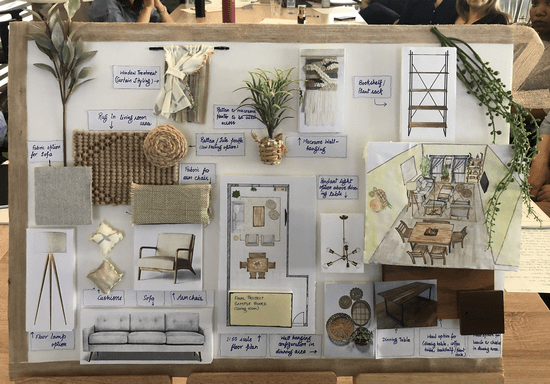
Specify a palette the supplier can reproduce—not just a collage that looks good on screen.
The HEX values below are conceptual digital references. They are useful for keeping the palette consistent across presentations, but they are not equivalent to a Pantone, RAL, wood stain, leather dye or fabric code. Cross-system matches should be confirmed by physical sample.
In FF&E, a colour approval is strongest when it identifies the actual upholstery, timber stain, powder coat, metal plating or rug yarn. The sample should be viewed with the neighbouring finishes rather than approved independently.
Quiet Luxury — alabaster #F2EFE9, muted taupe #B3A79A, espresso #3D312A, warm bronze #9A8067, limestone #D8D0C5Biophilic Sanctuary — sage #9CA998, terracotta #C37A5D, smoked oak #5C5346, oat #D8CDBD, soft ivory #F4F1EAMinimal Monochrome — chalk #F7F7F7, cool grey #A8ADB1, charcoal #54585A, matte black #1E1E1E, pale timber #D0BEA1Coastal Abu Dhabi — bleached sand #EAE5DC, slate blue #7F92A1, rattan #D2B48C, sea grey #AEBAC1, warm white #F7F4EEEditorial Jewel — deep olive #4B533E, brushed mustard #C59B27, burgundy #58111A, tobacco #8B5E3C, parchment #E8DFD0For upholstery, record fibre composition, colourway, roll / dye-lot strategy, width, abrasion / performance data, cleaning code and fire information where relevantFor timber furniture, approve species / veneer, stain tone, sheen, grain direction, edge / joint detail and acceptable natural variationFor metal, specify base material, finish process and sheen—'brass colour' is not enough to ensure two suppliers produce the same result