Keep the Design, Decisions, Budget and Site Moving in the Same Direction

Interior Design Project Management

Interior projects rarely fail because nobody had a good idea. They fail when an approval sits unanswered, a supplier misses a production date, a drawing revision reaches the wrong contractor, a variation is instructed without a cost, or the joinery arrives before the electrical and MEP interfaces are resolved. Bella’s project management service creates one coordinated route through those moving parts so the approved design is not gradually diluted by fragmented decisions.

We can manage residential renovations, villas, commercial offices, retail, hospitality, wellness and specialist interiors from pre-construction through procurement, fit-out coordination, installation, snagging and handover. Depending on the appointment, the scope can cover responsibility matrices, baseline programmes, decision logs, design coordination, tender / contractor interfaces, procurement tracking, material approvals, change control, progress reporting, site observations, FF&E delivery and close-out.

Programme ControlDesign CoordinationCost & ChangeProcurement TrackingSite ReportingHandover
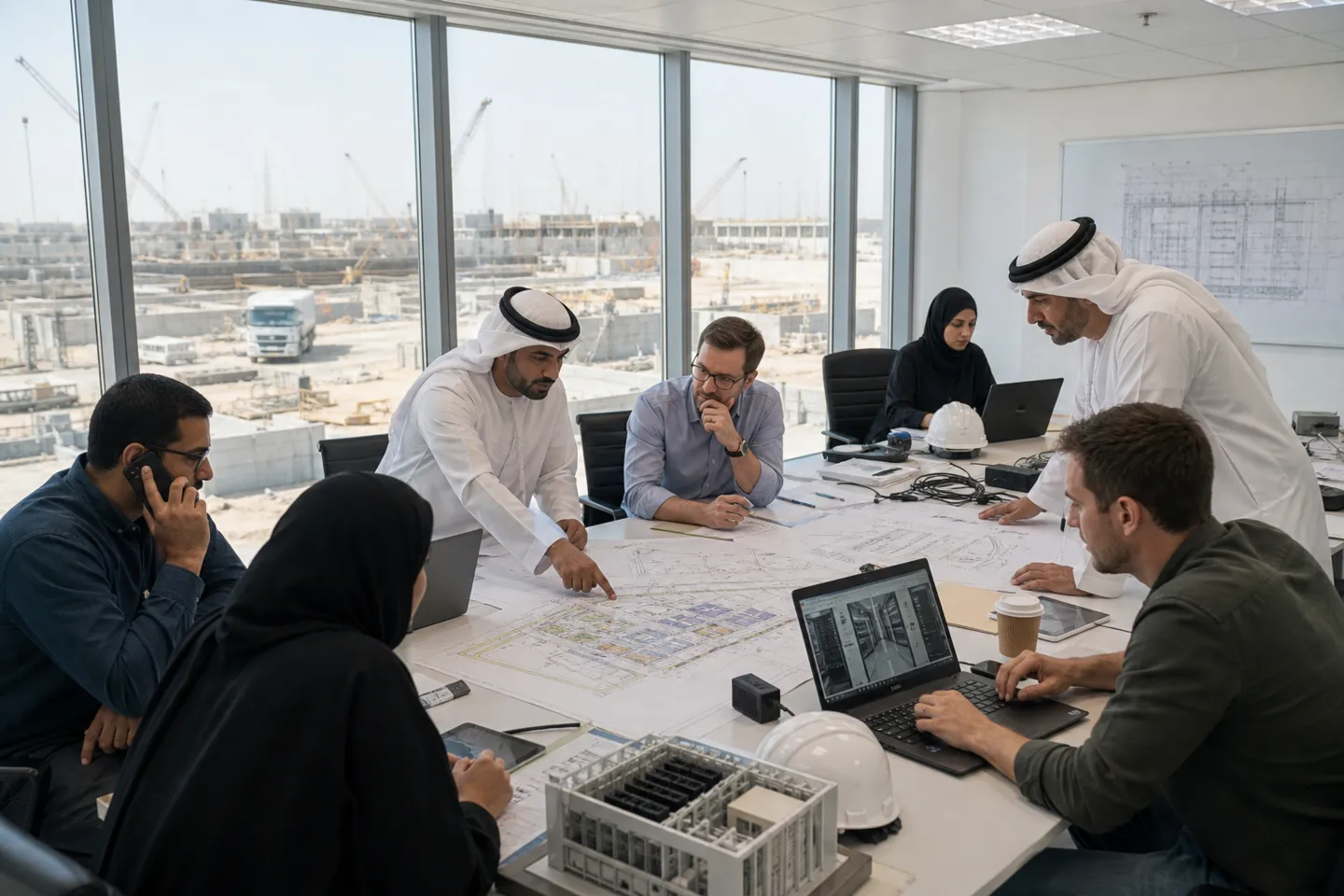
UAE interior fit-out project meeting with drawings, tablet and project team inside an active construction space
Project Management / Abu Dhabi Programme · Cost · Procurement · Site

Manage the Interfaces Before They Become Delays

Where is your project currently losing control?

A project manager should make responsibilities visible. We identify who owns each decision, when it is needed and what happens if it arrives late.

01

Everyone is waiting for someone else to decide

We maintain a decision and action register with an owner and required date. Client selections, consultant responses, contractor RFIs and supplier information are separated so the project team can see exactly what is blocking the next activity.

02

The programme exists, but procurement is not connected to it

A site programme without material lead times is incomplete. We track sample approval, order date, supplier deposit, production, shipping, delivery and installation against the date the site actually needs the item.

03

The contractor says a variation is urgent and there is no time to review it

We separate instruction from commercial approval. The project team records why the change is required, who requested it, cost and time impact, available alternatives and whether the change affects drawings, procurement or another trade.

04

Design revisions are reaching site through WhatsApp screenshots

We establish a controlled drawing and document route. Superseded information is identified, issued revisions are logged and critical changes are communicated to the people who actually need to build or procure against them.

05

The client receives progress photos but still does not know whether the project is on time

A useful report compares actual progress with the baseline, identifies the critical issues, records cost / variation status, tracks procurement and shows the next two weeks of required actions. A photo gallery alone is not project control.

06

The project is almost finished, but handover keeps moving

Testing, commissioning, snagging, rectification, authority close-out, furniture installation, as-builts, warranties, O&M manuals, keys, access cards and spare materials are treated as scheduled deliverables rather than tasks to discover during the final week.

Three Controls We Keep Visible

Time, money and design information need to move together.

A project can appear healthy in one area and still be failing in another. These three controls are reviewed as one system.

01

Programme + decisions

We establish milestones, dependencies, client decision dates, approval gates and procurement dates so the programme reflects more than physical construction.

  • Baseline milestones agreed
  • Critical decisions given required-by dates
  • Short-term look-ahead actions maintained
  • Delays linked to an owner and recovery action
02

Cost + change

The approved budget, committed costs, forecast costs, variations and provisional allowances are tracked separately so the client can distinguish what has been spent from what the project is currently expected to cost.

  • Original budget / contract baseline retained
  • Variations logged before approval
  • Committed versus forecast spend separated
  • Contingency use made visible
03

Design + quality

Drawings, samples, mock-ups, shop drawings and site work are reviewed against the approved design intent. The project manager coordinates the response; specialist designers and contractors remain responsible for their own technical work.

  • Current drawing register maintained
  • Material / sample approvals traceable
  • Shop-drawing interfaces coordinated
  • Snagging linked to responsible party and closure date

Choose the Management Role

Project management can sit on the client side, design side or across procurement and site delivery.

The appointment should define authority clearly. A project manager who can report a problem but cannot instruct, approve or escalate anything needs a different responsibility matrix from a client representative with delegated authority.

Abu Dhabi project team reviewing large architectural drawings, digital models and construction information around a meeting table
Client-Side

Owner’s Project Management

Bella can act as the design-aware coordination point for a client who has separate designers, consultants, contractors and suppliers. The focus is governance, decisions, programme, reporting and protecting the client from gaps between appointments.

Single reporting routeDecision governanceCost / change visibilityCross-consultant coordination
Design professionals reviewing floor plans, rendered interior views, timber, stone and fabric samples
Design-Led

Design Coordination Management

When the main risk is protecting design intent, we focus on drawing interfaces, consultant information, samples, mock-ups, shop drawings and the technical questions that must be answered before procurement or fabrication.

Drawing registerRFI coordinationSample / mock-up controlDesign-intent protection
Interior project planning board with floor plan, finish samples, furniture references, schedule and procurement information
Procurement-Led

FF&E + Procurement Management

For furniture- and material-heavy interiors, the critical path may sit outside the construction site. We track approvals, POs, supplier deposits, production, shipping, storage, delivery, damage, installation and final placement against the handover programme.

PO / order registerLong-lead trackingDelivery sequencingInstallation readiness
Two UAE fit-out professionals inspecting exposed ceiling MEP services with a tablet on an active interior construction site
Site Interface

Fit-Out Delivery Coordination

Where the contractor manages labour and construction, Bella can coordinate design information, client decisions, procurement, programme interfaces, progress reporting and quality observations so the client has an independent design-led view of delivery.

Programme monitoringSite issue escalationDesign-quality observationsSnag / close-out

What Interior Design Project Management Can Include

One coordinated record from brief, design and procurement through site and handover.

The exact scope is agreed by appointment. Bella can manage design-led project controls, but construction means, methods, safety, statutory design and specialist certifications remain with the relevant contractor / consultant.

01

Project governance + responsibilities

Make authority and information routes visible before pressure builds.

  • Project brief and objectives register
  • Stakeholder / consultant / supplier map
  • Responsibility matrix / RACI-style allocation
  • Communication and meeting cadence
  • Decision / approval authority matrix
  • Document-control route
02

Programme + progress control

Track the dates that actually control handover.

  • Master milestone programme review
  • Design / approval / procurement integration
  • Look-ahead action schedules
  • Progress versus baseline review
  • Critical issue / delay tracking
  • Recovery / mitigation action follow-up
03

Budget + change control

Keep original scope, committed cost and forecast separate.

  • Budget / cost-report structure
  • Tender / quotation comparison support
  • Provisional sum tracking
  • Variation / change log
  • Cash-flow / payment milestone coordination
  • Contingency and forecast reporting
04

Design + consultant coordination

Prevent the site from choosing between conflicting drawings.

  • Drawing / revision register
  • RFI and design-query coordination
  • MEP / interior interface tracking
  • Shop-drawing review routing
  • Material / sample / mock-up register
  • Client design sign-off tracking
05

Procurement + logistics

Connect every order to the date the project needs it.

  • FF&E / material procurement schedule
  • RFQ / quotation status
  • Purchase-order tracking where included
  • Supplier deposits and balance milestones
  • Production / shipping / customs / storage status
  • Delivery, damage and installation coordination
06

Site + handover

Turn progress observations into closed actions.

  • Periodic site coordination / design observations
  • Progress photography and issue reporting
  • Quality / finish observations
  • Snag / defect tracking
  • Testing / commissioning interface tracking
  • As-built, O&M, warranty and handover-document coordination

Project management does not transfer the contractor’s responsibility for site safety, manpower, temporary works, workmanship or construction methods; nor does it replace the architect / engineer / MEP / fire consultant’s statutory design responsibility. Bella’s authority to instruct, approve cost or certify work must be explicitly stated in the contract.

From Project Definition to Close-Out

Every phase gets a control point before the next one depends on it.

We tailor the process to the project, but the sequence below keeps design, procurement, approvals and site delivery connected.

01

Set the project controls

We define objectives, scope, parties, responsibilities, communication routes, reporting format, decision authority, cost structure and the project’s key milestones.

Project execution / responsibility framework
02

Baseline the programme + budget

Design, approvals, tender, procurement, construction, FF&E installation and handover milestones are aligned with the budget and required opening / move-in date.

Baseline programme + cost-control structure
03

Coordinate design information

Current drawings, consultant inputs, RFIs, material selections, shop drawings and client approvals are tracked through a controlled register.

Coordinated design / approval status
04

Release procurement deliberately

Long-lead items are identified and released only when design, commercial approval and site dimensions are sufficiently resolved for the item involved.

Procurement + long-lead tracker
05

Monitor site + forecast risk

Progress is compared with the baseline, upcoming dependencies are reviewed, variations and risks are recorded, and decisions are escalated before they become critical.

Progress / risk / cost reporting
06

Control installation + quality

Samples, finishes, joinery, furniture and specialist installations are observed against the approved design information while defects and outstanding items are recorded for closure.

Quality / snag register
07

Close + hand over

Snags, commissioning interfaces, final deliveries, manuals, warranties, as-builts, keys / access items and outstanding commercial matters are tracked toward a defined close-out.

Handover / close-out register

Project Controls That Make the Service Useful

A project manager should show you what is late, what it affects and what decision is required.

The management tools below are intentionally practical. Their exact format changes with project scale, contract model and the software used.

Abu Dhabi consultants conducting a site inspection beneath exposed interior HVAC, electrical and ceiling services
01

Use a baseline, not a moving target

The agreed baseline programme should remain visible even when the forecast changes. Otherwise every delayed activity simply moves right and the project can appear 'on schedule' because the schedule itself has been rewritten.

02

L1, L2 and L3 are schedule-detail conventions

AACE describes schedule levels by degree of detail: Level 1 is management summary / major milestones, Level 2 adds project-level components and deliverables, and Level 3 is detailed enough to support meaningful control / critical-path monitoring. Exact numbering can vary by contract, so the project’s schedule specification should define what each level means.

03

A two- or three-week look-ahead turns the master programme into site actions

A master schedule explains the whole project; a short-term look-ahead focuses the team on drawings, materials, access, manpower and preceding work needed for the next activities. AACE guidance recognises near-term look-ahead schedules as a more detailed control layer.

04

RFI, submittal and decision logs solve different problems

An RFI records a technical question; a submittal records something issued for review such as a shop drawing or material; a decision log records a choice needed from the client or project team. Combining all three into one email trail makes responsibility and due dates difficult to control.

05

Change control should show both money and time

A variation is not fully understood until the team knows the scope difference, cost impact, programme impact, affected drawings / orders and approval status. The client should be able to see pending changes separately from approved changes.

06

Procurement status needs dates beyond 'ordered'

Interior-specific platforms such as Programa and DesignFiles track PO, payment, shipping, delivery and installation information because an item can be 'ordered' and still miss the site by six weeks. Long-lead reporting should expose the next dependency, not only the current status.

07

Communication is central, but '90%' is not a proven universal rule

The claim that project managers spend 90% of their time communicating is widely repeated. PMI published a paper noting that this figure is often quoted without evidence-based support. The practical point remains valid: meetings, reports and messages should create decisions and accountable actions rather than communication volume for its own sake.

08

Reports should be short enough to manage from

For many interior projects, a useful weekly report includes milestone status, percentage progress, critical issues, decisions required, procurement risks, variations, safety / authority interfaces, progress photographs and a two-week look-ahead. The detailed registers can sit behind that management summary.

Abu Dhabi Approvals & Responsibility Tracking

The project manager tracks the approval route; the authorised party still prepares and signs the regulated submission.

DMT’s Abu Dhabi minor-works process allows contractors to obtain approvals directly for specified non-structural modifications, maintenance and interior finishes on eligible residential properties. Other work can require different municipal, consultant, landlord, developer or sector-specific routes. The project manager’s role is to identify the applicable gate, required inputs, responsible submitter and date by which approval is needed for the programme.

Where fit-out work affects fire and life-safety systems, Abu Dhabi Civil Defence requirements can involve approved drawings, fire alarm / firefighting modifications, ventilation, emergency lighting and other specialist interfaces. Project management should keep these approvals linked to procurement and construction rather than treating them as paperwork that happens independently of the site.

  • Which jurisdiction, landlord / developer and authority processes apply?
  • Who is the authorised submitting consultant / contractor?
  • Which design information has to be frozen before submission?
  • What NOCs or security deposits are required before mobilisation?
  • Which fire alarm, sprinkler, emergency-light or life-safety changes are involved?
  • Are specialist-sector approvals needed for healthcare, F&B, education or another regulated use?
  • What inspections must occur before ceilings / walls are closed?
  • Which authority comments affect procurement or shop drawings?
  • What final approvals / certificates are needed before occupation or operation?
  • Who owns each close-out document and its required date?
Read the current DMT — Streamlined Permit Process for Minor Works in Abu Dhabi
Interior design team comparing timber, stone, metal and finish samples over construction drawings

Material Approval & Project-Control Colours

A finish is not approved because someone reacted with a thumbs-up to a photo.

Material control should identify the exact product, supplier, code, finish, size, location, approved sample / mock-up, commercial status, lead time and approval date. Phone photographs are useful records, but they are not a substitute for a coded sample when colour, grain, sheen or texture matters.

The status HEX values below are Bella-friendly project-control conventions for dashboards / mark-ups, not mandatory CAD or construction-industry standards.

Critical / blocked — red #D64545 for overdue approvals, critical programme risks or actions that stop successor workAt risk / pending — amber #D89A2B for decisions approaching their required date, unresolved RFIs or procurement with shrinking floatApproved / complete — green #3F7D5A for signed-off samples, closed actions and completed milestonesInformation / client action — blue #315C8A for items awaiting information, review or client-side confirmationBaseline / existing — charcoal #4A4A4A for approved baseline information, retained construction or reference recordsEvery sample should carry a unique reference linked to room / area, drawing or schedule, supplier and approval statusNatural stone and timber should be approved against realistic range / variation, not a single perfect sample where the material naturally variesMock-ups are especially useful for repeated joinery, stone junctions, decorative metal, feature ceilings and lighting details where a small error would repeat across many locations

Project Management Fees & Programme

Price the management responsibility—not just the number of site visits.

Current 2026 UAE market references use several models. One Dubai fit-out project-management guide publishes approximately 5–10% of project value, reducing toward 5–7% on larger projects. A separate UAE interior-design practice publishes about 8–10% of project value for project management. Other studios bundle management into a design or turnkey fee. These are third-party market references—not Bella rates—and they are not directly comparable unless the authority, procurement, cost-control and site responsibilities are the same.

Fee drivers

What changes an interior project-management fee

  • Project value, duration and number of phases
  • Client-side PM versus design-only coordination
  • Number of consultants, contractors and specialist vendors
  • Site-meeting / inspection frequency
  • Procurement and FF&E quantity
  • Whether Bella manages RFQs / POs / delivery tracking
  • Cost reporting / variation review depth
  • Live-site, night-work or phased-occupation constraints
  • Authority / landlord coordination requirements
  • Reporting frequency and stakeholder complexity
  • Travel / multiple sites / regional supplier coordination
  • Handover, commissioning and aftercare scope
Programme references

Project management normally begins before site and ends after construction looks finished.

  • Pre-construction management should begin early enough to establish scope, responsibilities, approvals, baseline programme and long-lead procurement before mobilisation
  • A current Abu Dhabi / UAE commercial fit-out reference publishes roughly 3–6 weeks for survey / design, 2–4 weeks for approvals and 8–14 weeks for a standard commercial-floor site phase
  • KPS documents a 2025 Clifford Chance ADGM fit-out of 7,233 sq ft planned around a tight 10-week delivery; authority approvals delayed the planned start by two weeks, illustrating why approval risk must sit inside the programme
  • Weekly reporting is common during active fit-out, while critical projects may require more frequent decision / procurement tracking
  • Two- to three-week look-aheads are useful during construction even when the master programme runs for several months
  • Close-out can continue after practical completion while snags, warranties, as-builts, O&M information and final commercial matters are resolved

As simple fee illustrations only: 5–10% of an AED 500,000 project equals AED 25,000–50,000; 5–10% of an AED 2 million project equals AED 100,000–200,000. Those calculations do not establish Bella’s fee. A real proposal should state project duration, authority level, procurement responsibility, site frequency, reporting and delegated powers.

Project Management Questions, Answered Clearly

Interior Design Project Management — Frequently Asked Questions

These answers distinguish professional project control from construction supervision and clarify several project-management terms that are commonly oversimplified online.

01What is project management in interior design?

Interior design project management is the structured coordination of scope, decisions, programme, budget, design information, procurement, contractors, suppliers, site interfaces, quality observations and handover so the approved interior can move from concept to completion without losing control between stages.

02Can an interior designer be a project manager?

Yes, when the appointment and competence match the role. Interior designers are well placed to manage design intent, finishes, FF&E, suppliers and client decisions. They should not assume the statutory responsibilities of structural, MEP, fire or other licensed consultants, or the contractor’s responsibilities for construction methods, labour and site safety.

03What is the difference between an interior design project manager and a construction project manager?

Interior design PM is usually more design-, specification-, FF&E- and client-decision-led. Construction PM focuses more heavily on programme, construction packages, contractors, commercial controls and site delivery. On a large interior project the roles may overlap or coexist, so the responsibility matrix should state exactly who controls each interface.

04What are the five basics of project management?

PMI’s process-group approach uses five groups: Initiating, Planning, Executing, Monitoring & Controlling, and Closing. They are logical groups of management processes rather than a rule that every interior project must run through five perfectly separate chronological phases.

05What are the seven types of project management?

There is no official universal list of exactly seven. Common approaches people compare include predictive / waterfall, Agile, Scrum, Kanban, Lean, Six Sigma and PRINCE2. Some are methods or frameworks rather than 'types'. Interior fit-out projects commonly use a predictive master programme with rolling short-term planning and flexible issue resolution.

06What are seven common types of interior design?

There is no official fixed list, but a useful sector grouping is residential, workplace / office, retail, hospitality / F&B, healthcare / wellness, education / institutional and specialist / leisure interiors. Each sector changes the project manager’s approvals, suppliers, technical interfaces and handover requirements.

07What are five useful project-management tools for interior designers?

Examples include Programa and DesignFiles for interior-specific schedules, specifications and procurement; Studio Designer for design-business / purchasing workflows; and general task platforms such as Asana or Trello for actions and team coordination. The best tool is the one the entire team will maintain consistently—software cannot compensate for missing ownership or outdated data.

08Is 90% of a project manager’s job communication?

Communication is a major part of project management, but the exact 90% figure should not be treated as proven fact. PMI has published discussion noting that the widely repeated 90% statement was often quoted without evidence-based research. The useful lesson is to make communication produce clear decisions, actions and records.

09What are L1, L2 and L3 schedules in project management?

AACE uses schedule levels to describe detail. Level 1 is a management-summary view with major components and milestones; Level 2 adds more project / deliverable detail; Level 3 is detailed enough for meaningful critical-path control. Contracts may use different conventions, so the project schedule specification should define the levels rather than relying only on the label.

10How much does project management cost in the UAE?

Current 2026 published guidance varies by responsibility. One Dubai fit-out PM guide publishes roughly 5–10% of project value, while a UAE interior-design practice cites about 8–10% for project management. Some firms use fixed fees or monthly retainers instead. These are third-party market references, not Bella rates.

11When should I appoint an interior project manager?

Ideally before contractor mobilisation and before long-lead procurement. The project manager adds the most value when there is still time to define responsibilities, baseline the programme, coordinate drawings, set the budget / variation process and identify approvals rather than being brought in after delays have already occurred.

12What should be in a weekly interior-project report?

A useful report normally shows overall milestone status, actual versus baseline progress, critical issues, decisions required, procurement / long-lead status, variations and cost risks, authority / inspection interfaces, progress photographs and a short look-ahead of upcoming activities and required information.

13Does the project manager approve contractor variations?

Only if the contract delegates that authority. Otherwise the PM should review the reason, scope, cost and time impact, coordinate technical input and make a recommendation, while the client or authorised contract administrator gives the formal commercial approval.

14What does procurement management include for interiors?

It can include RFQs, quotation comparisons, approved specifications, purchase orders, supplier deposits, production dates, shipping, customs, storage, delivery, damage / replacement, installation sequencing and final reconciliation. The scope should state whether the project manager only tracks procurement or is also authorised to place orders and handle payments.

15What happens during project handover?

The team closes outstanding snags, coordinates testing / commissioning, confirms FF&E delivery and installation, collects as-built drawings, O&M manuals, warranties, keys / access credentials and relevant authority / landlord close-out documents, and records any defects or commercial items that continue after practical completion.

16What is the highest-paid interior design job?

There is no authoritative single highest-paid title. Earnings vary by country, firm ownership, sector and responsibility. Principals / studio owners, design directors, senior project / design managers and highly specialised luxury, hospitality, marine or aviation designers can all sit at the higher end of the profession.

17How is Project Management different from Bella’s Design & Fit-Out service?

Project Management coordinates the parties, programme, cost, design information, procurement, risks and handover. Design & Fit-Out carries interior design into technical development and physical implementation. A PM appointment can manage an independent contractor or several vendors without Bella becoming the contractor itself.

Bring the Project Under Control

Send us the programme, budget and current project team—not only the floor plan.

Share the project location, property / business type, floor area, current stage, approved design status, target handover date, approximate budget, contractor / consultant appointments and the main issue you need managed.

If you already have a programme, BOQ, contract, drawing register, variation log, procurement schedule, authority comments, progress report or supplier tracker, send them. Those records let us understand where control currently sits and what needs to be rebuilt.