Interior Design and Renovation Dubai

Interior Renovation Dubai

Bella Interior Design plans and delivers interior renovation in Dubai for apartments, villas, penthouses and townhouses that need more than new paint or furniture. We can rework layouts, open kitchens, rebuild bathrooms, replace flooring, redesign ceilings and lighting, upgrade joinery, modernise MEP, integrate smart-home systems and coordinate developer / building approvals so the finished home feels intentionally redesigned rather than cosmetically patched. For 2026 feasibility, current Dubai market guides place broad full-renovation work around AED 1,400–2,400 per m² for standard specification, AED 2,400–4,000 per m² for premium work and AED 4,000–9,000+ per m² for luxury renovation; apartment-specific guides commonly show AED 150–300 per ft² for standard work and AED 300–600 per ft² for mid-range full renovation, while villa projects can run from AED 150–250 per ft² for cosmetic renewal to AED 800–1,200+ per ft² for luxury gut-and-rebuild scope. Bella therefore budgets from the actual condition, drawings and BOQ rather than selling one generic renovation package.

A Dubai renovation should start with the reason you are changing the property: better family flow, a larger kitchen, modern bathrooms, more storage, stronger rental positioning, updated MEP, a lighter interior, improved views or a full luxury transformation. We preserve what is worth keeping, replace what limits the home, and spend the budget where it changes the way you live.

Apartment RenovationVilla RenovationKitchen + BathroomsLayout ReconfigurationMEP + LightingTurnkey Handover
Renovated Palm Jumeirah villa living room and kitchen with waterfront glazing, white seating, dark kitchen island and integrated lighting
Interior Renovation / Dubai Layout · Kitchens · Bathrooms · MEP · Joinery · Handover

Home Renovation and Interior Design Dubai

Renovate the problems first, then spend on the finishes.

The strongest renovation brief begins with what is not working. We ask what feels dated, dark, cramped, noisy, difficult to maintain or badly planned before proposing marble, joinery or decorative lighting. That makes the investment visible in daily life rather than only in photographs.

01

Your apartment feels developer-standard

We can improve the home without rebuilding everything: new flooring, lighting, joinery, kitchen fronts or full kitchen replacement, bathroom upgrades, concealed storage, better furniture planning and view-oriented layouts. In high-rise buildings we retain fixed structural and wet-service conditions wherever moving them would add disproportionate cost.

02

Your villa layout no longer suits family life

Older Dubai villas often have enclosed kitchens, disconnected living rooms, limited storage or service routes that do not match current lifestyles. We test whether non-structural reconfiguration, wider openings, better sightlines, dual kitchens, family lounges or indoor-outdoor connections can improve the plan before considering major structural intervention.

03

You bought an older property and want a complete reset

A full renovation can include strip-out, new electrical and plumbing, AC upgrades, kitchens, bathrooms, flooring, ceilings, doors, joinery, smart systems and FF&E. The property condition matters: older homes can reveal failed waterproofing, obsolete pipework, uneven screeds or AC issues once finishes are removed.

04

You want to renovate for resale or rental performance

We prioritise the changes that buyers and tenants feel immediately: kitchen, bathrooms, lighting, flooring, storage, paint, layout clarity and a cohesive material palette. The goal is not to overcapitalise on highly personal finishes that the next occupant may remove.

05

You need a premium renovation without unnecessary demolition

High-end design does not require stripping every surface. We can retain technically sound floors, ceilings, doors, kitchen carcasses or MEP where they support the new concept, then invest in focal stone, veneer, lighting, sanitaryware, hardware and custom joinery that materially change the experience.

06

You already have renovation quotations but cannot compare them

We separate demolition, civil, waterproofing, MEP, flooring, kitchen, bathrooms, joinery, lighting, approvals, furniture and contingency so you can see whether two contractors are pricing the same scope. A low total is not useful if half the renovation is sitting in exclusions and provisional sums.

Interior Renovation in Dubai — Six Decisions That Control the Result

The renovation budget should follow the condition of the property and the value of each change.

We use the following six layers to define the scope before drawings, procurement and demolition move too far.

01

1. Retain vs replace

We inspect existing floors, ceilings, doors, sanitaryware, joinery, kitchen carcasses, MEP and glazing to identify what can realistically remain. Retaining good infrastructure can release budget for higher-impact design.

  • Condition
  • Age
  • Maintenance
  • Compatibility
  • Value
02

2. Layout improvement

Furniture planning, door positions, kitchen flow, storage, sightlines, privacy and room relationships are tested before wall removal. If the problem can be solved through joinery or furniture zoning, structural work may be unnecessary.

  • Circulation
  • Views
  • Privacy
  • Storage
  • Furniture
03

3. Wet areas

Kitchens and bathrooms drive a large part of renovation cost because they combine joinery, stone, waterproofing, sanitaryware, plumbing, electrical and ventilation in a small area. We freeze their layouts early because late wet-point changes create expensive rework.

  • Kitchen
  • Bathrooms
  • Drainage
  • Waterproofing
  • Ventilation
04

4. MEP health

Older electrical boards, AC units, thermostats, ducts, pipework and drainage are reviewed before new ceilings or finishes hide them. Renovating a home beautifully while leaving unreliable services untouched can move the disruption into the first year after handover.

  • Electrical
  • Plumbing
  • AC
  • Controls
  • Access
05

5. Finish hierarchy

We decide where premium material genuinely matters: focal stone, kitchen island, feature staircase, master bathroom, living-room joinery or front entrance. Secondary rooms can use durable alternatives that protect the overall budget.

  • Stone
  • Timber
  • Porcelain
  • Paint
  • Hardware
06

6. Approvals + programme

Developer NOCs, building-management rules, service-lift bookings, contractor deposits, structural approvals and long-lead materials are put into the programme before mobilisation. A renovation start date is only meaningful when these dependencies are visible.

  • NOC
  • Permit
  • Logistics
  • Lead time
  • Handover

Interior Renovation Dubai — Communities & Property Conditions

Dubai renovations are shaped by the community, building age and approval environment.

The address affects more than the style. Tower logistics, developer rules, waterfront humidity, older MEP, villa structure and external works can change the renovation strategy substantially.

Palm Jumeirah renovated villa with white living furniture, dark kitchen island, marble surfaces and panoramic waterfront glazing
Dubai / 01

Palm Jumeirah — Waterfront Villa Renovation

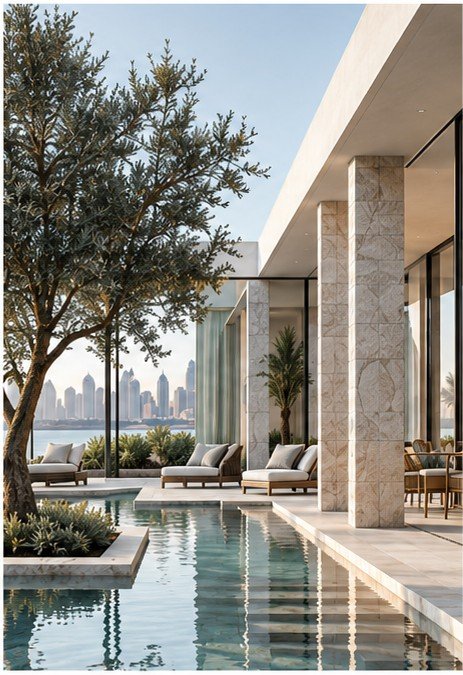
Palm Jumeirah renovations often combine interior re-planning with sea-facing glazing, terraces, kitchens, bathrooms, joinery, lighting, smart controls and external works. Nakheel states that alterations require an NOC before work and that changes cannot affect the external façade or structure without the applicable approval. We therefore separate interior upgrades from structural / external changes from the start.

Nakheel NOCWaterfront humidityOpen-plan livingLuxury bathroomsIndoor-outdoor flow
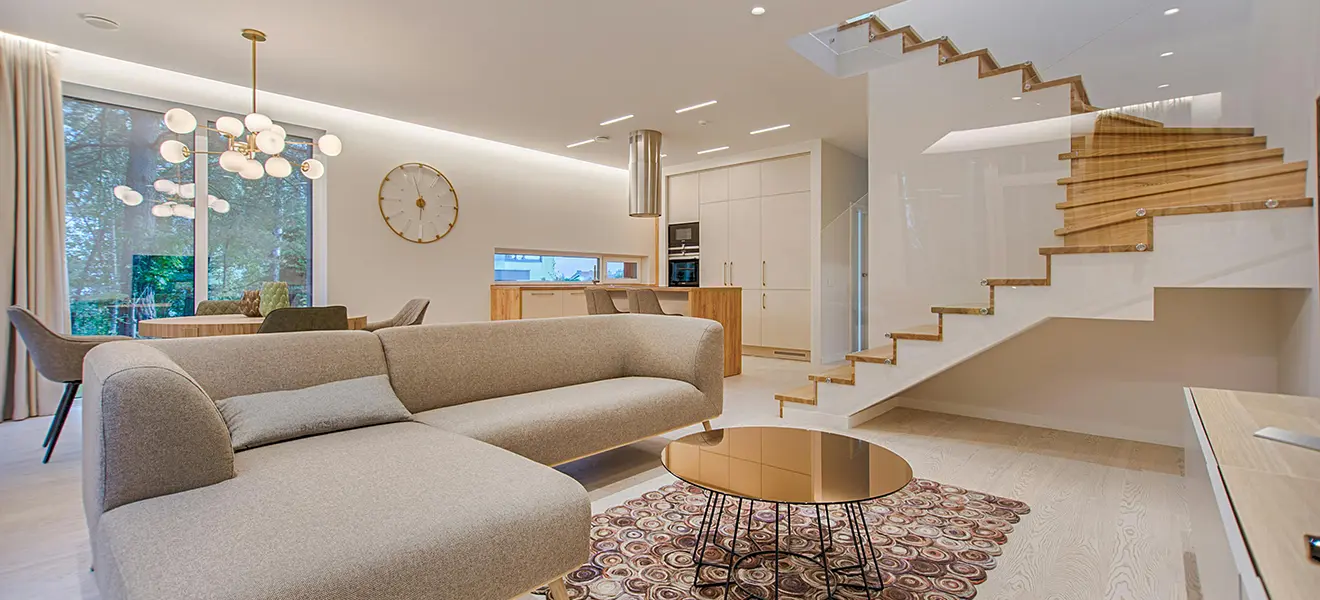
Dubai Hills renovated villa living room with soft grey sectional sofa, dining area, large garden-facing window and sculptural pendant lighting
Dubai / 02

Dubai Hills Estate & Emirates Hills — Whole-Villa Transformation

Large villas in Dubai Hills and Emirates Hills can justify broader renovation because the floor area supports dedicated pantry, study, gym, formal and family zones. A current Dubai Hills turnkey project reference includes a redesigned pantry, lounge, offices, gym, pool, pergola and outdoor kitchen—showing why interior and external scopes should be budgeted separately even when designed together.

Whole-villa planningBespoke joineryMEP upgradesLandscape interfacePremium finishes
Renovated Arabian Ranches villa living room with pale cabinetry, timber details, television wall, soft seating and adjoining open kitchen
Dubai / 03

Arabian Ranches & The Meadows — Established Family Villa Renovation

Established Emaar communities often have villas where kitchens, bathrooms, flooring, lighting and storage now feel dated even when the structure remains valuable. Emaar's published home-modification process specifically covers internal layout changes, upgrades and refurbishments and requires an NOC. We typically prioritise family flow, open or semi-open kitchens, brighter finishes, modern MEP and practical storage.

Emaar NOCKitchen openingBathroom rebuildsFamily storageMEP renewal
Renovated Dubai Marina apartment with open living, dining and kitchen layout, floor-to-ceiling windows, neutral furniture and sculptural pendant lights
Dubai / 04

Dubai Marina, JBR & Bluewaters — High-Rise Apartment Renovation

Marina-side apartments are usually constrained by fixed structure, façade glazing, vertical wet stacks, chilled-water systems and building logistics. We create value through view-oriented layouts, custom storage, new flooring, kitchens, bathrooms, lighting and smart controls while avoiding service relocation that does not justify its cost.

Building NOCChilled-water ACWet-stack constraintsViewsService-lift logistics
Downtown Dubai apartment with open living and dining layout, marble-look table, ring pendant lights, media wall and full-height curtains
Dubai / 05

Downtown Dubai & Business Bay — View-Led Apartment Renovation

In Downtown, the view often has more value than another decorative feature. Burj Vista, Address Boulevard, Act One Act Two and similar towers each have building-specific management and technical restrictions. We organise furniture, kitchen, lighting, curtains and joinery around the glazing and preserve the strongest Burj Khalifa or skyline sightlines.

Burj Khalifa viewsTower approvalsPremium joineryLightingInvestor / owner use
Jumeirah villa double-height living room with warm timber wall panels, neutral sofas, skylight, floor-to-ceiling glazing and garden views
Dubai / 06

Jumeirah & Al Wasl — Bespoke Villa Renovation

Jumeirah villas can range from relatively recent luxury homes to older properties that need deeper upgrades to plumbing, AC, waterproofing, windows and internal planning. We use the architecture of the villa rather than imposing a tower-style interior: courtyards, double-height spaces, formal hosting, family privacy and garden connections become part of the renovation brief.

Villa characterOlder servicesFormal hostingCourtyard / gardenCustom detailing

Interior Design and Renovation Services Dubai

Renovation should combine the design decisions and the hidden construction decisions.

Bella can work from a defined room upgrade through a full-property renovation. The project scope is built around what changes, what remains and what must be upgraded behind the finishes.

01

Existing-condition audit

Understand the property before deciding the final scope.

  • Measured survey
  • Current floor plan
  • Existing finishes
  • Kitchen condition
  • Bathroom condition
  • Joinery condition
  • Electrical / DB review
  • Plumbing review
  • AC / thermostat review
  • Waterproofing risks
  • Windows / glazing
  • Retain / replace schedule
02

Space planning + reconfiguration

Improve daily movement before adding decoration.

  • Furniture planning
  • Open-plan options
  • Kitchen / dining flow
  • Majlis / guest privacy
  • Family living
  • Bedroom planning
  • Walk-in dressing
  • Storage
  • Home office
  • Service routes
  • View orientation
  • Indoor-outdoor flow
03

Kitchen renovation

Resolve storage, workflow and services as one package.

  • Kitchen layout
  • Show kitchen
  • Working / wet kitchen
  • Cabinetry
  • Island
  • Countertops
  • Backsplash
  • Appliances
  • Lighting
  • Sockets
  • Plumbing
  • Ventilation
04

Bathroom renovation

Rebuild wet areas around waterproofing and drainage first.

  • Demolition
  • Waterproofing
  • Floor falls
  • Drainage
  • Shower
  • Bath
  • Sanitaryware
  • Vanity
  • Storage
  • Mirror / lighting
  • Ventilation
  • Glass
05

MEP + smart upgrades

Modernise the hidden systems where the existing home needs it.

  • Electrical points
  • Distribution board
  • Lighting circuits
  • Smart controls
  • Motorised curtains
  • AC / FCU
  • Thermostats
  • Duct modifications
  • Plumbing
  • Water heaters
  • Data / Wi-Fi
  • AV
06

Architectural finishes

Use a coherent material system rather than treating every room separately.

  • Porcelain
  • Marble / stone
  • Engineered timber
  • Skirting / shadow gap
  • Paint
  • Wallpaper
  • Decorative plaster
  • Wall panels
  • Ceilings
  • Doors
  • Metal details
  • Glass
07

Bespoke joinery

Add storage and identity without cluttering the plan.

  • Wardrobes
  • Walk-in dressing
  • TV walls
  • Libraries
  • Entrance storage
  • Vanities
  • Study joinery
  • Kitchen joinery
  • Concealed doors
  • Display cabinets
  • Banquettes
  • Custom furniture
08

Approvals + construction

Coordinate the rules before demolition.

  • Building management
  • Developer NOC
  • Emaar / Nakheel requirements where applicable
  • DM / DDA / Trakhees route where applicable
  • DCD where applicable
  • Structural consultant
  • MEP consultant
  • Contractor access
  • Service lift
  • Protection
  • Waste removal
  • Site inspections
09

Styling + handover

Finish the renovated home as one composition.

  • Furniture
  • Rugs
  • Curtains
  • Art
  • Accessories
  • Decorative lighting
  • Snagging
  • Deep cleaning
  • System testing
  • Warranty handover
  • Material care
  • Final walkthrough

Structural alterations, extensions, façade changes, major pool / landscape changes and certain MEP works can require separately appointed licensed consultants, contractors and authority approvals. We define those responsibilities before construction rather than treating every renovation as ordinary interior decoration.

Interior Renovation Process Dubai

Survey → scope → design → approvals → strip-out → rebuild → finish → handover.

A renovation programme should reveal hidden risk early. We avoid ordering premium finishes before the existing condition, layout, wet areas and MEP direction are sufficiently understood.

01

Home assessment

Review the property, photos, drawings, age, current defects, what you dislike and what you want to keep.

Output: existing-condition brief
02

Scope + budget bands

Separate cosmetic, standard, premium and structural options so the renovation ambition matches the available capital.

Output: scope options + budget framework
03

Layout development

Test furniture, kitchen, bathrooms, storage, walls, doors and circulation before committing to finishes.

Output: approved renovation layout
04

Concept + materials

Develop colour, floors, stone, timber, bathrooms, kitchen, joinery, lighting and key 3D views.

Output: approved interior concept
05

Technical design + approvals

Coordinate RCP, power, plumbing, AC, joinery and wet areas, then submit the required building / developer / authority documents through the responsible parties.

Output: construction-ready package
06

BOQ + procurement

Price the measured scope and release long-lead kitchen, sanitaryware, lighting, stone, joinery and appliances.

Output: agreed BOQ + procurement schedule
07

Strip-out + investigation

Remove approved finishes carefully, protect retained areas and inspect concealed services / substrates before closing the final construction scope.

Output: verified renovation base
08

MEP + wet works

Complete plumbing, electrical, AC, drainage, waterproofing, ceilings and other concealed work before finishes.

Output: inspected first fix
09

Finishes + joinery

Install floors, wall finishes, kitchen, wardrobes, vanities, doors, lighting and final details with progressive snagging.

Output: completed renovated interior
10

Commission + handover

Test systems, close snags, deep-clean, install final FF&E where included and hand over warranties / care information.

Output: move-in-ready home

Dubai Renovation Technical Priorities

What sits behind the new finish usually decides whether the renovation ages well.

The following are practical renovation principles, not universal code numbers. The final technical solution should follow the property, approved consultant drawings, manufacturer systems, building conditions and applicable authority requirements.

Arabian Ranches renovated family living room with built-in media joinery, pale wall panelling, warm timber and adjoining kitchen
01

Open walls only after the structure is understood

Removing a partition can improve the plan dramatically, but load-bearing walls, beams and post-tensioned slabs need professional review. We distinguish a simple partition change from a structural modification before demolition.

02

Wet-point relocation can be expensive in towers

High-rise apartments depend on fixed vertical drainage stacks and structural slabs. Moving toilets, showers or kitchens can require gradients, approvals and service coordination that outweigh the design benefit. We test the layout against the existing wet infrastructure first.

03

Waterproofing is not a decorative line item

Bathroom and wet-area renovations should include substrate preparation, compatible waterproofing, sealed penetrations and testing before tile installation. A premium tile does not compensate for poor waterproofing underneath.

04

Renovation is the best time to rationalise electrical points

Furniture, bedside charging, kitchen appliances, lighting, curtain motors, TVs, Wi-Fi access points and smart controls are mapped before walls and ceilings close so extension leads and surface wiring do not return after handover.

05

AC should be checked before new ceilings

Older FCUs, filters, thermostats, drain trays and ducts can be difficult to service after decorative ceilings are complete. We retain access panels and coordinate diffusers with the new layout rather than centring every grille for visual symmetry.

06

Old floor levels can control the entire renovation

Removing tile or marble can reveal uneven screed, level changes and insufficient build-up for the new material. Flooring transitions, door clearances and skirting details should be set after actual substrate levels are known.

07

Joinery should solve storage before adding decoration

Entrance cabinets, wardrobes, media walls, study units and kitchen extensions can remove visible clutter and make a smaller home feel calmer. Full-height storage is most effective when ventilation, sockets and access panels remain serviceable.

08

Natural stone and porcelain solve different problems

Marble offers natural variation and prestige but needs sealing, maintenance and careful installation. Large-format porcelain can reduce cost, weight and maintenance in many locations. We use each where its performance and visual value make sense.

09

Older villas can reveal hidden MEP after strip-out

Pipework, waterproofing, earthing, distribution boards and AC condition may be difficult to judge before finishes are removed. A renovation contingency exists for exactly this reason.

10

Tower renovation logistics affect labour productivity

Service-lift bookings, loading times, noisy-work windows, corridor protection and limited material storage can slow an apartment project even when the physical area is small. The programme should account for the building rules.

11

Renovation details should allow maintenance

Valves, FCUs, drivers, DBs, water heaters and concealed services need access. A seamless aesthetic that has to be demolished for routine maintenance is a short-term design decision.

12

Snag progressively, not only at the end

Tile alignment, paint preparation, ceiling joints, waterproofing, joinery reveals, door gaps and stone setting-out are easier to correct trade by trade. Final snagging should confirm quality, not discover the project's first quality issues.

Dubai Renovation NOCs, Permits & Community Rules

The right renovation approval path depends on the property and how deeply you are changing it.

Dubai Municipality currently offers a Self Permit to Carry Out Decorative Works for qualifying decorative works in building units over 100 m², subject to its conditions. That means some limited decorative scopes can follow a lighter route than structural or service-changing renovation.

Once the project changes layouts, structural elements, plumbing, major electrical systems, façade, GFA or other regulated building conditions, the approval route can change. The correct consultant, contractor and permit should therefore be confirmed before demolition rather than assumed from the word 'renovation'.

Where Dubai Development Authority is the relevant building authority, its Fit-Out Permit currently costs AED 0.90 per ft² with a minimum AED 200 and maximum AED 10,000, plus Knowledge and Innovation Dirhams. The permit is valid for six months, and DDA notes that works classified as Building Modification must move to the applicable modification route.

DDA's current Design Revision service separately lists Building Modification after final permit at AED 1,000 plus AED 1.0 per ft² of additional modified area if approved, while fit-out revision carries AED 1,000 plus AED 0.9 per ft² of additional modified area. These DDA charges apply only where DDA is the relevant authority.

Emaar's published home-modification fact sheet defines modifications broadly to include internal villa layout changes, internal upgrades and refurbishments and requires an Emaar Community Management NOC, with DM, DDA and DCD requirements applying where relevant.

Nakheel's current customer information states that owners can make changes provided they do not affect the external façade and structure and that an NOC from Nakheel Urban Planning must be obtained before alterations. Nakheel community rules also state that structural or non-structural internal or external works require prior application and approval.

High-rise apartments usually also require building / facilities-management approval, contractor insurance, access control, service-lift booking, common-area protection and a refundable deposit. These are building conditions rather than one citywide fee.

Bella coordinates the renovation interior-design package with the appropriately licensed contractor, engineering consultant, DCD / MEP parties and community / authority process required for the actual property.

  • Confirm exact property and community
  • Confirm landlord / building management
  • Confirm developer NOC requirement
  • Confirm whether work is decorative, fit-out or building modification
  • Confirm structural review for wall openings
  • Confirm wet-area / plumbing changes
  • Confirm electrical load / DEWA requirements
  • Confirm DCD scope where fire systems are affected
  • Confirm DDA / DM / Trakhees or other jurisdiction
  • Confirm contractor licence / insurance
  • Confirm refundable deposit
  • Confirm service-lift rules
  • Confirm noisy-work hours
  • Confirm waste-removal procedure
  • Confirm common-area protection
  • Confirm final inspection / close-out
Read the current Dubai Municipality — Self Permit to Carry Out Decorative Works
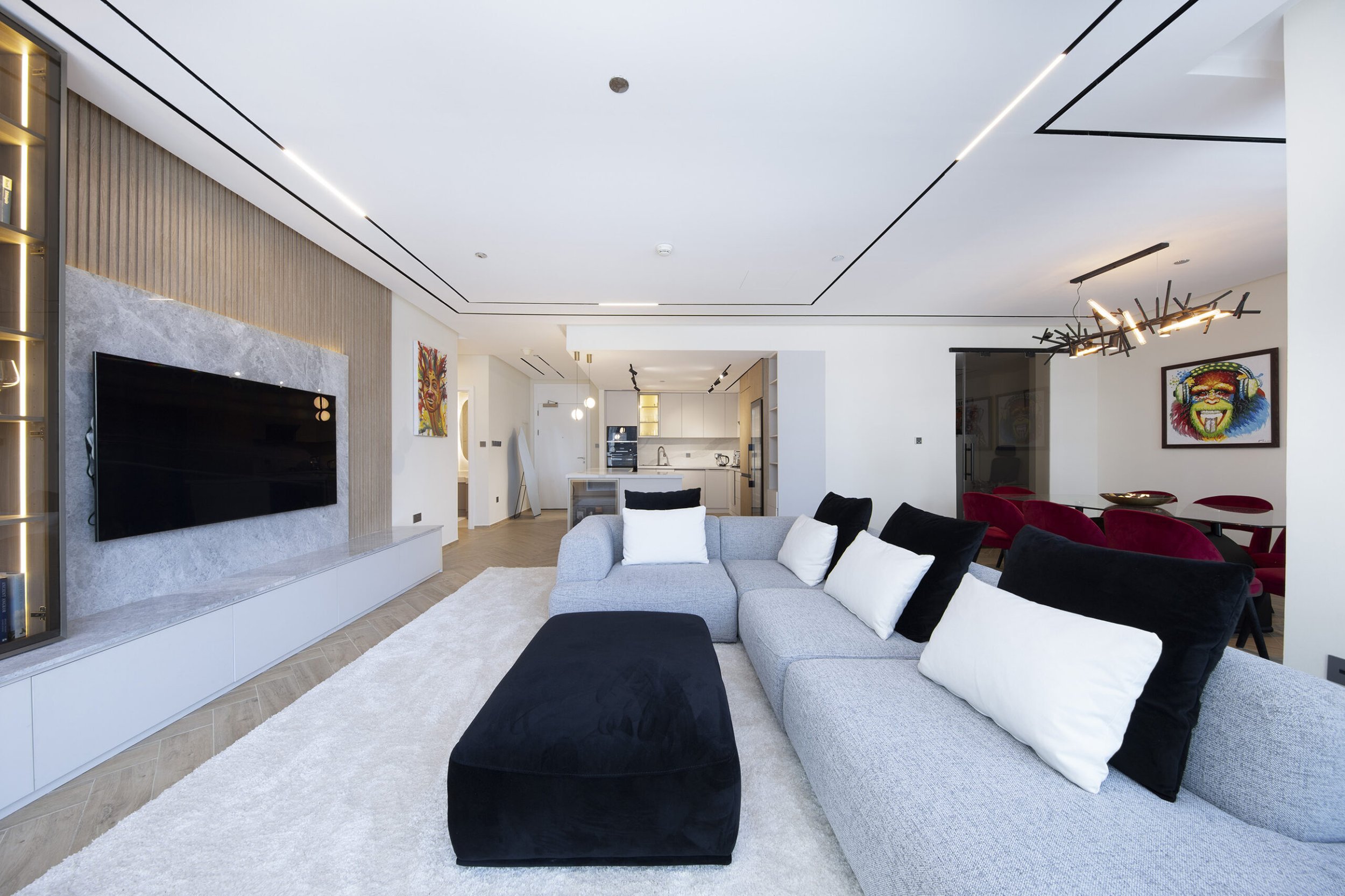
Renovated Dubai Marina living room with grey sectional, black-and-white upholstery, media wall, warm timber and integrated linear ceiling lighting

Dubai Renovation Materials, Colours & Value Engineering

The best renovation keeps the new palette coherent and the high-cost materials intentional.

A renovation palette should respond to what remains. Existing window frames, stone, doors or architectural features can either be incorporated or deliberately replaced; ignoring them usually produces a home that feels like two separate design eras.

The hex values below are digital palette references. We approve actual paint, timber, stone, metal and fabric samples inside the property because Dubai daylight, tinted glazing and warm evening lighting can shift colour significantly.

Value engineering works best when the hierarchy stays intact: keep the focal island, staircase, entrance or master bathroom premium, then simplify secondary joinery, hidden carcasses, guest rooms or back-of-house materials where the visual return is lower.

Warm Contemporary — Soft Ivory #F1EEE7 · Sand #D7C7B5 · Warm Oak #B28F6E · Taupe #8C8176 · Bronze #9A7651Coastal Dubai — Sea White #EFF2F0 · Pale Stone #D8D3C8 · Driftwood #C5B6A2 · Deep Blue #2E4659 · Champagne #C9AA72Modern Contrast — Chalk #F4F3EF · Greige #C9C3BA · Charcoal #3F4142 · Walnut #715642 · Brass #BA985BPorcelain — practical for broad floor areas where marble look, lower maintenance and tighter cost control are prioritiesNatural stone — strongest on focal surfaces, bathrooms, stairs and selected living areas where variation and maintenance are acceptedEngineered wood — adds warmth to bedrooms and living zones; coordinate substrate moisture and transition heightsQuartz / sintered stone — useful for kitchens and high-use surfaces where stain resistance is importantReal veneer — appropriate for visible joinery faces when grain quality and matching justify the costHMR / plywood cores — selected according to humidity, wet exposure, hardware and fabrication requirementsDecorative plaster — useful for feature walls where continuous texture is preferred to wallpaperWashable paint — practical for circulation, family rooms and children's spaces where maintenance mattersPVD / coated metals — used for trims and hardware after confirming cleaning and corrosion suitabilityAcoustic fabrics / rugs — soften hard renovated interiors with stone, glass and large open-plan spacesMotorised curtains — coordinate pockets, power and control before ceilings closeSmart-home hardware — best integrated while electrical work is open rather than retrofitted after finishing

Interior Renovation Dubai Cost 2026

How much does interior design and renovation cost in Dubai?

Renovation pricing only makes sense when the property type and scope are stated. A cosmetic apartment refresh, full Marina apartment rebuild and Palm Jumeirah villa transformation should never be compared using the same rate.

2026 Dubai planning benchmarks

Use these figures for feasibility, then replace them with a measured BOQ

  • Broad Dubai renovation guide: basic refresh roughly AED 800–1,400 per m² (AED 75–130 per ft²).
  • Broad standard full renovation: approximately AED 1,400–2,400 per m² (AED 130–225 per ft²).
  • Broad premium renovation: approximately AED 2,400–4,000 per m² (AED 225–375 per ft²).
  • Broad luxury renovation: approximately AED 4,000–9,000+ per m² (AED 375–840+ per ft²).
  • Apartment-specific 2026 guide: standard / cosmetic approximately AED 150–300 per ft², mid-range AED 300–600, premium AED 600–1,000 and luxury AED 1,000–1,500+ per ft². The higher figures reflect full apartment packages with more joinery, marble and imported systems than the broad renovation guide.
  • Apartment totals from the same source: a typical 1-bedroom around 750 ft² is approximately AED 115,000–225,000 standard and AED 225,000–450,000 mid-range; a 2-bedroom around 1,200 ft² is approximately AED 180,000–360,000 standard and AED 360,000–720,000 mid-range.
  • Villa cosmetic refresh: approximately AED 150–250 per ft² in one current 2026 villa guide.
  • Villa standard full renovation: approximately AED 250–400 per ft²; mid-range approximately AED 400–600 per ft².
  • Villa premium renovation: approximately AED 600–800 per ft²; luxury gut-and-rebuild approximately AED 800–1,200+ per ft² before unusually complex external or structural work.
  • Kitchen renovation: current 2026 Dubai guides span roughly AED 20,000–120,000+ for many apartment kitchens and AED 45,000–400,000+ for villas depending on cabinetry, stone and appliances.
  • Bathroom renovation: approximately AED 14,000–25,000 basic, AED 25,000–45,000 mid-range and AED 45,000–80,000+ premium in a current 2026 bathroom-specific guide; luxury master bathrooms can move far higher.
  • Apartment flooring: roughly AED 50–800 per m² supplied and installed across basic tile to natural marble in one current 2026 guide.
  • Villa flooring: a current villa-specific guide places many installed systems around AED 150–900+ per m², with highly detailed stone work above that.
  • Joinery / wardrobes can become one of the largest budget categories; imported systems also add shipping and manufacturing lead time.
  • Keep contingency: current Dubai guides commonly recommend roughly 10–15% because strip-out can reveal hidden waterproofing, plumbing, AC or substrate issues.
  • 5% UAE VAT is additional unless specifically included in the contractor quotation.
Programme

Approvals and long-lead joinery can control the move-in date more than demolition

  • Studio / 1-bedroom cosmetic apartment refresh: current 2026 guidance commonly uses around 2–4 weeks on site after approvals.
  • Full 2–3 bedroom apartment renovation: around 6–12 weeks on site in a current 2026 benchmark.
  • Luxury apartment gut renovation with imported joinery: around 12–20 weeks, with 8–12 weeks of manufacturing lead time capable of driving the programme.
  • Downtown Dubai full apartment projects are also commonly advertised around 12–16 weeks from design sign-off, with smaller scopes around 6–10 weeks.
  • Defined villa renovation: many current Dubai contractor guides use approximately 8–14 weeks for partial / standard multi-room scopes.
  • Full villa renovation: typically around 3–5 months; complex structural or imported luxury schemes can take 6–12 months or more.
  • Developer / building NOCs should be obtained before mobilisation. Emaar and Nakheel both publish modification / NOC requirements for work within their communities.
  • Structural review, extensions, plumbing relocation and authority comments can add pre-construction time beyond a simple decorative scope.
  • Kitchen, joinery, sanitaryware, lighting and imported furniture should be ordered according to lead time rather than waiting until finishes are ready.
  • Add programme buffer for hidden defects, authority comments, building access restrictions and client design changes.

All figures are external 2026 market benchmarks and not Bella quotations. Published ranges vary because inclusions vary. A proper renovation quote should identify demolition, civil work, structure, MEP, waterproofing, flooring, kitchen, bathrooms, joinery, ceilings, lighting, doors, glass, paint, sanitaryware, appliances, FF&E, approvals, deposits, protection, waste, project management, contingency and VAT.

Interior Renovation Dubai — FAQs

Questions homeowners should answer before starting a renovation in Dubai.

The useful questions are not only about style. Budget, existing condition, building rules, wet areas, MEP and approval depth determine whether the renovation stays controlled.

01How much does interior renovation cost in Dubai in 2026?

A current broad Dubai guide places basic refresh around AED 800–1,400 per m², standard full renovation around AED 1,400–2,400 per m², premium around AED 2,400–4,000 per m² and luxury around AED 4,000–9,000+ per m². Apartment- and villa-specific guides can be materially higher because they include more joinery, kitchens, bathrooms and MEP.

02How much does apartment renovation cost in Dubai?

One current 2026 apartment-specific guide places standard / cosmetic renovation at AED 150–300 per ft², mid-range full renovation at AED 300–600, premium at AED 600–1,000 and luxury at AED 1,000–1,500+ per ft². A 1,200 ft² 2-bedroom is estimated around AED 180,000–360,000 standard or AED 360,000–720,000 mid-range.

03How much does villa renovation cost in Dubai?

A current 2026 villa-specific guide places cosmetic renewal around AED 150–250 per ft², standard full renovation AED 250–400, mid-range AED 400–600, premium AED 600–800 and luxury gut-and-rebuild AED 800–1,200+ per ft². External works, pools and extensions can add significantly.

04What is included in a full home renovation in Dubai?

A full renovation can include strip-out, layout changes, flooring, ceilings, lighting, kitchen, bathrooms, joinery, doors, paint, plumbing, electrical, AC modifications, smart systems, approvals, snagging and final styling. Furniture, appliances, external works and authority fees should be confirmed separately in the BOQ.

05What is the difference between renovation and interior fit-out?

Renovation starts with an existing property and changes or replaces what is already there. Fit-out often describes building an interior from a shell or partially fitted condition. In practice Dubai contractors use the terms interchangeably, so the written scope matters more than the label.

06Do I need a permit for interior renovation in Dubai?

It depends on the scope. Dubai Municipality offers a self-permit for qualifying decorative works in units over 100 m², while layout, structural, plumbing, electrical, façade or other significant changes can require a different permit / consultant route. Building and developer NOCs can also apply.

07Do Emaar homes require an NOC for renovation?

Emaar's published home-modification process covers proposed renovations, internal layout changes, upgrades and refurbishments and requires an Emaar Community Management NOC, with other authority approvals applying where relevant.

08Do Nakheel properties require an NOC for renovation?

Nakheel currently states that owners may make changes provided they do not affect the external façade and structure and that an NOC from Nakheel Urban Planning must be obtained before alterations. Community rules also require prior approval for structural and non-structural works.

09Can I remove a wall during a Dubai renovation?

Possibly, but not before the wall type and structure are confirmed. A non-structural partition is different from a load-bearing wall or post-tensioned slab. Structural changes require the appropriate engineering and approval process before demolition.

10Can I move a kitchen or bathroom in a Dubai apartment?

Sometimes, but high-rise wet areas are constrained by vertical drainage stacks, slab structure and building rules. Moving plumbing can add cost, floor build-up and approval complexity. We first test whether the desired layout can work around existing wet points.

11How long does apartment renovation take in Dubai?

Current 2026 guidance commonly uses 2–4 weeks for a cosmetic studio / 1-bedroom refresh, 6–12 weeks for a full 2–3 bedroom renovation and 12–20 weeks for luxury gut renovation with imported joinery. Design and approvals come before that site time.

12How long does a villa renovation take in Dubai?

A defined multi-room renovation can take roughly 8–14 weeks after approvals, while full villa transformations commonly take around 3–5 months. Structural work, external works, imported finishes or very large villas can extend the programme to 6–12 months or more.

13What room is most expensive to renovate?

Kitchens and bathrooms usually carry the highest cost per area because they combine cabinetry, stone, sanitaryware, plumbing, electrical, waterproofing, appliances and specialist installation. Current 2026 Dubai guides commonly show kitchens and bathrooms consuming a substantial share of total renovation spend.

14How much does a kitchen renovation cost in Dubai?

Current 2026 sources span roughly AED 20,000–120,000+ for many apartment kitchens and approximately AED 45,000–400,000+ for villas. The spread is driven by size, local versus imported cabinetry, countertop material and appliance package.

15How much does bathroom renovation cost in Dubai?

A current 2026 bathroom guide places a basic bathroom around AED 14,000–25,000, mid-range around AED 25,000–45,000 and premium around AED 45,000–80,000+. Luxury master bathrooms with large-format or natural stone and premium sanitaryware can move much higher.

16Should I renovate room by room or do the whole property at once?

Room-by-room work reduces the initial outlay but can repeat protection, demolition and contractor mobilisation and can make the final design less cohesive. A whole-property renovation usually coordinates MEP, flooring, ceilings and joinery more efficiently, but requires a larger upfront budget and temporary relocation.

17Can I live in the property during renovation?

For light painting or isolated room upgrades, sometimes. For full kitchens, multiple bathrooms, rewiring, AC work, major demolition or whole-home flooring, moving out is usually safer and more efficient because dust, noise, water shut-offs and blocked circulation can be significant.

18What should I send Bella for a renovation quotation?

Send the Dubai location, building / community, property type, floor area, current photos, floor plan or DWG if available, the rooms you want changed, whether walls or wet areas will move, your target finish level, budget range and required move-in date.

19Which Dubai areas does Bella cover for renovation?

Bella can undertake suitable renovation projects across Dubai including Palm Jumeirah, Jumeirah, Al Wasl, Dubai Hills Estate, Emirates Hills, Arabian Ranches, The Meadows, Downtown Dubai, Business Bay, Dubai Marina, JBR, Bluewaters, JLT, JVC, Al Barari and other communities subject to scope and approval requirements.

Start Your Dubai Renovation

Show us what you have now and what you want to change.

Send the Dubai location, building or community, floor area, current photos and your floor plan if available. Tell us which areas feel dated or difficult, whether you want layout changes, and whether the property will be occupied during the works.

If you already have contractor quotations, a snag report, building modification rules, Emaar / Nakheel correspondence, landlord NOC requirements or an existing MEP drawing, include them. Those documents can change the renovation scope, programme and budget.