Private Jet Interior Design in Dubai

Aircraft & Private Jet Interior Design Dubai

If you are acquiring a pre-owned jet, refreshing a cabin during a Dubai maintenance slot, developing a new VIP interior or coordinating a larger ACJ / BBJ concept, Bella Interior Design can lead the owner-facing design brief from cabin zoning, colour and material direction through 3D visualization, upholstery, carpet, veneer, decorative plating, lighting intent, galley / lavatory aesthetics and completion-centre design coordination. Budget varies by aircraft and certification scope: external large-cabin benchmarks place seat re-covering around AED 734,500, carpet replacement around AED 146,900–330,500 and wood refinishing around AED 1.10–1.84 million, while current 2026 full interior + exterior programmes on large aircraft can run roughly AED 5.5–22.0 million; a VVIP completion can be substantially higher. These are market references, not Bella quotations.

Dubai is now a serious business-aviation refurbishment base rather than only a departure point. Mohammed Bin Rashid Aerospace Hub (MBRAH) at Dubai South / Al Maktoum International Airport (DWC) hosts private-aviation, MRO and completion activity; ExecuJet MRO Services Middle East documented a full Embraer Legacy 650 cabin refurbishment in Dubai in September 2026, while Jet Aviation has completed full business-jet cabin refurbishment at its Dubai International Airport (DXB) facility. Bella's role is design-led: we develop the cabin experience and visual package, then coordinate that intent with the owner's OEM, approved Design Organisation, MRO, completion centre and specialist suppliers.

Private Jets + Business JetsDWC / Dubai SouthDXB / Dubai InternationalCabin RefurbishmentVIP + VVIP InteriorsDesign + Completion Coordination
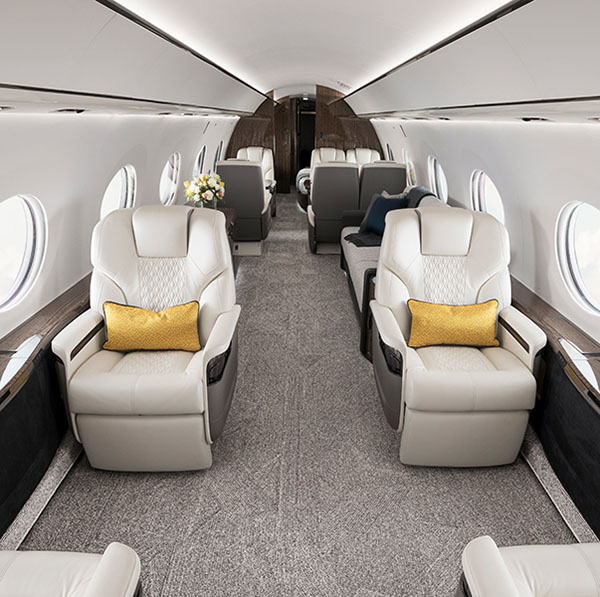
Airbus ACJ TwoTwenty private jet main lounge with dining table, executive seating, wide cabin aisle and integrated ceiling lighting
Private Aviation / Dubai Mission · Cabin Zoning · Certified Materials · Coordination

Start With the Aircraft, Registry and Dubai Work Scope

What are you actually asking the cabin to do—and what is the aircraft approved to change?

A Dubai aircraft-interior project can be anything from replacing carpet and leather during scheduled maintenance to redesigning seats, monuments, connectivity, lighting and multiple living zones. Those are different programmes. Before we discuss a mood board, we need the aircraft model, existing approved layout, registry, maintenance / completion location, typical mission, passenger profile, desired changes and target redelivery date.

01

You are bringing a pre-owned jet to Dubai and want the cabin to feel current

We separate high-impact cosmetic work from certification-heavy change. New leather, carpet, sidewall finishes, plating, selected veneer refinishing and soft goods can transform the cabin while preserving more of the approved geometry. This can be especially valuable when the aircraft is already coming to DWC or DXB for scheduled maintenance.

02

You want one Dubai visit to combine maintenance and cabin refurbishment

That can reduce repeated downtime when the MRO slot, engineering and material lead times are planned together. Dubai providers have documented heavy-maintenance visits paired with cabin refurbishment, including Global 6000 and Legacy 650 programmes. We develop the design package early enough for the approved technical teams to review it before the aircraft enters the hangar.

03

You want a residential or yacht-like cabin without residential weight

We translate the atmosphere rather than importing residential construction literally. Bouclé-like texture, deep veneer, stone appearance, layered carpet, concealed storage and warm lighting can be developed through lightweight aviation-suitable constructions and approved materials chosen with the completion team.

04

You need work, dining, sleep and privacy in one long-range mission

Large-cabin and ultra-long-range aircraft can support several living zones. Gulfstream's G700 is offered with up to five living areas; Airbus positions the ACJ TwoTwenty around six zones. We use that kind of mission logic—work, lounge, dining, private suite, galley and crew functions—while keeping the actual design tied to your specific certified airframe.

05

You want a Middle East owner profile reflected without turning the cabin into a theme

Where relevant to the owner, the brief can include majlis-style social seating, family privacy, discreet prayer-space planning, rich but controlled materials, formal dining and hospitality details. These preferences still sit inside the aircraft's approved seating, restraint, egress, weight and systems constraints.

06

You are considering major seat, partition, monument or system changes

That is no longer a purely decorative project. GCAA CAR 21 treats changes to type design through approved change / STC processes, and the applicable design organisation determines the certification basis and substantiation. Bella develops the design intent; the authorised aviation parties own the engineering approval and airworthiness release.

Why Dubai Is Different for Private Jet Interior Projects

Dubai gives owners a growing aviation ecosystem—but design, MRO and certification roles still have to stay clearly separated.

The strongest project team is not one company pretending to do everything. It is a coordinated chain in which the owner, interior designer, approved engineering organisation, MRO / completion centre, seat and monument specialists, material suppliers and operator each know what they are responsible for.

01

1. Dubai South / MBRAH aviation ecosystem

Mohammed Bin Rashid Aerospace Hub at Dubai South is a dedicated aerospace platform beside Al Maktoum International Airport. It hosts private-jet companies, MROs, maintenance centres and supply-chain facilities, making DWC a logical coordination point for aircraft already based in or visiting the region.

  • DWC
  • MBRAH
  • VIP Terminal
  • MRO facilities
  • Aerospace supply chain
02

2. DXB remains relevant for refurbishment

Jet Aviation documented its first full business-jet cabin refurbishment at its Dubai DXB facility in 2023, involving complete interior removal, cabinetry, bulkheads, side ledges, tables, wardrobes, galley and soft goods. That gives owners more than one Dubai aviation node to consider depending on aircraft, operator and MRO capability.

  • DXB
  • Business jet MRO
  • Cabinetry
  • Soft goods
  • Redelivery
03

3. Mission profile before visual style

Two-hour GCC sectors, overnight Europe missions and ultra-long-range intercontinental flights create different cabin priorities. Passenger count, crew use, work, dining, sleep, baggage and charter / resale strategy all shape which zones deserve the most space and budget.

  • Typical sector
  • Passenger count
  • Work
  • Dining
  • Sleep
04

4. Certification basis before layout change

Registry, state of design, existing STCs, approved configuration and the nature of the proposed change determine the engineering route. A seat re-cover can be very different from moving certified seats, changing monuments or adding a new connectivity system.

  • Registry
  • TC / STC
  • DOA / engineering
  • Approved data
  • Authority acceptance
05

5. Weight, balance and range

Every material and system has a mass consequence. The design should deliver visual richness with controlled construction depth, lightweight substrates and deliberate hardware rather than treating the cabin like a villa where weight is mostly a cost issue.

  • Material mass
  • Monuments
  • Seats
  • Systems
  • Weight & balance
06

6. Cabin systems are part of the interior

CMS, IFE, Wi-Fi, shades, lighting, power, seat controls, displays, galley equipment and environmental systems all affect the user experience. If technology is considered late, it tends to appear as visible retrofit clutter or trigger avoidable engineering change.

  • CMS
  • IFE
  • Connectivity
  • Lighting
  • Power
07

7. Maintenance slot and lead time are design constraints

A beautiful package that is approved after the hangar slot starts is already late. Leather, carpet, veneer, plating, seat foam, testing, engineering data and specialist parts can have different lead times. We front-load owner approvals so the MRO can plan the installation sequence.

  • MRO slot
  • Samples
  • Engineering
  • Procurement
  • Downtime

Aircraft Types & Cabin Programmes

Private jet interior design in Dubai changes dramatically with the airframe and mission.

We do not sell one 'luxury jet package'. The cabin width, length, seat tracks, exit geometry, existing monuments, certification basis and mission determine what can be proposed. The examples below describe design logic—not permission to alter a specific aircraft.

Compact private business jet cabin with tan leather executive seats, wood-finish side ledges and narrow central aisle
Aircraft / 01

Light & Midsize Jet Cabin Refresh

For aircraft such as Citation, Phenom, Learjet and comparable cabins, the design challenge is density. Club seating, compact tables, galley, storage and lavatory all compete within a narrow fuselage. A successful refresh uses fewer material transitions, controlled stitching, efficient side ledges and strong seat / carpet coordination to make the cabin feel wider without stealing aisle space.

Seat upholsteryCarpetSidewall / headlinerCompact storageVisual width
Private aircraft club seating around a polished table beside large windows with integrated cupholders and side ledges
Aircraft / 02

Super-Midsize Executive Jet

Praetor, Challenger and comparable super-midsize aircraft can support a more residential seating rhythm while remaining highly space-sensitive. We focus on club groups, divan relationships, conference / work surfaces, credenza storage, lighting and a coherent finish line from forward galley to aft lavatory.

Club seatingDivanConference / workCredenzaLighting scenes
Gulfstream G700 large-cabin interior with multiple cream leather seats, wood bulkheads, panoramic windows and long central aisle
Aircraft / 03

Large-Cabin & Ultra-Long-Range Jet

Gulfstream, Global, Falcon and comparable long-range aircraft allow real zoning: executive club, lounge, conference / dining, sleep and private areas can be developed as a sequence rather than one repeated seat layout. Gulfstream's G700, for example, is offered with up to five living areas, which shows why the interior brief becomes a spatial-planning exercise rather than a simple upholstery choice.

Multi-zone planningDining / conferencePrivate suiteLong-haul comfortConnectivity
Airbus ACJ TwoTwenty wide VIP cabin with dining table, lounge seating, broad aisle and layered ceiling lighting
Aircraft / 04

ACJ / BBJ & VIP Airliner Interior

Corporate airliners operate at another scale. Airbus describes the ACJ TwoTwenty around 73 m² of cabin floor space split into six zones, allowing business lounge, main lounge, cinema / private lounge, bedroom and en-suite functions. The design opportunity is closer to hospitality—but every wall, monument, system and material still belongs to a certified aircraft.

Reception / loungeFormal diningPrivate suiteCrew / serviceMulti-zone privacy
ExecuJet MRO Services Middle East aircraft maintenance hangar at Al Maktoum International Airport in Dubai with multiple business jets undergoing work
Aircraft / 05

Pre-Owned Cabin Refurbishment in Dubai

A pre-owned jet may not need a new layout to feel new. Dubai refurbishment programmes have documented re-varnished cabinetry, replacement carpet, re-covered sidewalls / ceilings, replated metallic parts and redesigned seat upholstery. We create a coordinated palette so the investment looks intentional rather than like a collection of replaced parts.

Retain what worksSeats + carpetVeneer / platingSidewalls + ceilingResale awareness
Luxury Gulfstream private jet passenger seat beside panoramic oval window with integrated side ledge and refined wood trim
Aircraft / 06

Owner Fleet / Charter Cabin Harmonisation

Owners or operators with several aircraft may want one recognisable design language without forcing identical layouts. We can align leather tone, stitching, carpet geometry, veneer family, plated hardware, lighting temperature, soft goods and branded details while each aircraft keeps its own approved configuration and maintenance strategy.

Fleet identityRepeatable finishesSpare materialsCharter durabilityResale flexibility

Aircraft Interior Design Scope in Dubai

Bella leads the design intent; approved aviation organisations make the aircraft legally and technically airworthy.

That boundary matters. We can develop the owner brief, cabin zoning, materials, renderings and visual details, then work with the appointed technical chain. We do not represent ordinary interior-design drawings as approved aircraft engineering.

01

Aircraft + owner mission brief

Define why the cabin is being changed before defining how it should look.

  • Aircraft make / model / serial
  • Registry and operator
  • Existing approved cabin layout
  • Typical passenger count
  • Typical flight duration
  • Corporate / family / charter use
  • Work / meeting needs
  • Dining and catering expectations
  • Sleep / privacy requirements
  • Baggage / wardrobe needs
  • Resale / fleet strategy
  • Target maintenance / redelivery slot
02

Dubai project and MRO strategy

Coordinate the design around where the aircraft will actually be worked on.

  • DWC / Al Maktoum International Airport
  • Mohammed Bin Rashid Aerospace Hub
  • DXB / Dubai International Airport
  • MRO / completion-centre capability
  • Hangar slot timing
  • Local material / specialist availability
  • Imported material lead times
  • Owner review / mock-up location
  • Aircraft access and photography rules
  • Coordination with operator / CAMO / technical representative
03

Cabin zoning + layout design intent

Use the approved geometry intelligently before proposing structural change.

  • Executive club seating
  • Majlis-style social zone where appropriate
  • Conference / dining
  • Divan / relaxation
  • Private suite / sleep zone
  • Crew rest interface
  • Galley
  • Lavatory
  • Credenza / media
  • Wardrobe / storage
  • Privacy partition concepts
  • Prayer-space flexibility where required
04

Colour + aviation-material direction

Candidate finishes are chosen for visual effect and later technical qualification.

  • Leather / technical upholstery
  • Carpet
  • Veneer / decorative face
  • Technical laminates
  • Decorative plating
  • Lightweight stone / stone-look surfaces
  • Solid-surface concepts
  • Headliner / sidewall textiles
  • Curtains / soft goods
  • Stitching / quilting
  • Brand / crest details
  • Owner-supplied art concepts
05

Cabin furniture + monument design intent

Built elements are developed as aircraft products, not villa joinery.

  • Credenzas
  • Side ledges
  • Conference / dining tables
  • Media units
  • Wardrobes
  • Galley fronts
  • Lavatory vanity
  • Display / art integration
  • Storage
  • Partition-door appearance
  • Latches / hardware finish
  • Concealed-function concepts
06

Lighting + CMS / IFE user experience

The visual layer should work with the approved systems architecture.

  • Ambient scenes
  • Reading-light intent
  • Night / sleep mode
  • Accent lighting
  • Window-shade interaction
  • CMS screen hierarchy
  • IFE display integration
  • Connectivity touchpoints
  • Charging locations
  • Technology concealment
  • Conference / video-call use
  • Cabin branding / welcome scene
07

Owner visualization + approval package

Use visuals to decide before expensive fabrication begins.

  • Mood boards
  • Material boards
  • Zone-by-zone palettes
  • Cabin elevations
  • 3D renders
  • Day / night lighting views
  • Seat stitching studies
  • Carpet artwork
  • Veneer / plating combinations
  • Galley / lavatory visual studies
  • Full-scale mock-up review where commissioned
  • Owner presentation deck
08

Completion / MRO design coordination

Keep the approved engineering and the approved look aligned through production.

  • Design Organisation interface
  • OEM / completion-centre interface
  • MRO coordination
  • Seat manufacturer coordination
  • Material substitution review
  • Weight-conscious value engineering
  • Certification-driven design revision
  • Production sample review
  • Cabin aesthetic inspection
  • Cosmetic punch list
  • Final finish record
  • Spare material schedule

Bella's interior-design appointment does not itself approve an aircraft modification for flight. Structural substantiation, seat / restraint certification, flammability compliance, systems engineering, weight-and-balance revision, approved data, STC / minor-change approval, manufacture, installation and return-to-service must be completed by the appropriately approved aviation organisations for the aircraft and registry.

Private Jet Interior Design Process Dubai

Design the cabin before the aircraft starts consuming hangar days.

The design process should run ahead of the MRO slot so the owner is not choosing carpet while engineers wait. We organise decisions in a sequence that lets the approved aviation team review the concept early.

01

Aircraft, registry + Dubai work plan

We review airframe, current layout, registry, operator, existing approvals, proposed Dubai facility, maintenance timing, passenger mission, desired change and redelivery target.

Output: project brief + responsibility map
02

Existing cabin survey + technical baseline

Cabin photos, measurements / approved drawings, seats, monuments, systems, material condition and known modification records are reviewed with the owner's technical team.

Output: retain / refresh / change matrix
03

Zoning + concept options

We develop cabin experience, visual language, living-zone priorities, materials, lighting intent and owner-use scenarios while the approved engineering team flags certification implications.

Output: preferred design concept
04

Material + sample development

Leather, carpet, veneer, plating, sidewall / headliner concepts and lightweight surface options are narrowed through physical samples, appearance review, weight awareness and the applicable technical qualification route.

Output: owner-approved finish package
05

Engineering + certification integration

The authorised design organisation / OEM / MRO develops or validates the necessary approved drawings, substantiation and compliance data. Bella revises design intent where engineering, egress, systems, mass or testing require change.

Output: certification-coordinated design
06

Production + Dubai installation coordination

Samples, seat upholstery, carpet, veneer / cabinetry work, plating, soft goods and approved hardware are reviewed through production milestones while the completion / MRO team controls manufacture and installation.

Output: production-aligned interior package
07

Cabin aesthetic inspection + redelivery

We review colour consistency, stitching, grain / veneer alignment, carpet direction, hardware finish, lighting scenes and cosmetic snags while the approved aviation parties complete conformity, testing, records and return-to-service.

Output: design close-out + owner handover

Aircraft Cabin Design Is a Certified Technical Environment

A private jet interior can look residential; it cannot be engineered like a residence.

For UAE-registered aircraft, GCAA CAR 21 provides the framework for changes to type design and supplemental type certificates. The GCAA also relies on accepted state-of-design systems such as FAA, EASA and Transport Canada depending on aircraft type. The exact rules and approval path are determined by the approved aviation organisations—not by the mood board.

Gulfstream G700 galley with integrated dark-wood monuments, aircraft appliances, narrow aisle and controlled task lighting
01

GCAA CAR 21 governs approved aircraft changes

For UAE-registered aircraft, changes and repairs require the applicable GCAA or approved design-organisation route. GCAA guidance specifically lists a change to seating configuration as an example requiring design assessment. That means moving a seat is not comparable to moving a sofa.

02

The aircraft's state of design still matters

GCAA guidance explains that UAE type acceptance relies on accepted state-of-design certification systems—for example FAA for many US-designed aircraft, EASA for Airbus / Dassault, and Transport Canada for Bombardier. The technical team must identify which approved data and authority route apply to your airframe.

03

Cabin materials and decorative surfaces have compliance requirements

EASA CS 25.853 requires applicable cabin materials, including finishes and decorative surfaces, to meet defined test criteria. This is why a residential fabric, foam, adhesive, lacquer or stone build-up cannot simply be installed because it looks suitable.

04

Do not apply a universal '16G' claim to every old aircraft seat

Modern transport-category seat certification can involve dynamic 16 g forward test conditions, but the exact requirement depends on certification basis and seat approval. The FAA notes that older aircraft can retain earlier-approved seat standards. The approved seat / engineering team therefore decides what applies to a specific aircraft.

05

Weight and balance are interior-design constraints

Heavy stone, thick solid wood, oversized hardware and unnecessary layers can reduce payload or range and create engineering issues. We pursue perceived richness through thin veneer, lightweight substrates, carefully selected hardware and controlled surface build-ups.

06

Curved fuselage geometry changes furniture design

Cabin width is not a rectangular room width. Sidewalls curve inward, windows and systems occupy side-ledges, and the aisle must remain functional. Credenzas, divans, tables and storage need airframe-specific geometry rather than residential furniture dimensions.

07

Galleys are systems-heavy monuments

A galley combines food preparation, appliances, electrical loads, potable water, waste, latches and storage. Bella can design the visible language and workflow intent, while the approved completion team determines equipment, structure, systems and certification.

08

Lavatories and showers create major technical scope

Water, drainage, moisture, floor loading, ventilation, privacy and weight make a shower or large VIP lavatory more than a decorative request. On suitable aircraft it can be achieved, but only through the approved aircraft design and completion route.

09

Cabin management and connectivity change the architecture

Screens, antennas, routers, audio, lighting, shades, touch interfaces, charging and controls create wiring, power, software and cooling requirements. Decide the user experience early so the hardware can be integrated instead of added visibly later.

10

Maintenance access must survive the redesign

Beautiful panels are not useful if technicians have to damage them to reach approved equipment. We coordinate access-panel locations, removable trim, wear items and replaceable soft goods with the MRO so the cabin remains maintainable.

11

A 20-year-old aircraft is evaluated by condition and airworthiness—not age alone

Older aircraft can remain safely operable when properly maintained and compliant. GCAA continuing-airworthiness guidance considers maintenance history, life-limited components, airworthiness directives, modification / repair status, weight-and-balance records and cabin configuration among the information reviewed. A pre-buy and records review matter more than the birthday alone.

Dubai / UAE Aircraft Interior Approval Route

The design only becomes an aircraft interior when the approved aviation chain accepts and installs it.

For a UAE-registered aircraft, the GCAA is the federal civil-aviation authority. CAR 21 covers certification of aircraft and changes to type design; GCAA guidance states that changes / repairs on UAE-registered aircraft require approval from the GCAA or a UAE design organisation authorised for the relevant approval.

Foreign-registered aircraft undergoing work in Dubai can have a different approval chain because the state of registry, state of design, OEM data, STCs and the MRO's approvals all matter. The owner / operator's technical representative should confirm that route before cabin work is contracted.

Dubai has real local capability. ExecuJet MRO Services Middle East documented a full Embraer Legacy 650 cabin refurbishment in September 2026 at its DWC operation, including cabinetry re-varnish, carpet, dado / overhead / sidewall / ceiling coverings, replating and redesigned seat upholstery. It states the seat redesign was coordinated with Embraer and the seat manufacturer for regulator compliance.

Jet Aviation's Dubai DXB facility documented a full Gulfstream G450 cabin refurbishment involving complete interior removal, restored cabinetry and monuments, new seat foam / leather and full reinstallation. This shows that owners can coordinate significant refurbishment in Dubai, but capability must still be checked against the exact aircraft type and work scope.

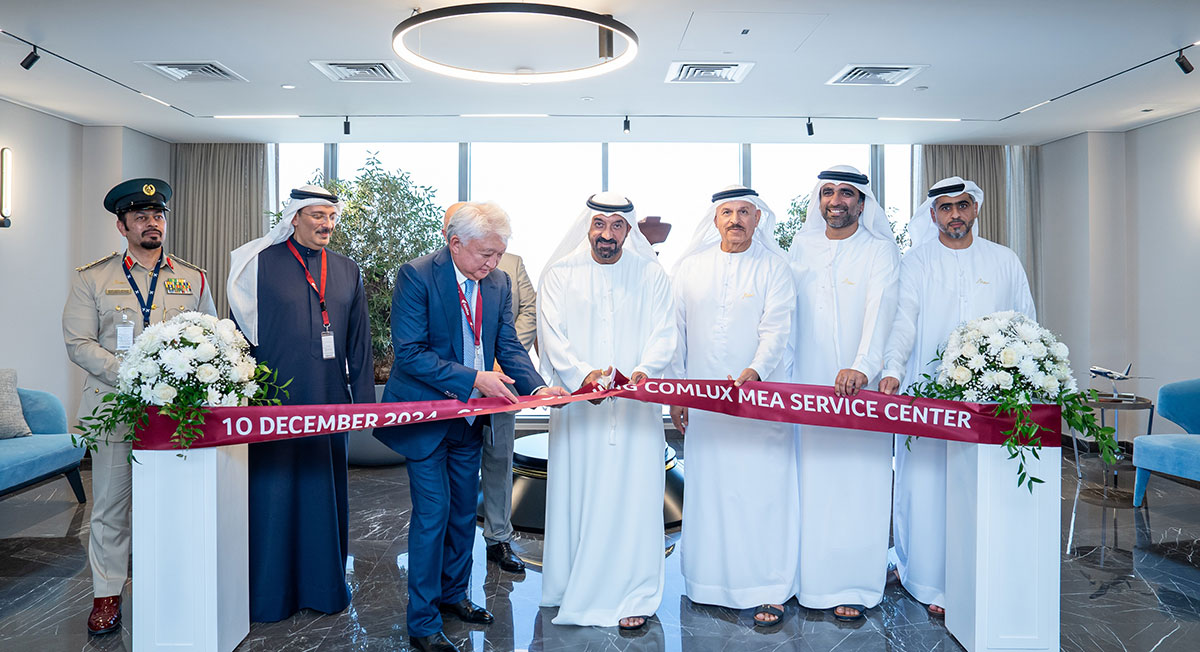
At Dubai South, MBRAH has expanded the aviation supply-chain and maintenance ecosystem, and a 20,000 m² Comlux facility opened in the VIP Terminal aircraft-maintenance area at DWC. The local ecosystem can support project logistics; it does not remove the need for the correct approved design and maintenance organisations.

Bella is the interior-design and owner-experience side of that chain. We can coordinate concepts, materials, visuals and design reviews with the appointed technical organisations, but we do not independently issue aircraft airworthiness approvals or release an aircraft to service.

  • Confirm aircraft make, model, serial number and registry
  • Confirm current approved cabin layout and modification status
  • Identify the state of design and applicable accepted certification basis
  • Appoint / confirm the approved Design Organisation or engineering approval route
  • Confirm MRO / completion-centre approval for the aircraft and work scope
  • Classify the requested work as repair, cosmetic refurbishment or design change
  • Confirm seat / divan approval before changing upholstery, foam or geometry
  • Confirm material test / flammability documentation requirements
  • Track material, monument and equipment mass through the responsible organisation
  • Confirm CMS / IFE / connectivity / electrical interfaces
  • Preserve approved egress, safety equipment, signs and access
  • Review production samples against approved specification
  • Complete conformity, testing and technical records
  • Update weight-and-balance / equipment records where required
  • Return the aircraft to service only through the authorised aviation process
Read the current UAE GCAA — CAR 21 Certification of Aircraft
Gulfstream G700 private suite with light upholstered bed, dark wood veneer, neutral sidewalls, integrated lighting and panoramic windows

Private Jet Colours, Materials & Luxury Detail

The palette has to read as luxury in bright daylight, night mode and a curved, tightly controlled cabin.

The hex values below are design references, not certified aviation paint or material codes. Final colours must be approved on physical samples because daylight at altitude, warm cabin LEDs, veneer gloss and surrounding textiles change how a colour is perceived.

Every specified leather, textile, carpet, veneer finish, adhesive, foam, coating or surface build-up remains subject to the aircraft's approved material and test route. A material being flame-retardant in an architectural catalogue does not automatically make it approved for a particular aircraft installation.

For resale-sensitive aircraft, the most durable strategy is often a calm architectural base with personality concentrated in replaceable elements—carpet artwork, cushions, stitching, plating and soft goods—rather than irreversible theme-driven monuments.

Modern Desert — Desert Sand #E6D7C3 · Warm Mink #8C7A6B · Smoked Walnut #3E302A · Champagne Accent #C7A36ACorporate Executive — Midnight Navy #1B2A47 · Aviation Grey #B2B4B6 · Crisp Alabaster #F4F6F0 · Dark Walnut #352A24Classic Heritage — Burnt Walnut #3E2723 · Saddle Tan #A0522D · Ecru Cream #F5F2EB · Antique Bronze #8A6A45Stealth Sport — Carbon Matte #2B2B2B · Cool Platinum #E1E4E6 · Graphite #4E5357 · Crimson Accent #990000Upholstery — aviation-qualified leather, technical leather or textile selected around seat approval, wear, cleanability and the applicable compliance routeCarpet — custom wool / wool-blend or other approved constructions designed around aisle scale, pattern repeat, weight, edge finishing and cleaningVeneer — thin natural or engineered decorative face on lightweight aviation construction rather than heavy solid residential cabinetryPlating — nickel, chrome, bronze, champagne, gold-tone, gunmetal or other approved decorative systems coordinated with substrate and component approvalStone appearance — thin stone, lightweight backed stone, approved engineered surfaces or simulated finishes rather than full residential slab thicknessHeadliner / sidewalls — light-coloured approved materials can increase perceived cabin width and brightness while deeper lower-sidewall tones visually ground the cabinSoft goods — pillows, blankets, curtains and bedding developed around appearance, storage and the operator's approved cabin proceduresConcealed details — flush latches, pocketed controls, pop-up screens and hidden charging can simplify the visual field when the approved hardware and systems allow it

Private Jet Interior Cost Dubai & Downtime

How much does a private jet interior cost in Dubai?

There is no meaningful single price per square foot for an aircraft cabin because the same visible finish can carry very different engineering, certification and installation scope. The external benchmarks below use USD/AED 3.6725 for planning conversion and are not Bella quotations. They are best used to understand order of magnitude before an MRO / completion-centre proposal is issued.

External large-cabin refurbishment benchmarks

Budget references before you ask for a Dubai aircraft-interior quotation

  • Seat re-covering: Guardian Jet's large-cabin / ultra-long-range refurbishment guide estimates about USD 200,000 for new leather on the cabin seats — approximately AED 734,500.
  • Carpet replacement: the same guide estimates roughly USD 40,000–90,000 — approximately AED 146,900–330,500.
  • Woodwork refinishing: Guardian Jet gives roughly USD 300,000–500,000 — approximately AED 1.10–1.84 million.
  • Broader 2026 programme context: an aviation design / project-oversight specialist writing for GlobalAir says full interior + exterior refurbishments she works on commonly average around USD 1.5–6 million — approximately AED 5.51–22.04 million. This includes exterior work and is not an interior-only rate.
  • New VIP / VVIP completions, major monument changes, showers, extensive systems or bespoke corporate-airliner cabins can exceed these figures materially. They should be priced against the exact airframe and approved completion scope rather than a generic internet range.
  • Bella's design fee is quoted separately after review of airframe, existing configuration, registry, number of cabin zones, 3D / mock-up requirement, sample development, travel, MRO coordination, certification-driven design revisions and expected project duration.
  • Do not assume ordinary Dubai residential design rates apply to aircraft. A villa can be priced by floor area; an aircraft cabin is governed by approved components, engineering interfaces and downtime.
Programme and downtime

The fastest aircraft refurbishment is the one designed before the maintenance visit starts

  • Guardian Jet cites roughly 6–10 weeks for a large-aircraft soft-goods refurbishment and around 14–16 weeks of downtime for a complete refurbishment as industry benchmarks.
  • Current 2026 market commentary also warns that completion-centre slot availability can create months of waiting before the aircraft even enters the hangar.
  • Combining refurbishment with a planned heavy-maintenance event can make efficient use of downtime, but only when materials, seat work, engineering and approved data are ready.
  • Custom carpet, leather, veneer, plating and specialist hardware have separate production lead times.
  • Seat redesign / reupholstery can require coordination with the seat manufacturer and approved technical organisations.
  • New connectivity, CMS, antennas, electrical equipment or monument changes can extend engineering and certification time.
  • Maintenance findings discovered after cabin removal can affect both programme and budget.
  • Owner approval delays are expensive when they occur after the aircraft occupies an MRO slot.

For a meaningful first review, send the aircraft model / serial, registry, current layout and photographs, typical passenger mission, requested changes, appointed MRO / completion centre, scheduled Dubai maintenance slot and target redelivery. Tax treatment, customs and import / export treatment should be confirmed with the contracting parties and qualified UAE tax / aviation advisers for the specific transaction.

Private Jet Interior Design Dubai — FAQs

Questions aircraft owners ask before committing to a cabin refurbishment or design programme in Dubai.

Aircraft interiors are high-value and safety-regulated. Where a question is really about engineering, airworthiness or charter pricing rather than interior design, the answer below makes that distinction instead of forcing everything into a design sales pitch.

01How much does a private jet interior cost?

It depends on whether you mean soft goods, a complete refurbishment or a new VIP completion. Guardian Jet gives large-cabin benchmarks of about USD 200,000 for seat leather, USD 40,000–90,000 for carpet and USD 300,000–500,000 for wood refinishing. At AED 3.6725/USD, that is roughly AED 734,500; AED 146,900–330,500; and AED 1.10–1.84 million respectively. Current 2026 industry commentary places full interior + exterior programmes around USD 1.5–6 million on average for projects handled by one specialist, or roughly AED 5.51–22.04 million. VVIP programmes can be much higher.

02How much does an interior designer charge in Dubai?

For normal residential / commercial Dubai interiors, current 2026 design-only guidance commonly uses roughly AED 15–35 per sq ft for concept and layout, AED 35–80 per sq ft for a full technical package and AED 80–150+ per sq ft with procurement / supervision. Aircraft design should not be priced from those building rates because certification, approved components, airframe geometry and MRO coordination dominate the scope. Bella quotes aircraft design after reviewing the specific airframe and programme.

03How much do private jet interior designers make?

That is a career-compensation question rather than a project-price question, and there is no single reliable Dubai salary figure that applies to independent designers, OEM studios, completion centres and MRO employees. Compensation varies by seniority, employer, aviation experience and whether the role includes project management or technical coordination. If you are budgeting an aircraft project, ask for the actual design fee and deliverables rather than inferring them from a designer's salary.

04Who designs aircraft interiors?

The creative work can involve specialist aviation interior designers, OEM design studios, independent luxury designers and owner representatives. The certified solution also needs approved aviation engineers / Design Organisations, seat and monument specialists, suppliers and an appropriately approved MRO or completion centre. Bella can lead the owner-facing aesthetic and spatial brief; the authorised aviation organisations are responsible for approved engineering and return to service.

05Is a 20 year old private jet safe?

Age alone does not determine airworthiness. A 20-year-old aircraft can remain serviceable when it is properly maintained and compliant, while a newer aircraft can still have unacceptable findings. GCAA continuing-airworthiness guidance considers maintenance history, life-limited parts, airworthiness directives, modification / repair status, weight-and-balance records and cabin configuration. Use a qualified aviation technical adviser and pre-buy inspection for a specific aircraft.

06How much is a 2 hour private jet flight?

2026 charter-market data from Paramount Business Jets gives hourly aircraft rates of about USD 3,750–4,200 for light jets, USD 4,700–5,500 for midsize, USD 8,500–10,000 for large and USD 12,000–17,000 for ultra-long-range jets. Two flight hours therefore correspond roughly to AED 27,500–30,800, AED 34,500–40,400, AED 62,400–73,450 or AED 88,100–124,900 in aircraft-time rates. Actual trip quotes can be higher because positioning, landing, handling, crew and taxes / fees vary.

07What are the top 10 interior design companies in Dubai?

There is no official Dubai-government top-10 ranking, and general interior-design lists are not a good way to choose an aircraft cabin team. For private aviation, shortlist designers and facilities based on business-jet portfolio, the exact aircraft type, approved engineering / MRO relationships, material and seat capability, certification route, project management and recent owner references. A strong villa portfolio alone does not prove aircraft capability.

08What is the 70/30 rule in aircraft interior design?

The 70/30 rule is an informal visual-balance idea, not an aviation standard. You might use roughly 70% calm architectural base—headliner, sidewalls, carpet field and primary leather—and 30% contrasting veneer, secondary upholstery, stitching, plating or accent colour. Certification and weight always take priority over the styling ratio.

09Is AI replacing aircraft interior designers?

AI can speed early visualization, option generation, image references and documentation, but it does not replace the owner brief, physical sample judgment, airframe-specific spatial decisions or the approved engineering / certification chain. In aviation, human responsibility is especially important because an attractive AI render has no authority to approve a seat, material, monument or aircraft modification.

10Can Bella redesign the seating layout of my private jet?

Bella can develop seating-zone and owner-experience concepts, but moving or changing certified seating is an aviation engineering and approval matter. GCAA CAR 21 guidance lists seating-configuration changes among examples requiring design assessment. The appointed approved Design Organisation / OEM / STC holder must determine whether and how the change can be approved.

11Can I use normal luxury leather, fabric or marble in a private jet?

Not simply because it is high quality. The installed construction must satisfy the applicable aircraft material, flammability, attachment, weight and durability requirements. A residential marble slab may become a thin lightweight stone system; a residential fabric may need an aviation-qualified construction or may be unsuitable. Final approval belongs to the technical / completion team.

12What does a full cabin refurbishment in Dubai include?

The scope can include seat foam / leather, carpet, sidewalls, headliner, dado panels, veneer or cabinetry refinishing, plating, galley / lavatory surfaces, lighting and selected technology. ExecuJet's September 2026 Dubai Legacy 650 project documented cabinetry re-varnish, carpet replacement, new panel / ceiling coverings, replated metallic parts and redesigned / reupholstered seats.

13How long does a private jet cabin refurbishment take?

Guardian Jet cites roughly 6–10 weeks for a large-aircraft soft-goods refurbishment and around 14–16 weeks for a complete refurbishment as industry benchmarks. Engineering, material testing, seat work, connectivity, paint, maintenance findings and MRO slot availability can extend the overall programme.

14Can my aircraft interior be refurbished at DWC / Dubai South?

Dubai South's MBRAH hosts business-aviation and MRO infrastructure, including the VIP Terminal aircraft-maintenance area. ExecuJet operates a purpose-built DWC MRO and Dubai South has opened a 20,000 m² Comlux facility at MBRAH. Whether your exact aircraft and scope can be accepted depends on the facility's approvals, capability and available slot.

15Can a private jet cabin be refurbished at DXB?

Yes, depending on aircraft and provider capability. Jet Aviation documented a full Gulfstream G450 cabin refurbishment at its Dubai DXB facility in 2023. Always confirm current approvals, aircraft-type capability and slot availability before planning the design programme around a particular facility.

16Can you create a majlis-style private jet cabin?

We can develop a hospitality-led social zone inspired by majlis principles—face-to-face interaction, formal welcome, material richness and privacy—where the aircraft's certified seating and restraint arrangement allows it. We do not treat a residential majlis sofa as an aircraft seat; the approved seating and engineering solution comes first.

17Should I refurbish an older jet before selling it?

That depends on aircraft value, cabin condition, buyer expectations and how long you plan to keep flying it. Current 2026 aviation-market commentary notes that a documented professional refurbishment can strengthen the presentation and market position of an aging large-cabin jet, but not every dollar of customization is recovered. Neutral, high-quality and maintainable updates are generally easier to resell than extremely personal permanent modifications.

18What should I send Bella for a Dubai private jet interior quotation?

Send the aircraft make / model, serial or tail information if appropriate, registry, current cabin layout and photographs, typical passenger mission, the changes you want, current maintenance status, appointed MRO / completion centre if any, planned Dubai hangar slot, target redelivery and whether you need a cosmetic refresh, design-only concept, multi-zone redesign or completion-centre coordination.

Start Your Dubai Aircraft Interior Brief

Tell us the aircraft and mission before you tell us the leather colour.

Share the aircraft make / model, registry, current cabin photos and layout, typical passenger count, mission length, desired changes and target redelivery. If the aircraft is coming to DWC / Dubai South or DXB for maintenance, tell us the proposed facility and slot.

If you want to move seats, add a partition, modify monuments, change connectivity / CMS, alter the galley or add major water / lavatory features, flag that immediately. Those requests can materially change engineering, certification, weight, procurement and downtime.