Old + New, Bold + Quiet, Connected by a Clear Point of View

Eclectic Interior Design

Eclectic interior design combines furniture, art, colour, materials and references from different periods into one deliberate composition. Bella uses the style to create Abu Dhabi interiors that feel collected and personal rather than matched from one showroom—mixing vintage and contemporary pieces, strong artwork, pattern and custom elements while controlling scale, repetition, storage and circulation so the result feels layered, not chaotic.

Your eclectic interior can be quiet and gallery-like, colourful and maximalist, vintage-led, contemporary-classic or art-driven. We begin by identifying the pieces, colours or stories that matter to you, then build a visual system around them so contrast feels intentional from room to room.

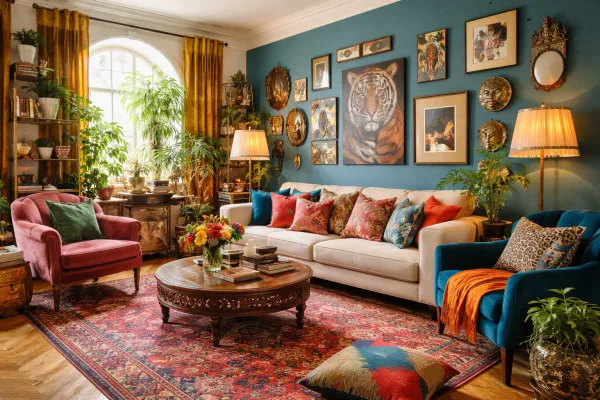
Eclectic living room with neutral sofa, vintage carved table, Persian-style rug, mixed chairs, plants and layered art
10 curated, mixed-era style direction

What Eclectic Interior Design Really Means

Eclectic design is not “anything goes”; it is the skill of making different things belong together.

Eclectic interior design deliberately combines different design periods, furniture languages, colours, patterns and materials while maintaining visual relationships between them. A vintage armchair can sit beside a contemporary sofa, a traditional rug can ground modern artwork, and an antique console can work beneath a sculptural light when scale, colour, proportion and repetition connect the pieces. Bella uses that method to create interiors with history and personality without sacrificing layout, function or long-term cohesion.

The style is often confused with bohemian interior design. Both can feel layered and collected, but boho usually leans toward natural fibres, relaxed furniture, plants and global craft. Eclectic design is broader and can combine Art Deco lighting, Italian contemporary seating, classic joinery, a mid-century table and modern art in the same room. The mix is not defined by one material family; it is defined by the quality of the editing.

That editing is especially important in Abu Dhabi properties where the architecture may already be strong. A Saadiyat Island apartment with art and large glazing may need a quiet architectural base and a few important furniture pieces from different eras. An Al Maryah Island residence can take sharper contemporary furniture with one antique or vintage counterpoint. A Khalifa City villa can mix a formal majlis, contemporary family living and inherited furniture without making the whole house feel stylistically disconnected.

The Eclectic Design Logic

Six rules keep mixed eras and strong personalities visually connected.

Eclectic interiors can break stylistic rules, but they still need design rules. We create a framework first, then allow contrast inside it.

01

Repeat something across the differences

Colour, material, shape or proportion should recur across unrelated pieces. A burgundy artwork can connect to a vintage rug and a contemporary chair; black metal can repeat in lighting, frames and furniture legs.

02

Use one visual anchor per room

A major artwork, rug, sofa, table or architectural feature gives the eye a starting point. Supporting pieces can be more varied once the room has a clear hierarchy.

03

Mix eras, not dimensions

A 1950s chair and a new sofa can work together if their seat heights and visual weight are compatible. Eclectic style does not excuse poor furniture scale.

04

Contrast works better beside calm

Patterned rugs, gallery walls and coloured furniture need quieter surfaces around them. We use negative space so bold pieces remain legible instead of competing with one another.

05

Existing pieces become design inputs

Inherited furniture, art, books and travel objects can guide the new scheme. We measure, photograph and assess them early rather than treating them as accessories to place after the design is finished.

06

Editing is part of the service

Not every piece has to stay visible and not every idea needs to enter one room. We decide what belongs together, what should move elsewhere and what new piece is actually missing.

Eclectic Interior Design Directions

Choose whether your eclectic interior should feel gallery-like, vintage-rich, colourful or more classically grounded.

The style has no single visual formula. These directions show how the same mixed-era logic can create very different moods.

Gallery-like eclectic living room with mid-century chairs, artwork, indoor plants, multiple rugs and timber furniture
Art-Led + Calm

Gallery Eclectic Interior Design

Use a relatively quiet architectural background, sculptural furniture from different eras and strong art as the main source of character. This direction gives collected pieces room to breathe and works particularly well in view-led or premium apartments.

Vintage-modern eclectic office with antique timber desk, contemporary task chair, patterned rug and mixed framed art
Old + New

Vintage-Modern Eclectic Interior

Pair a contemporary sofa or lighting system with antique tables, vintage chairs, older rugs and collected art. The room feels grounded because not everything looks newly purchased.

Maximalist eclectic living room with green velvet sofa, abstract gallery wall, Persian-style rug and mixed vintage furniture
Colour + Pattern

Maximalist Eclectic Interior Design

Use stronger walls, layered rugs, pattern-on-pattern, gallery art and expressive upholstery, but repeat colour and shape deliberately. Maximalism works when every layer contributes to one composition rather than simply increasing quantity.

Collected eclectic bedroom with gallery wall, vintage furniture, books, patterned quilt and contemporary lighting
Heritage + Current

New-Traditional Eclectic Interior

Traditional architecture or furniture is combined with contemporary art, simplified upholstery, high-gloss colour or modern lighting. This direction works well when you want history and formality without recreating a period interior.

Eclectic Interior Design Layouts

Furniture can be from different eras, but the plan still needs one clear circulation and social logic.

We organise eclectic rooms spatially before styling them. Strong furniture placement is what allows unrelated objects to look intentionally collected instead of scattered.

One main focal pointCompatible furniture scaleClear circulationVisual breathing spaceArt and furniture considered together
01

Anchor-first living layout

Start with the main sofa, artwork, fireplace, view or rug, then arrange secondary pieces around that anchor. The furniture may differ stylistically but should still form a clear conversation zone.

02

Mixed seating with compatible ergonomics

A modern sofa, vintage lounge chair and classic occasional chair can sit together if seat height, depth and visual weight feel intentional. We test the group as a functional arrangement, not only as individual objects.

03

Gallery-wall sightline planning

Art should relate to furniture below it and to the distance from which it is viewed. We choose one main wall or sequence rather than scattering strong gallery compositions through every room.

04

Open-plan zones with different personalities

Living and dining can have different furniture periods while sharing one or two repeated colours, metals or timber tones. Rugs and lighting define each zone without making them feel unrelated.

05

Collected dining composition

Mixed chairs can work around one table when seat height and spacing are controlled. A contemporary pendant over a vintage or classic table is a simple way to create useful stylistic contrast.

06

Quiet transitions between expressive rooms

Hallways, entries and circulation zones can be simpler than the main rooms. These visual pauses help a more expressive eclectic home feel coherent rather than continuously intense.

Eclectic Interior Materials

Material contrast is welcome, but undertone and finish still need to connect.

Eclectic design lets us mix polished and rough, new and old, plain and patterned. We control the relationships so the room feels rich rather than mismatched.

Timber

Mix timber periods through undertone

Walnut, oak, teak and older dark woods can coexist when warm or cool undertones are considered. We do not force every timber to match, but we avoid accidental clashes.

  • Review pieces together
  • Repair vintage surfaces where needed
  • Protect sun-exposed timber
Stone

One strong stone can bridge old and new

Marble, travertine, terrazzo or quartzite can create an architectural anchor while furniture around it becomes more varied. A calm stone floor can also support stronger rugs and art.

  • Check maintenance
  • Control competing veining
  • Coordinate stone with rug and timber tones
Textile

Velvet, linen, wool and patterned fabric

Different textile families create depth. We repeat colours or motif scale so a velvet chair, linen sofa and patterned cushion group still feel connected.

  • Specify for cleaning and UV
  • Limit competing large-scale patterns
  • Use performance fabric on high-use pieces
Metal

Mixed metal can work when one finish leads

Brass, chrome, blackened steel and bronze do not have to match exactly. We normally make one finish dominant and allow another to appear as a secondary vintage or sculptural accent.

Wall Finish

Quiet envelope or statement colour—choose intentionally

A neutral architectural shell can support complex furniture and art, while a strong wall colour can connect otherwise different pieces. We choose based on how visually dense the furnishing layer will be.

Vintage & Found

Patina is useful when condition is acceptable

A worn edge, aged brass or old timber can add history, but damage, unstable construction or difficult maintenance should not be romanticised. We assess the piece before designing around it.

Eclectic Interior Design Colours

Eclectic colour works best when two or three tones repeat across unrelated objects.

These HEX values are digital references, not paint specifications. Current 2026 interiors are strongly embracing deeper brown, burgundy, green and layered vintage colour, which works naturally with eclectic design when balanced by calmer neutrals.

#F0E8DD

Gallery Cream

A calm base for rooms where furniture, art and rugs already carry significant colour.

#B7A89B

Mushroom Taupe

A neutral bridge between old timber, contemporary upholstery and stone.

#6A4A36

Chocolate Brown

A strong grounding tone for furniture, joinery, leather or painted cabinetry.

#314F3A

Gallery Green

A deep green for walls, velvet seating, shelving or art-led rooms.

#722F3F

Burgundy

A rich vintage-friendly accent for rugs, cushions, art or occasional furniture.

#345A73

Petrol Blue

A cool saturated contrast that works well beside brown, brass and timber.

#C56B42

Burnt Orange

A warm accent for vintage upholstery, ceramics or one expressive piece.

#B69457

Aged Brass

A metal-reference tone for lamps, frames and vintage hardware.

#232323

Ink Black

A visual line for frames, lighting and contemporary pieces that need to sharpen the mix.

Eclectic Design Room by Room

Every room can mix periods differently while the whole property still feels connected.

We use repeated colour, timber, metal or art language across the property rather than making every room look the same.

Living Room

The strongest room for mixing eras and furniture languages

A contemporary sofa can sit with vintage chairs, a traditional rug, modern art and a sculptural light. We control the furniture scale and repeat colour so the differences look intentional.

Dining

One table can connect mixed chairs, lighting and art

An antique or contemporary table can act as the anchor while chairs and lighting come from another period. Clearances and seat heights still need to work before the visual contrast matters.

Bedroom

Use fewer contrasts so the room still supports rest

A vintage bedside table, contemporary upholstered bed, patterned rug and personal artwork can create an eclectic bedroom without the visual density of the living room.

Kitchen

Architectural function first, eclectic character second

Cabinetry and workflow remain coherent while personality can enter through stone, lighting, bar stools, handles, colour or artwork. We avoid mixing so many finishes that the kitchen loses visual order.

Bathroom

A strong mirror, tile or vanity can carry the mix

Bathrooms benefit from restraint. One vintage-inspired mirror, contemporary vanity and patterned tile or unusual light can create an eclectic result while maintenance stays manageable.

Home Office

Collected objects around a serious work setup

An antique desk can work with an ergonomic contemporary chair, modern task light, gallery art and books. Power, data and storage should remain practical even when the furniture is mixed.

Eclectic Interior Design Across Abu Dhabi

Eclectic style should respond to the architecture and lifestyle of each Abu Dhabi property.

These examples show how the same mixed-era logic can be quieter in a premium apartment, more art-led on Saadiyat or broader and more layered in a family villa.

Saadiyat Island

Gallery eclectic with contemporary art and vintage design

A Saadiyat residence can use a calm stone-and-plaster background with a contemporary sofa, one or two twentieth-century vintage pieces, sculptural lighting and a strong art collection. The mix feels intentional because the architecture remains quiet.

Best suited to: premium apartments and villas where art and collectible design should lead.
Al Maryah Island

Urban eclectic with sharper contemporary anchors

An Al Maryah apartment can begin with tailored contemporary furniture, dark timber and polished stone, then introduce one antique console, vintage light or expressive artwork to stop the interior from feeling corporate.

Best suited to: executive apartments, premium residences and polished client-facing interiors.
Al Reem Island

Compact eclectic using art and smaller vintage pieces

In an Al Reem apartment, the mix should stay physically light. A contemporary sofa, vintage side chair, one patterned rug, gallery wall and wall-mounted storage can deliver character without sacrificing circulation or skyline views.

Best suited to: studios, one-to-three-bedroom apartments and view-led high-rise homes.
Yas Island

Family eclectic with durable anchors and changeable accents

A Yas home can use a durable neutral sofa and practical dining table as long-term anchors, then bring in vintage chairs, colourful artwork, rugs and collected accessories that can evolve as the household changes.

Best suited to: villas, townhouses and family apartments with active everyday use.
Al Raha Beach

Waterfront eclectic with lighter colour and global pieces

Pale walls, light upholstery and blue-green accents can keep the waterfront atmosphere open while a carved table, vintage rug, contemporary light and travel-collected objects add individuality.

Best suited to: waterfront apartments, duplexes and homes with large glazing.
Khalifa City

Villa-scale eclectic connecting formal and family rooms

A Khalifa City villa can keep the majlis more formal while family rooms mix contemporary seating, inherited furniture, books, art and vintage lighting. Repeating timber and colour across zones keeps the large house connected.

Best suited to: multi-bedroom villas, inherited furniture collections and phased renovation.
Al Bateen

Collected renovation using the property's existing history

An established Al Bateen home is ideal for eclectic design because good existing stone, parquet, doors or furniture can remain. New contemporary pieces can be layered around them rather than replacing everything simply because it is older.

Best suited to: established villas and apartments where selective renovation is more valuable than full replacement.
Abu Dhabi Corniche

City eclectic with vintage-modern contrast and strong views

A Corniche apartment can use a contemporary low sofa, vintage chair, gallery art, patterned rug and sculptural light while keeping the furniture profile low enough to preserve sea and skyline views.

Best suited to: city apartments and penthouses where furniture and art create character without changing the structural layout.

Eclectic Design for Small Spaces

A small eclectic room needs fewer contrasts, not smaller versions of everything.

Compact homes can still mix styles, but the number of strong ideas has to be controlled. We let one or two contrasts carry the personality and keep the circulation visually clear.

Choose one hero piece

A vintage chair, art piece or rug can become the room's strongest contrast. Other pieces should support it rather than compete for equal attention.

Keep large furniture visually quiet

A calmer sofa, bed or storage wall gives smaller vintage, colourful or patterned pieces more impact without reducing perceived space.

Use gallery walls vertically

Art can create eclectic character without using floor area. Keep frame spacing and overall composition deliberate so the wall reads as one installation.

Mix styles through small furniture

Side tables, lamps, chairs and mirrors are easier ways to introduce another era than filling a compact room with several large statement pieces.

Hide non-design clutter

Documents, cables, household items and toys do not need to become part of the eclectic layer. Closed storage allows the collected pieces to remain intentional.

Repeat one colour across the room

Using the same red, green, blue or brown in the rug, artwork and one furniture piece can visually connect otherwise unrelated objects.

Eclectic Interior Design Cost in Abu Dhabi

Eclectic design can protect budget by reusing what you own—or become premium when collectible furniture and custom work are central.

The style itself does not determine the cost. An eclectic interior can start with your existing furniture, art and rugs and add only a few carefully chosen pieces, or it can involve full renovation, bespoke storage, collectible vintage furniture, imported lighting and high-value art. Bella separates the professional design fee from fit-out and procurement so the budget reflects the real scope rather than the style label.

Important

The figures below are external 2026 Abu Dhabi planning references, not Bella fixed prices. Confirm whether furniture sourcing, vintage purchases, restoration, art installation, joinery, construction, approvals, delivery and VAT are included before comparing quotations.

Residential concept design only

Space planning, eclectic direction, existing-piece review, materials and concept development without full implementation management.

AED 150–250/m²
Concept + 3D visualisation

Adds developed room visuals and a more resolved furniture, art, colour and material direction.

AED 200–300/m²
Full-service professional design

A broader appointment from concept toward implementation coordination. Exact procurement and site services still need to be listed.

AED 300–500/m²
Eclectic refresh

Paint, rugs, lighting, furniture, art and light joinery where the existing layout and main services remain.

AED 400–800/m²
Standard eclectic fit-out

New finishes, fitted storage, lighting and some layout adjustment with mostly straightforward fabrication.

AED 800–1,800/m²
High-spec / collectible eclectic

Premium stone, custom joinery, altered layouts, specialist lighting, restoration and higher-value furniture or art coordination.

AED 1,800–3,500+/m²
120 m² apartment — concept + 3DAED 24,000–36,000

Planning example using AED 200–300/m² before furniture purchases, fit-out, approvals or VAT.

120 m² apartment — eclectic refreshAED 48,000–96,000

Planning example where the existing layout stays and most character comes through paint, rugs, furniture, art, lighting and selected storage.

120 m² apartment — standard fit-outAED 96,000–216,000

Planning range using AED 800–1,800/m². Vintage/collectible furniture, art and restoration may sit outside depending on the quotation.

Made-throughout / collectible projectCan exceed AED 3,500/m²

Current Abu Dhabi guidance places fully bespoke made-throughout work from AED 3,500/m² upward. Custom joinery, specialist finishes, collectible furniture and major reconfiguration can move an eclectic project into that level.

Eclectic Design Built for Abu Dhabi

Vintage pieces, strong colour and layered materials need to work with UAE sun, AC, dust and building rules.

Eclectic interiors can include fragile or older materials, so condition, maintenance and climate need to be considered before a beautiful piece becomes central to the scheme.

01

Sunlight can change vintage textile and timber

Older rugs, upholstery, art and furniture may be more sensitive to UV than new performance materials. We use window treatment and furniture placement to protect valuable pieces where possible.

02

Vintage furniture needs inspection

We check structure, upholstery, finish, dimensions, pests and restoration needs before relying on a vintage item for daily use.

03

Art needs proper environmental placement

Strong sunlight, AC discharge and humidity changes can affect artwork. Placement, hanging systems and lighting should respond to the actual work rather than simply filling an empty wall.

04

Mixed materials need one maintenance plan

Stone, antique timber, brass, glass, lacquer and textile all require different care. We explain which surfaces will patina, stain or need specialist cleaning before specification.

05

Storage becomes more important as collections grow

Books, objects, records, art and travel pieces need a curatorial plan. Not everything has to be displayed simultaneously; closed storage and rotation can keep the interior fresh.

06

Renovation scope still follows approvals

A furniture-and-art refresh may be light-touch, but structural, MEP, fire/life-safety, common-property or developer-controlled changes can require formal approvals before construction.

Abu Dhabi DMT introduced a simplified permit procedure in 2025 for qualifying minor works on residential properties, including non-structural interior/exterior modifications, general maintenance and interior finishes. Structural, MEP, fire/life-safety, common-property or developer-controlled work can still require additional approvals. Standard-rated UAE supplies are generally subject to 5% VAT.

Eclectic Interior Design Timeline

Mixed-era interiors need time for editing, sourcing and testing—not just more shopping.

Programme depends on whether we are working mainly with furniture/art or changing the architecture as well. Vintage and collectible sourcing can extend the process because the right piece may not be available immediately.

013–7 days

Brief, survey and existing-piece inventory

We document furniture, art, rugs and objects you want to keep, measure them and identify which ones should influence the new scheme.

022–4 weeks

Space planning and eclectic concept

Furniture placement, colour repetition, material relationships, art zones and the balance between old and new are developed into one clear direction.

032–5 weeks

3D, specifications and built-element detailing

Key rooms are visualised and any storage, lighting, joinery, wall finish or architectural intervention is resolved before construction or major purchases.

043–12+ weeks

Furniture, vintage and art sourcing

New local furniture can move quickly; collectible vintage, restoration, custom upholstery and artwork can require longer sourcing and approval.

052–20+ weeks

Refresh, fit-out and installation

A furnishing-led apartment can be relatively fast. Full renovation, custom work or large villa installation takes longer and should follow the actual procurement programme.

Turn Eclectic Style Into a Cohesive Project

Choose the Bella service route that matches whether you need editing, furniture sourcing, renovation or complete delivery.

Eclectic design often begins with what you already own. These services let us build around those pieces instead of forcing every project into a complete replacement strategy.

Eclectic Interior Design Questions

Eclectic Interior Design — Frequently Asked Questions

These answers focus on the real decisions behind the style: what eclectic means, how it differs from boho, how to mix without clutter, what it costs and how it can work in Abu Dhabi.

01What is eclectic interior design?

Eclectic interior design intentionally mixes furniture, art, colour, pattern and materials from different styles or periods. The room stays cohesive because scale, colour, proportion, repetition and layout connect the pieces.

02Is eclectic interior design just mixing everything together?

No. Random mixing usually creates clutter. Professional eclectic design uses hierarchy: one or two visual anchors, repeated colours or materials, compatible furniture scale and enough quiet space around strong pieces.

03What is the difference between eclectic and bohemian interior design?

Bohemian design usually leans toward natural fibres, rattan, plants, relaxed furniture and global craft. Eclectic design is broader and can combine classic, modern, Art Deco, mid-century, Italian, vintage or other references in the same interior.

04Can eclectic interior design look elegant?

Yes. A quiet architectural background, important art, strong furniture silhouettes and carefully selected vintage pieces can create a very refined eclectic interior. Eclectic does not have to mean colourful or maximalist.

05Is eclectic interior design still relevant in 2026?

Yes. Current 2026 coverage strongly favours collected, personal interiors, vintage-modern mixing and layered character over generic matchy rooms. Designers are using history, pattern, colour and meaningful objects while still editing the final composition.

06How do I stop an eclectic room from looking cluttered?

Use one main focal point, repeat two or three colours, control furniture scale, limit the number of large patterns, use closed storage for everyday items and leave some wall or floor areas visually quiet.

07Can I keep my existing furniture in an eclectic redesign?

Absolutely. Existing pieces are often an advantage because they give the room history. We assess dimensions, condition, comfort and visual importance, then decide what to retain, restore, relocate or complement.

08Can I mix vintage and modern furniture?

Yes. It is one of the most effective eclectic strategies. The pieces do not need to match stylistically, but their scale, seat height, colour relationships and visual weight should work together.

09What colours work in eclectic interiors?

Almost any palette can work, but repetition is important. Cream, mushroom and brown make useful bases, while green, burgundy, petrol blue, burnt orange and brass can provide richer accents. Choose a few recurring tones rather than introducing a new colour in every object.

10Can eclectic design work in a small Al Reem Island apartment?

Yes. Use a quieter large sofa or storage wall, then add one vintage chair, one rug, a controlled gallery wall and a few smaller contrasting pieces. Keep floor circulation and the strongest window view open.

11Can eclectic design work in an Abu Dhabi villa?

Yes. Villas give enough space to create different room personalities while repeating timber, metal or colour through the house. Formal areas can be more restrained while family rooms, libraries or bedrooms become more expressive.

12How much does eclectic interior design cost in Abu Dhabi?

Current 2026 Abu Dhabi references place residential concept design around AED 150–250/m², concept plus 3D around AED 200–300/m² and broader full-service design around AED 300–500/m². Physical work can range from roughly AED 400–800/m² for a refresh to AED 800–1,800/m² standard and AED 1,800–3,500+/m² high specification.

13Is eclectic interior design expensive?

Not automatically. Reusing existing furniture, art and rugs can protect budget. Costs rise when the project includes collectible vintage furniture, restoration, imported lighting, bespoke joinery, high-value art or major renovation.

14How do you design around an art collection?

We document the art, sizes, framing and environmental needs, then plan wall space, furniture height, sightlines and lighting around it. Art should be part of the room composition from the start rather than something fitted into leftover wall space.

15Do eclectic renovations need approval in Abu Dhabi?

It depends on the construction scope, not the aesthetic. DMT's simplified minor-works process includes qualifying non-structural interior changes, maintenance and interior finishes, while structural, MEP, fire/life-safety, common-property or developer-controlled changes can require additional approval.

16What should I send Bella for an eclectic interior design proposal?

Send the Abu Dhabi area, property type, floor plan or dimensions, current photos, furniture and art you want to keep, style references, budget range and target date. Also tell us whether you need FF&E/styling only, renovation, fit-out or full turnkey delivery.

Build an Eclectic Interior Around What You Actually Love

Show us the pieces, colours and references you do not want to choose between.

Share your Abu Dhabi location, floor plan, current photos, furniture and art you want to keep, references from different styles, approximate budget and target date. We can then identify the visual thread that connects them and decide whether you need styling and FF&E, selected renovation, full design or complete turnkey delivery.