Geometry establishes the style
Fans, sunbursts, chevrons, stepped profiles, fluting and strong framed lines are classic Deco cues. We usually choose one or two motifs and repeat them at different scales rather than mixing every historical pattern.
Meet the studio, understand our process and discover how we move from first conversation to finished space.
Geometry, Rich Materials, Controlled Glamour
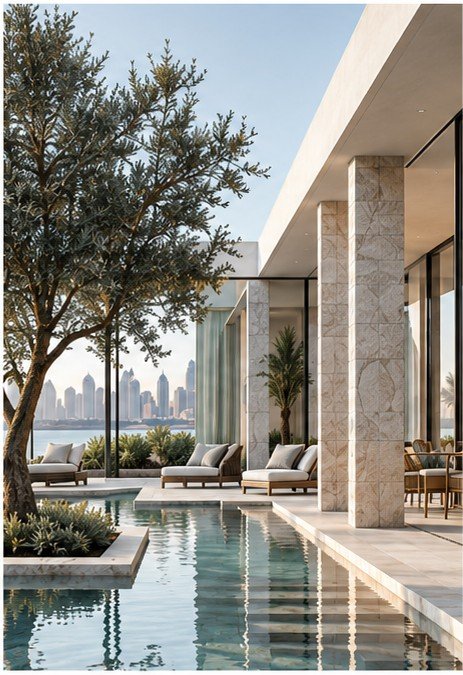
Art Deco interior design combines strong geometry, symmetry, sculptural furniture, rich timber, marble, velvet, glass and polished metal to create interiors with presence. Bella adapts the style for Abu Dhabi through a more livable Neo-Deco approach: fewer motifs, better proportions, carefully chosen statement pieces and precise joinery, lighting and material transitions so the result feels sophisticated rather than themed.
Your Art Deco interior can be bold and jewel-toned, lighter and more contemporary, hotel-inspired, or quietly glamorous. The key is not to cover every surface in gold and pattern; it is to choose where symmetry, material richness and one or two strong Deco gestures will have the most impact.

What Art Deco Interior Design Means
Art Deco interior design is a bold, ordered style associated with the 1920s and 1930s, known for geometric patterns, symmetry, jewel tones and luxurious materials such as lacquered wood, marble, velvet, glass and polished metal. For a current Abu Dhabi home, we use those ingredients selectively: one strong geometry, one rich timber family, one metal finish and a small number of sculptural pieces can establish the style without making every wall compete for attention.
In 2026, the most useful interpretation is often Neo Deco. Instead of reproducing a historic room exactly, Neo Deco borrows the movement's strongest ideas—dark woods, saturated colour, marble, chrome or brass, fluting, stepped forms, curved upholstery and dramatic lighting—then balances them with quieter plaster, linen, honed stone and contemporary layouts. That makes the style easier to live with and much more adaptable to modern apartments, villas and commercial interiors.
Art Deco is also different from simply choosing expensive finishes. Luxury interior design can use almost any aesthetic; Art Deco has a specific visual grammar based on geometry, proportion, repetition and contrast. A room with marble and brass is not automatically Deco. It becomes Deco when those materials are organised through stepped forms, symmetry, fluting, curves, starbursts, fan motifs or a disciplined black/cream/jewel-tone composition.
If you want the glamour translated into drawings, materials, lighting and a buildable fit-out rather than a decorative theme, our Interior Design Studio Abu Dhabi approach can shape the Art Deco language around your property, budget and actual daily use.
The Art Deco Design Logic
The style is visually rich, but it is not random. We control the geometry, symmetry, materials and lighting so each statement has room to register.
Fans, sunbursts, chevrons, stepped profiles, fluting and strong framed lines are classic Deco cues. We usually choose one or two motifs and repeat them at different scales rather than mixing every historical pattern.
Paired lamps, balanced wall panels, centered mirrors and ordered furniture groups can give the room a formal rhythm. Symmetry is especially useful in majlis, dining rooms, foyers and bedroom headboard walls.
Marble, brass, chrome, lacquer and glass look more sophisticated beside matte plaster, wool, suede, linen or honed stone. High shine everywhere quickly becomes visually exhausting.
Classic Deco uses both angular and rounded forms. A curved sofa, rounded bar, oval dining table or scalloped mirror can balance stepped joinery and sharp floor patterns.
Tiered pendants, globe lights, stepped sconces and concealed cove light can reinforce the geometry while creating evening atmosphere. Decorative fixtures should align with the furniture and room axis rather than float randomly.
A contemporary Art Deco room often needs fewer objects with stronger silhouettes. One sculptural sofa, one geometric rug and one polished console can carry the style more effectively than a full room of themed accessories.
Art Deco Inspired Interiors
These directions share the same geometric DNA but change the level of ornament, colour and material richness.
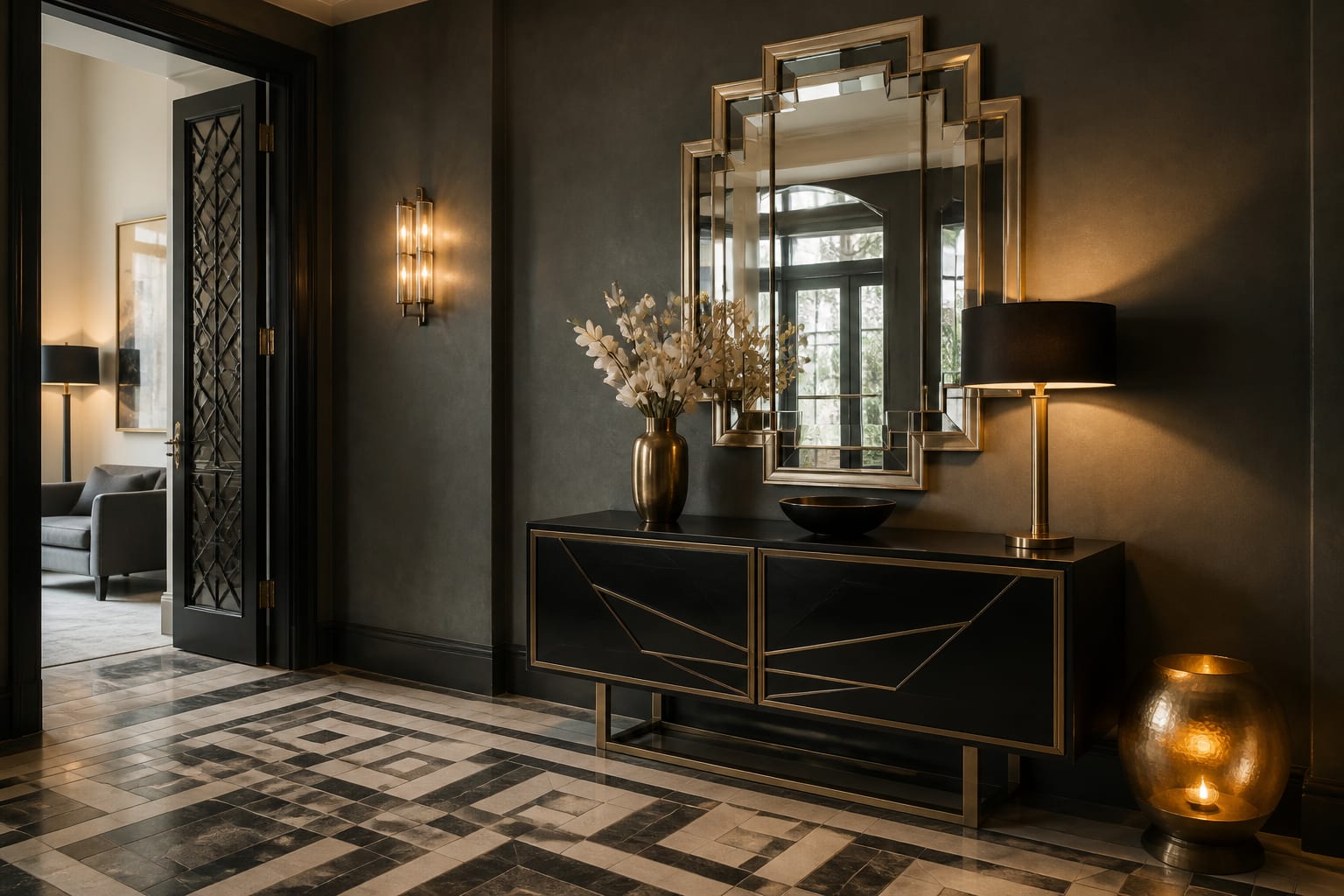
Use walnut, marble, chrome or brass, sculptural furniture and a few Deco details against quieter plaster, linen and contemporary architecture. This is the most adaptable direction for a current Abu Dhabi home.

Emerald, oxblood, sapphire, plum or peacock tones combine with velvet, black lacquer, marble and warm metal for a richer, more theatrical room. We keep the architectural background simpler so the colour and material can lead.
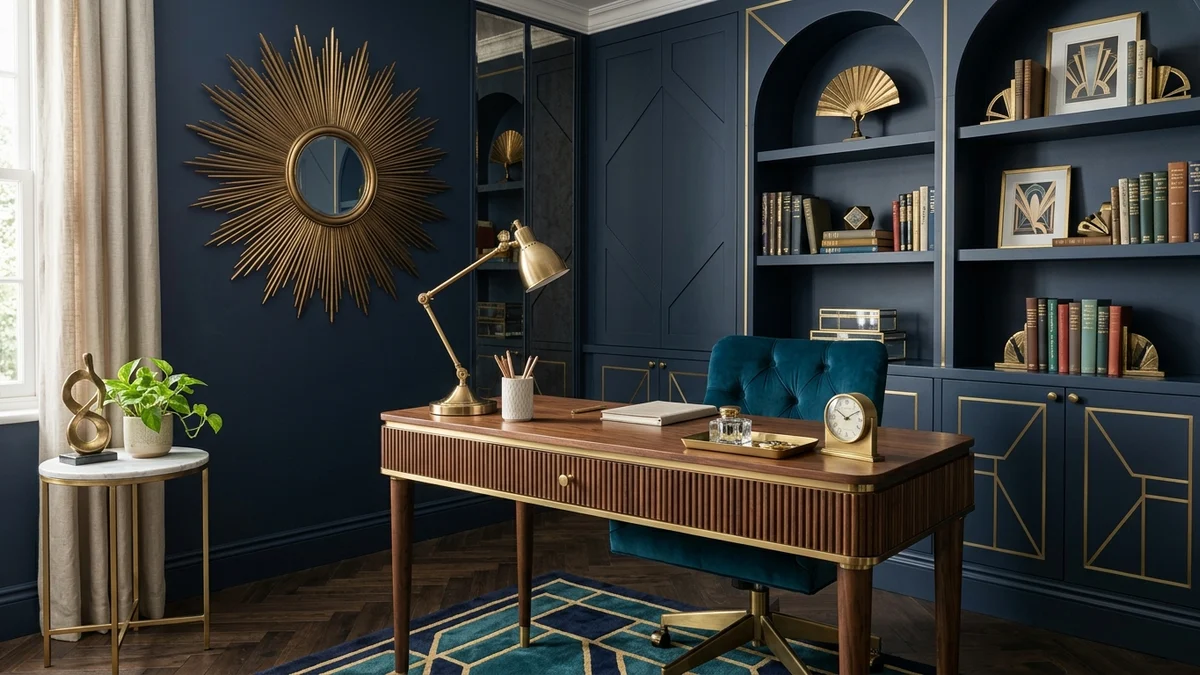
Dark walnut, ebonised wood, brass or bronze, cream upholstery and moody lighting create a more architectural Deco interior. This works particularly well in offices, bars, libraries and formal reception rooms.

Cream, pale stone, brushed brass, warm taupe and softly curved furniture can express Deco without dark walls or heavy contrast. This direction is useful for waterfront homes or brighter apartments where you want elegance with more daylight.
Art Deco Themed Interior Design Layouts
The style can be rich, but the plan should stay readable. We use symmetry and focal lines to organise the room before introducing decorative geometry.
Align the main sofa, rug, coffee table and focal wall around one clear centerline. Paired chairs or sconces can reinforce symmetry while circulation stays around the edges.
A rounded sofa or pair of curved chairs can create a more social arrangement around a central table. This is a contemporary way to bring Deco softness into a living room or majlis.
A majlis can use paired seating groups, a centered art or stone feature, matching side tables and controlled brass or bronze detailing. The layout should still support comfortable conversation and guest circulation.
A long or oval table, centered pendant and mirrored or panelled focal wall can create the ordered ceremony associated with Art Deco dining without overloading the room.
Center the bed on a strong headboard wall, use paired lighting and integrated bedside elements, then add one bench, chair or dresser rather than filling the room with secondary furniture.
In villas and hospitality-inspired homes, bars, prep kitchens or service storage can sit behind fluted, mirrored or flush panels so the glamorous public room remains visually controlled.
Art Deco Interior Materials
Art Deco materials are tactile and reflective. The challenge is balancing polished surfaces with enough matte texture that the room feels sophisticated rather than shiny.
Dark or richly grained timber gives Deco interiors weight. Book-matched veneer, fluting, reeding and inlay can create impact without carving every surface.
Stone can become the room's focal point at a console, bar, vanity, dining table or floor border. We use dramatic material where it can be appreciated rather than covering every surface.
Metal creates Deco sparkle through trims, lighting, handles, furniture bases and mirror frames. In 2026 Neo Deco, chrome and polished nickel can feel especially fresh beside dark timber.
Reflective surfaces amplify light and depth, particularly in compact spaces. Fluted or smoked glass can provide privacy while keeping the geometry visible.
Rich textiles soften stone and metal. Channel tufting, piping and carefully controlled sheen can reinforce the style while performance fabrics make it practical for family or commercial use.
A Deco wall does not need patterned wallpaper everywhere. One lacquered panel, fluted joinery zone, framed plaster composition or geometric inset can establish the style with more architectural control.
Art Deco Interior Colours
These HEX values are digital design references, not paint specifications. Art Deco palettes can be high contrast, but Neo Deco in 2026 often tempers jewel colour with tobacco, olive, smoky rose, walnut and warm plaster.
A warm light base for walls, ceilings or upholstery that lets dark timber and metal read clearly.
A rich timber-reference tone for cabinetry, paneling and furniture.
A deep green-black for velvet, walls, bar cabinetry or a dramatic study.
A classic saturated accent for lounge chairs, banquettes, art-led walls or leather.
A strong blue for wall panels, upholstery or a bedroom/office where deeper colour is wanted.
A metal-reference tone for lighting, trim and hardware rather than broad colour coverage.
A cooler metallic reference that works well in more contemporary Neo Deco rooms.
A softer earthy accent that modernises Deco beside walnut, plaster and honed stone.
Use selectively in lacquer, flooring borders, frames or geometric pattern to sharpen symmetry and contrast.
Art Deco Interior Design Room by Room
We adjust the level of glamour to the function. Living and dining can carry stronger statements; bedrooms should feel softer; kitchens need durability; and bathrooms can use Deco geometry in smaller, high-impact areas.
A curved or channelled sofa, geometric rug, marble or glass table and statement light can establish the style. We keep the surrounding walls quieter unless the room genuinely needs more ornament.
An oval or rectangular table can sit under a tiered pendant or chandelier, with a mirrored, fluted or stone focal wall. The dining composition should feel formal without restricting chair movement.
A broad upholstered headboard, paired bedside lights, dark timber and one metallic accent create Deco atmosphere without making the bedroom visually restless.
Reeded or veneered cabinetry, marble, brass or chrome and black/cream contrast can give the kitchen character. Appliance integration, prep clearances, storage and cleaning remain more important than decorative motif.
An octagonal or stepped mirror, marble vanity, fluted cabinet and polished metal fittings can deliver Art Deco strongly in a compact room while waterproofing and access remain properly resolved.
Home offices, bars, reception lounges and restaurants can take a richer Deco direction through walnut, lacquer, velvet, mirror, brass and lower evening lighting.
Art Deco Interior Design Across Abu Dhabi
These are design scenarios, not fixed packages. We use the architecture, view, property type and client lifestyle to decide which Deco elements belong.
For a Saadiyat residence, we would keep the architecture restrained and introduce Deco through one sculptural sofa, rich walnut, honed marble, polished nickel or chrome and carefully placed art. The result can feel cultured and collected rather than overtly themed.
Best suited to: premium apartments, cultural-district residences and villas with strong art or design collections.An Al Maryah apartment or executive space can take darker walnut, oxblood or peacock upholstery, smoked glass, polished metal and dimmable statement lighting. The look suits the district's high-rise, hospitality-influenced character when the furniture remains tightly edited.
Best suited to: premium residences, executive apartments and sophisticated commercial reception spaces.In an Al Reem apartment, full-period decoration can overwhelm the floor plate. We would use one fluted or mirrored wall, a curved sofa or chair, slim brass lighting and integrated storage while protecting the skyline view.
Best suited to: one-to-three-bedroom apartments, penthouses and compact view-led spaces.A Yas villa or apartment can use Art Deco most strongly in the social spaces: an oval dining table, statement pendant, reeded bar cabinet, rich colour and durable velvet-style performance fabric for hosting.
Best suited to: villas, apartments and entertainment-focused family homes.For Al Raha Beach, we can soften the traditional dark Deco palette with cream, pale marble, smoked glass and brushed brass while keeping geometric mirrors, fluted joinery and curved furniture as the style cues.
Best suited to: waterfront apartments, duplexes and homes with large glazing.A Khalifa City villa can support a stronger formal composition: symmetrical majlis seating, a centered stone or art wall, dark timber, paired sconces and a dining room with a clear axial layout. Family spaces can use a quieter Neo Deco variation.
Best suited to: large family villas, majlis-focused homes and full renovation/new-handover projects.In an existing Al Bateen property, we can retain quality stone, parquet or architectural details and introduce Deco through lighting, furniture, mirrors and selective joinery. This avoids unnecessary demolition and creates a collected rather than newly themed result.
Best suited to: established villas, apartments and selective high-quality renovations.A Corniche apartment can use black-and-cream geometry, brass or chrome, a strong entry console and symmetrical living composition while keeping furniture low enough to preserve sea or skyline views.
Best suited to: city apartments, penthouses and formal entertaining interiors with strong views.Art Deco Design for Smaller Spaces
Art Deco can become visually heavy in a small apartment if every surface uses pattern, velvet, mirror and gold. We reduce the number of motifs and use reflection, curves and slim furniture to protect space.
Choose one strong rug, mirror, wall panel or floor border. Repeating several large patterns in a small room quickly reduces visual depth.
A single mirrored or smoked-glass panel can deepen a dining wall or entry. Place it where it reflects light or a controlled composition rather than clutter.
A compact curved sofa, scalloped chair or oval dining table can provide Deco character while improving circulation around corners.
Brass or chrome frames, legs and lighting can deliver the metallic note without using bulky furniture. Thin metal profiles help preserve visible floor area.
Fluted or lacquered cabinetry can conceal television equipment, shoes, barware or household items so the room remains composed.
A statement pendant or pair of wall sconces can create a Deco mood without taking floor space. Check ceiling height and scale carefully before choosing an oversized chandelier.
Art Deco Interior Design Cost in Abu Dhabi
An Art Deco interior can be achieved through furniture, lighting and colour in an existing room, or it can become a high-spec fit-out with fluted timber, marble, curved joinery, metal inlays, custom doors and bespoke furniture. Current 2026 Abu Dhabi market references therefore make it important to separate professional design fees from the physical construction and procurement budget.
The figures below are external 2026 planning references, not Bella fixed prices. Compare quotations only after confirming whether bespoke joinery, metal trims, marble, curved fabrication, custom furniture, appliances, approvals, delivery and VAT are included.
Space planning, Art Deco direction, material palette, furniture and lighting concept without full implementation management.
Adds developed visuals and more resolved material, joinery, furniture and lighting direction for agreed rooms.
A broader appointment from concept toward implementation coordination. Exact drawings, procurement and site services still need to be defined.
Paint, wallpaper or panels, selected lighting, curtains and furniture where the existing layout and major services remain.
New finishes, fitted joinery, lighting and some layout adjustment using relatively straightforward stone/metal details.
Veneered or fluted joinery, marble, curved fabrication, metal trims, feature ceilings, upgraded MEP and made-to-measure furniture.
Planning example using the published AED 200–300/m² design-fee range before construction, furniture, approvals or VAT.
Planning example where the layout and main services stay and the style comes mainly through surfaces, lighting, selected joinery and furniture.
Planning example using AED 1,800–3,500+/m². Natural marble, bespoke metalwork, imported lighting and loose FF&E can push the project higher.
Current Abu Dhabi fit-out guidance places fully bespoke 'made throughout' work in this bracket. Art Deco can reach it quickly when the design uses curved/inlaid joinery, imported stone and custom furniture.
Art Deco Design Built for Abu Dhabi
The style is material-heavy, so execution quality and environmental conditions matter. We test how the surfaces behave in real daylight and how the detailing will be fabricated before construction begins.
Emerald, oxblood, navy and velvet can fade or look very different beside intense glazing. We review upholstery performance, window treatment and furniture position before fixing the colour story.
Walnut, mahogany and veneered joinery can change tone with strong sun exposure. Finish specification and curtain strategy should be coordinated with the joinery.
Polished brass, unlacquered brass, chrome, bronze and nickel age differently. We confirm whether you want patina, consistent shine or low-maintenance coated finishes before fabrication.
Reeded fronts, radius cabinets, metal inlay and patterned stone require accurate templates and fabrication tolerances. These should be reviewed before production rather than improvised on site.
A stepped ceiling or chandelier still needs correct supply/return air, sprinkler/detector positions and maintenance access. The geometry should organise services, not hide them unsafely.
Symmetry and formal hosting suit a majlis well. Entrance sightlines, guest circulation and separation from family/service zones should be resolved before decorative paneling or furniture is fixed.
Art Deco Interior Design Timeline
Programme depends on property size, approvals, amount of bespoke fabrication and whether the project is a furniture-led refresh or complete fit-out.
We establish the property, rooms, what stays, what changes, preferred Deco direction, key furniture requirements and site constraints.
Furniture axes, focal walls, geometry, colour, timber, stone, metal and lighting are developed into one coherent direction.
Key rooms, fluting, curved joinery, metal trims, stone layout, ceilings and lighting are developed far enough for pricing and fabrication.
Stone slab review, veneer samples, metal finish approval, shop drawings and imported lighting/furniture can become long-lead decisions.
A furniture-led refresh can be much shorter; a villa, restaurant, majlis or high-spec bespoke Deco interior requires more time. The final programme should follow actual scope and procurement.
Art Deco Interior Design References
Each image demonstrates one useful Deco principle: bold living-room geometry, centered dining, upholstered bedroom symmetry, marble bathroom detailing, a walnut-and-brass office or a hospitality-style bar. Replace these later with Bella-owned or properly licensed project photography while keeping the descriptive metadata structure.
Velvet, brass, mirror and geometric pattern create a strong focal composition around the seating area.
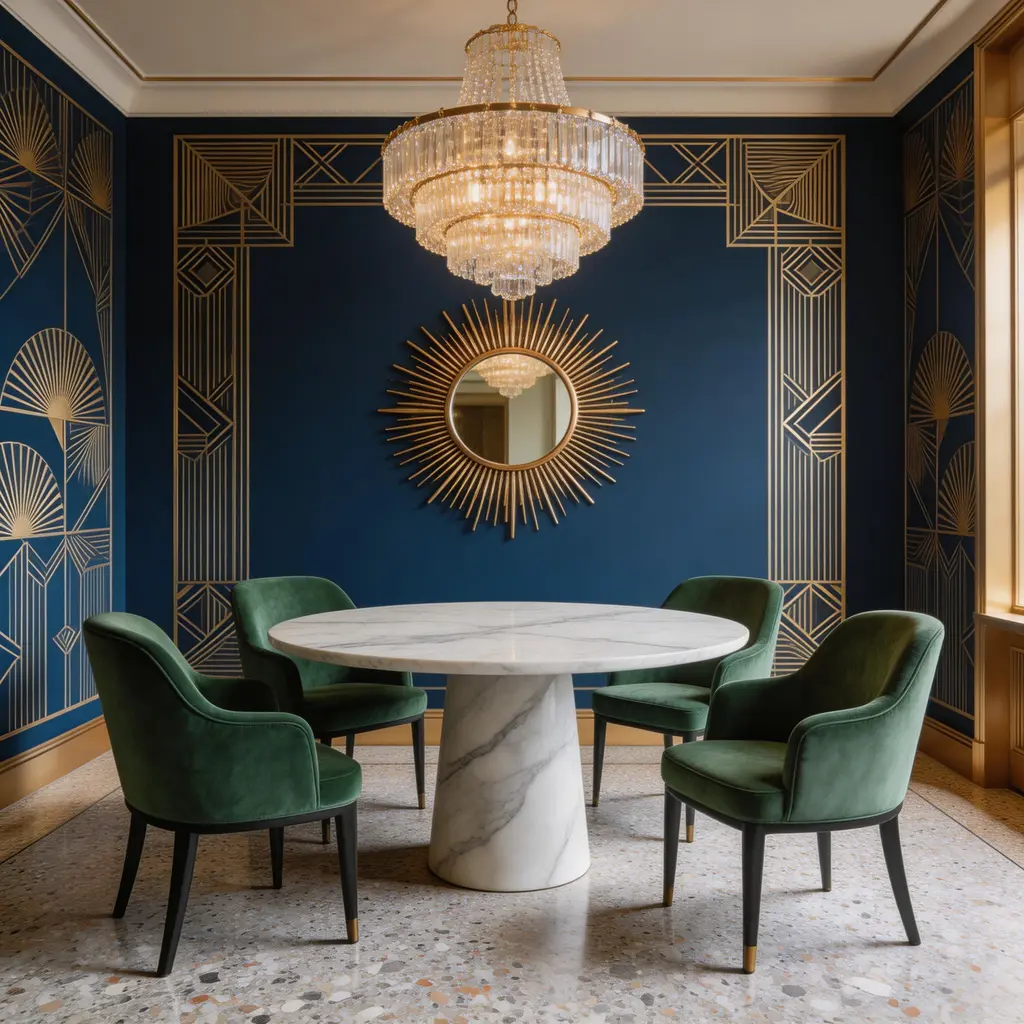
A round marble table, emerald velvet chairs, blue-and-gold wall geometry and centered chandelier create a strong symmetrical composition.
A tall channel-tufted headboard, paired lamps and dark lacquer bedside tables show how symmetry can create drama without clutter.
Octagonal mirrors, veined marble and brass fittings show how a compact room can carry strong Deco character through geometry and finish.
Fluted walnut, deep navy, brass and a sunburst mirror create an executive workspace without turning the room into a period replica.

A curved marble bar, fluted brass, jewel-tone seating and layered warm light demonstrate why Deco works naturally in hospitality and entertaining spaces.
Temporary external reference images are included for design direction only. Replace them with Bella-owned or appropriately licensed photography before using them as permanent portfolio proof.
Compare Related Interior Design Styles
These directions overlap with Deco in material, form or richness but create different visual priorities.

Choose Luxury when craftsmanship, stone, joinery and premium execution matter more than following one specific historical geometry.
Explore style →
Choose Contemporary when you like curves and rich material but want less Deco geometry and more freedom to mix current furniture and art.
Explore style →
Choose Classic when symmetry and formality should come through moulding, traditional proportion and timeless furniture rather than Deco geometry and shine.
Explore style →
Choose Retro when colour, vintage references and playful period furniture matter more than Deco luxury and symmetry.
Explore style →
Choose Eclectic when you want to mix Deco pieces with art, vintage, contemporary furniture and other periods in a more expressive composition.
Explore style →
Choose Arabic Interior Design when regional hospitality, majlis planning, pattern, craft and cultural identity should lead more strongly than the Deco language.
Explore style →Turn Art Deco Style Into a Buildable Interior
Art Deco can be achieved through selected FF&E in one property and require specialist fabrication in another. These services let us match the appointment to the actual level of intervention.
For apartments, villas and private homes where Deco materials and geometry need to remain coherent across multiple rooms.
For majlis, dining, double-height spaces, bars, kitchens and bedroom suites where the Art Deco language has room to scale.
For compact Art Deco planning, proportion, integrated storage and carefully controlled statement pieces in apartments.
For formal seating, guest circulation, symmetry, lighting and material richness in a majlis or reception setting.
For fluted joinery, bars, custom furniture, inlays, mirrors and specialist pieces made to the dimensions of the room.
For velvet seating, rugs, lighting, art, curtains, tables and decorative layers where the Art Deco character is mainly in loose furnishings.
For chandeliers, wall sconces, concealed light and dimming scenes that make metal, glass, velvet and stone work after dark.
For projects involving partitions, ceilings, MEP, stone, joinery, metalwork and specialist installation where Deco detailing needs precise execution.
Art Deco Interior Design Questions
These answers focus on what clients actually need to decide: what makes a room Art Deco, how Neo Deco differs, which materials matter, what it costs and how the style can be adapted to Abu Dhabi.
Art Deco interior design is a style associated with the 1920s and 1930s that uses bold geometry, symmetry, jewel colour and luxurious materials such as marble, lacquered or figured wood, velvet, glass and polished metal. Modern interpretations usually use the strongest Deco ideas selectively rather than reproducing an entire historical room.
Neo Deco is a current reinterpretation of Art Deco that keeps rich material, sculptural form, dark wood, polished metal, saturated colour and selected geometry while reducing the theatrical heaviness of a full period interior. It is more curated and easier to combine with contemporary architecture.
The strongest signals are repeated geometry, symmetry, stepped or fluted profiles, curved furniture, jewel tones, dark wood, marble, mirrored glass and brass/chrome/polished nickel. One or two of these used deliberately can be more convincing than many unrelated 'gold' accessories.
Art Nouveau generally uses flowing organic lines, botanical forms and asymmetry. Art Deco is more geometric, ordered and architectural, using stepped forms, sunbursts, fans, chevrons, symmetry and richer material contrast.
No. Luxury describes quality, craftsmanship and specification level and can be modern, classic, minimalist or other styles. Art Deco is a specific visual language. A luxury Art Deco room combines high-quality execution with Deco geometry and material choices.
Yes. Architectural Digest identified Neo Deco as a designer-approved 2026 trend, highlighting dark woods, marble, velvet, glass, polished metal, saturated colour and a more edited, contemporary interpretation of the style.
Classic choices include emerald, oxblood, peacock blue, black, ivory and metallic brass or chrome. Current Neo Deco can also use tobacco, olive, smoky rose and warm walnut. The palette works best when one saturated tone is balanced by neutral and natural material.
Walnut, mahogany, ebony-toned veneer, marble, onyx, lacquer, velvet, leather, mirrored or fluted glass, brass, bronze, chrome and polished nickel are all appropriate. You do not need all of them in one room.
Yes. Use one geometric focal point, a compact curved sofa or chair, slim metal furniture, integrated storage and one mirrored plane. Avoid covering every wall in pattern or using oversized period-style pieces that reduce circulation.
Yes. Symmetry, formal seating, rich upholstery, paired lighting and a strong focal wall suit majlis planning naturally. We adapt the style around guest circulation, privacy and the level of formality required by the household.
Current 2026 Abu Dhabi references place residential concept design around AED 150–250/m², concept plus 3D around AED 200–300/m² and broader full-service design around AED 300–500/m². Physical fit-out ranges widely: roughly AED 400–800/m² for refresh work, AED 800–1,800/m² standard, AED 1,800–3,500+/m² high specification, and fully bespoke work from AED 3,500/m² upward.
Curved joinery, fluting, veneer matching, marble slab work, metal inlay, bespoke mirrors and custom lighting require specialist fabrication and more shop-drawing coordination. The material quantity may not be huge, but the detailing can be labour intensive.
Absolutely. A pale stone room with one stepped mirror, brushed-brass light, fluted walnut console and curved chair can read as Art Deco without dark walls or strong pattern. Neo Deco is particularly suited to this quieter interpretation.
Yes. In fact, that is one of the most effective current approaches. Keep the Deco cues in selected material, lighting, mirror, rug or joinery while using contemporary seating and simpler architectural backgrounds.
It depends on scope. DMT's simplified minor-works process includes qualifying non-structural interior modifications, maintenance and interior finishes, while structural, MEP, fire/life-safety, common-property or developer-controlled changes can require additional approvals.
Send the Abu Dhabi area, property type, floor plan or approximate dimensions, current photos, rooms involved, furniture to keep, Art Deco references you like, preferred colour/metal direction, approximate budget and target date. Also tell us whether you need design only, FF&E, renovation or full fit-out.
Build Art Deco Around Your Property, Not Around a Theme
Share your Abu Dhabi location, floor plan, current photos, furniture to retain, Art Deco references, preferred colours and metals, approximate budget and target date. We can then decide whether the right route is a furniture-led Neo Deco refresh, a room-specific design, a full residential scheme or design and fit-out with bespoke joinery, stone and metalwork.