
Interior Design Guide
Interior Design Wallpaper
Interior design wallpaper is a wall-finish choice that can add colour, pattern, texture, scale and visual depth to a room, but it works best when the design is selected for the actual wall, lighting, furniture, maintenance and moisture conditions rather than chosen as a decorative image alone. For homes, wallpaper is most successful when its pattern size matches the room and wall proportions, the substrate is smooth and properly prepared, seams and repeats are planned around doors and corners, and the rest of the material palette gives the wallpaper enough visual space to be seen. It can be used across a full room, on one feature wall, inside niches or joinery, or as a quieter textured background; the correct approach depends on whether the wall should lead the room, support furniture and art, or simply add softness that paint cannot provide.
This guide explains wallpaper types, pattern scale, colour, feature-wall planning, bedroom and living-room use, hall and staircase applications, bathrooms and moisture, commercial use, installation, maintenance, costs and how to coordinate wallpaper with timber, marble, travertine, metal, furniture and lighting without making the interior feel over-decorated.
Wallpaper in One Minute
Choose wallpaper by wall role, pattern scale and room conditions—not by sample image alone.
Wallpaper can be the main visual feature or a subtle background. The correct choice depends on how much of the wall is visible, what sits in front of it and whether the room can support the pattern, texture and maintenance.
Wall role
Decide whether the wall should be a focal point, a quiet background, a headboard wall, a dining backdrop, a hall feature or a decorative layer inside joinery.
Pattern scale
Large repeats need enough wall area to read properly; dense small patterns can become busy when used across many surfaces or interrupted by doors and furniture.
Surface condition
Wallpaper follows the wall beneath it. Poor plaster, moisture, cracks and unevenness should be resolved before installation.
Material type
Paper, non-woven, vinyl-coated, textile, grasscloth, metallic and mural products have different appearance, installation and maintenance expectations.
Lighting
Directional light can reveal texture and seams; reflective papers can create glare; darker patterns can change significantly between daylight and evening.
Furniture + art
The wallpaper should support the bed, sofa, console, artwork and lighting composition rather than compete with every object in front of it.
Definition
What Is Interior Design Wallpaper?
Interior design wallpaper is a decorative wallcovering used to introduce colour, pattern, texture or imagery into an interior. Unlike paint, which normally gives a wall one colour and sheen, wallpaper can create repeated geometry, botanical or abstract pattern, textile-like texture, metallic reflection, mural imagery or a subtle woven effect.
That extra visual information makes wallpaper powerful but also easier to misuse. A pattern that looks elegant in a sample book can feel much larger, darker or busier across a full-height wall. A textured wallpaper can look refined under diffuse light and uneven under strong grazing light. A metallic finish can create controlled sparkle in one room and uncomfortable glare in another.
The design question is therefore not simply 'Do we like this wallpaper?' It is 'What role should this wall play, how much wallpaper will be visible, what furniture sits against it, what light reaches it, and can the product perform in this room?' When those questions are answered first, wallpaper becomes part of the interior architecture instead of an isolated decorative layer.
Choose the Right Wall Finish
Wallpaper vs Paint, Decorative Panels and Natural Materials
Wallpaper is not automatically more decorative than paint or less architectural than panels. Each wall finish solves a different problem. Paint is flexible and easy to update; wallpaper can create pattern and texture without adding physical thickness; timber or upholstered panels can add depth, acoustics or integrated detailing; stone can create a more permanent mineral focal point.
| Wall finish | Best when | Main advantage | Main consideration |
|---|---|---|---|
| Paint | The room needs a quiet background or easy future change | Simple, flexible and widely maintainable | Substrate quality and sheen strongly affect appearance |
| Wallpaper | Pattern, texture or imagery adds value without building out the wall | High visual impact with limited physical depth | Repeat, seams, substrate and product suitability must be managed |
| Decorative plaster | The room needs subtle hand-applied movement | Tactile depth without a repeated printed pattern | Repairs may be difficult to blend invisibly |
| Timber / panels | The wall needs architectural rhythm, protection, acoustic value or integrated joinery | Physical depth and stronger architectural presence | More fabrication, detailing and cost |
| Natural stone | The wall is intended as a permanent mineral focal point | Real variation, scale and permanence | Weight, fabrication, setting-out and maintenance |
| Upholstered / acoustic system | Softness or acoustic performance is required | Comfort and sound control | Cleaning, durability and tested performance where required |
Wallpaper Types
Common Wallpaper Types and What Changes Between Them
Wallpaper is a broad category rather than one material. The construction, surface coating, backing and texture influence installation, cleaning, seam visibility and where the product is appropriate. Always check the manufacturer's product data instead of assuming all wallcoverings behave the same way.
Paper wallpaper
Often selected for printed colour and pattern. It can be more delicate than coated products, so installation and cleaning expectations should be checked carefully.
Non-woven wallpaper
Common in residential interiors because many products are designed for relatively straightforward hanging and later removal. Product-specific instructions still matter.
Vinyl / vinyl-coated wallcovering
Often used where improved cleanability is useful. Commercial-grade products can be very different from lightweight residential papers, so confirm weight and intended application.
Grasscloth / natural-fibre wallcovering
Adds genuine texture and natural variation. Visible panel variation and seams can be part of the character rather than defects.
Textile wallcovering
Can create softness and luxury but requires careful installation and maintenance. Some systems may also contribute to acoustic character.
Metallic / reflective wallpaper
Can add controlled highlights, but seams, glare and uneven substrate become more visible under directional lighting.
Mural / panoramic wallpaper
Uses one large image or scene rather than a simple repeat. Wall dimensions and cropping need to be coordinated before ordering.
Embossed / textured wallpaper
Adds relief that can disguise a perfectly flat visual field, but strong side-light can exaggerate texture and seams.
Pattern
Wallpaper Pattern Scale: Match the Repeat to the Wall, Room and Furniture
Pattern scale is one of the most important wallpaper decisions. A large botanical or geometric repeat needs enough uninterrupted wall area to be understood. If the wall is cut by wardrobes, doors, mirrors and artwork, only fragments of the repeat may remain and the design can look accidental.
Small repeating patterns can work well in compact rooms, but dense pattern across every wall can reduce visual calm. Large patterns can sometimes make a small room feel more deliberate when used confidently, but the colour contrast and amount of visible wall need to be controlled.
Furniture should be placed into the composition before wallpaper is approved. A headboard may hide the most important part of a mural. A tall bookcase may cut through a geometric repeat. A console and artwork may sit better against a quieter section of the pattern than at the centre of its strongest motif.
| Pattern condition | Likely effect | What to check |
|---|---|---|
| Large repeat, low contrast | Architectural but relatively calm | Does enough wall remain visible for the repeat to read? |
| Large repeat, high contrast | Strong focal wall | Will furniture, art and lighting compete with it? |
| Small repeat, low contrast | Textured/background effect | Does the room need more visual depth than paint? |
| Small repeat, high contrast | Energetic and detailed | Is the room large enough to avoid visual overload? |
| Mural / panoramic image | Single narrative focal wall | Exact dimensions, crop, furniture and socket locations |
| Vertical stripe / rhythm | Can emphasise height | Wall straightness, corners and ceiling junctions |
| Horizontal motif | Can emphasise width | Alignment around doors, corners and furniture |
Colour + Light
Wallpaper Colour Changes With Daylight, Artificial Light and Nearby Materials
Wallpaper should be viewed in the room where it will be used whenever possible. A warm beige background can appear more yellow under warm lamps, while a cool grey paper may become bluer beside a warm timber floor. Metallic inks can look almost invisible in diffuse daylight and much stronger under evening spotlights.
Large windows also affect pattern contrast. Strong UAE daylight can make pale wallpapers look brighter and may reveal texture, seams or wall unevenness. Darker wallpapers can create depth and intimacy, but they absorb more light and may need a stronger lighting strategy.
Ask for a meaningful sample size and place it vertically on the actual wall. Leave it through different times of day if the decision is important. Holding a small sample flat under showroom lighting does not show how the full wall will behave.
Feature Wall
When Should Wallpaper Be Used on One Feature Wall?
A wallpaper feature wall works best when the room already has a natural focal wall: behind the bed, dining sideboard, console, reception desk or a seating group. The wallpaper should strengthen that focal point rather than create a second one unrelated to the furniture.
One-wall wallpaper is useful when the pattern is strong, when the budget does not justify covering the entire room, or when the other walls need to remain calm for art, storage or architectural elements. However, a feature wall can look arbitrary when it stops at an exposed corner or when the wallpaper colour has no relationship with the rest of the room.
In some rooms, wallpapering all walls creates a more complete result than one isolated feature. Low-contrast textured wallpaper can wrap a bedroom or study quietly, while a bold mural usually needs a single controlled surface. The decision should come from the pattern strength and room concept rather than a rule that wallpaper belongs on only one wall.
Bedroom
Wallpaper for Interior Design in Home Bedrooms
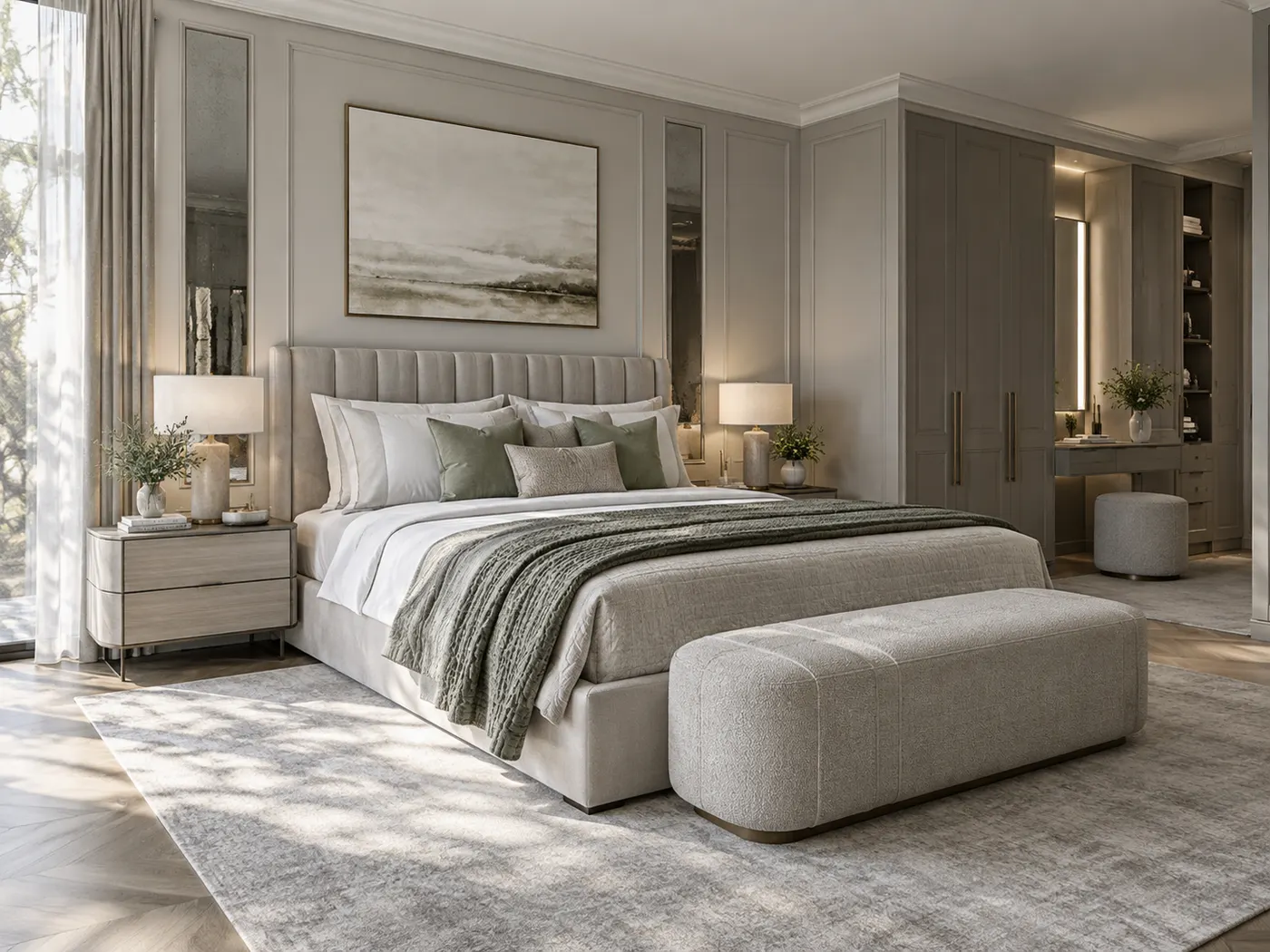
Bedrooms are one of the most forgiving places for wallpaper because wall contact is generally lower than in kitchens, corridors or busy commercial spaces. The bed wall gives a clear composition, while softer textile-like, botanical, geometric or tonal patterns can add depth without filling the room with objects.
Start with the bed, headboard and bedside lights. If the headboard is highly patterned or deeply upholstered, use quieter wallpaper. If the bed is visually simple, the wall can carry more pattern. Coordinate bedside sconces before installation so electrical points do not cut awkwardly through motifs.
For children's rooms, choose pattern with enough longevity that the room does not feel too young quickly, unless easy replacement is part of the plan. For guest rooms, wallpaper can create identity without adding floor-area-consuming furniture.
Living + Dining
Living Room and Dining Room Wallpaper: Let the Furniture Establish the Scale
Living rooms often already contain strong elements: sofa, rug, television, curtains, artwork and views. Wallpaper should be introduced where it supports that hierarchy. A subtle textured wallcovering behind the sofa can add depth without competing with art; a stronger pattern can work behind a dining sideboard where the furniture arrangement is more static.
If the living room has a media wall in stone or timber, another bold wallpaper wall may be too much. In that situation, wallpaper can move to a quieter adjacent zone or be omitted entirely. Conversely, a room with simple painted joinery and restrained furniture may benefit from one patterned wall as the main decorative layer.
Check curtain fabric carefully. Large patterned curtains beside large patterned wallpaper can create visual conflict unless the patterns are deliberately related in scale and colour.
Material Pairing
Pairing Wallpaper With Pale Marble and Quiet Natural Stone
Wallpaper becomes easier to control when the surrounding hard materials are visually calm. Pale natural stone, light timber and soft metal finishes can provide a stable base for pattern, particularly in foyers, bedrooms, powder-room approaches and formal reception areas.
For a bright, refined scheme, afghan white marble can be a relevant natural-stone reference because it is described as a crystalline white Afghan marble with restrained grey, beige or occasional warm movement, used for floors, walls, stairs, bathrooms and selected counters. If wallpaper sits beside a pale marble floor or vanity, the paper should be judged against the actual stone batch because a cool grey pattern can make warm ivory areas in the marble more visible, while a warmer wallpaper can soften the overall contrast.
Do not try to match every grey vein in the stone with a printed line in the wallpaper. Material relationships usually look more deliberate when one surface leads and the other supports. A highly veined stone may need quieter wallpaper; a very plain stone can tolerate more expressive pattern.
Earthy Palettes
Wallpaper With Travertine, Timber and Warm Mineral Materials
Travertine and other warm mineral materials pair naturally with wallpapers that use muted earth colour, woven texture, botanical forms or restrained geometry. The combination works because wallpaper can add softness while stone provides weight and natural irregularity.
A grey-brown silver travertine can create a stronger linear mineral character than pale beige limestone or cream marble. When that kind of travertine appears on a floor, console, fireplace or wall element, the wallpaper should not compete with every band and vein. A quieter woven paper, tonal geometric or soft abstract pattern can let the stone remain architectural while still preventing the room from feeling hard.
Timber can bridge the two materials. Medium or darker wood often warms silver-grey stone and gives patterned wallpaper a more residential context. The important step is to review the actual stone, timber and wallpaper sample together rather than approving each one separately.
Hall + Staircase
Wallpaper in Hallways, Entrances and Staircase Walls
Hallways and staircase walls can benefit from wallpaper because they often have limited furniture and need visual interest without reducing circulation. However, these areas can also receive more hand contact, luggage impact and cleaning than a bedroom.
In a narrow corridor, a low-contrast paper or fine texture can add depth without visually closing the space. A strong panoramic mural can work at the end of a long hall where it becomes a destination. On staircase walls, pattern alignment becomes more complex because the view changes as you move between floors.
Where the wall is frequently touched, confirm the product's cleanability and consider protective detailing or a more durable lower-wall treatment. Wallpaper does not need to run all the way to the floor if another material is better suited to impact.
A staircase paper should also be planned around wall lights, handrails, switches and landings so the pattern is not repeatedly interrupted.
Bathrooms + Powder Rooms
Can Wallpaper Be Used in Bathrooms?
Wallpaper can be used in some bathrooms and powder rooms, but it should not be treated as a universal wet-area finish. The exact product, adhesive, substrate, ventilation, humidity and proximity to direct water matter.
A powder room without a shower is usually easier because there is less sustained steam and direct water. Wallpaper can create strong identity on upper walls while the vanity and splash zone use stone, tile or another cleanable surface. In a full bathroom, use wallpaper only where the manufacturer permits it and keep it away from direct shower or bath splash unless the system is specifically designed for that condition.
Moisture problems behind wallpaper should be solved before installation. Covering a damp wall can hide the symptom temporarily while damaging the wallcovering and substrate. Ventilation and wall preparation are part of the specification, not separate maintenance issues.

Small Applications
Wallpaper Inside Niches, Shelving and Joinery
Wallpaper does not need to cover a full wall. It can line the back of a display niche, bookcase, wardrobe interior or glass-front cabinet to add pattern at a smaller scale.
This can be especially effective when the room uses expensive or strong permanent materials and needs one softer decorative detail. A patterned niche can also be easier to update later than a full stone or timber insert.
Check depth and lighting. A dark wallpaper in a deep cabinet can disappear without shelf lighting, while a metallic or reflective paper can become visually strong behind glass. Make sure shelf fixings and electrical cables are coordinated before papering so the finished backing is not damaged immediately.
Commercial Interiors
Commercial Wallpaper and Wallcoverings: Durability, Cleaning and Fire Requirements
Hotels, offices, restaurants, salons and retail spaces often use wallcoverings because they can create a strong brand atmosphere without physically building out the wall. Commercial products can also offer different weights, cleanability and performance from residential wallpaper.
The correct specification depends on the project. Corridors and waiting areas may need higher durability; restaurants may need cleanability; hotels may use wallcoverings extensively in guest rooms; offices may use textured products in reception or meeting spaces.
Where fire-performance or other statutory criteria apply, use products and systems with the required project-specific documentation and coordinate with the relevant consultant, landlord or authority. Do not assume a decorative sample is suitable for a commercial project simply because it is sold as wallpaper.
Installation
Wall Preparation Determines Whether Wallpaper Looks Premium
Wallpaper follows the substrate. Lumps, dents, cracks, loose paint, dust, dampness and uneven repairs can remain visible through the finished paper or cause adhesion problems.
The wall should be dry, sound, smooth and prepared according to the wallpaper and adhesive system. Highly reflective or fine plain wallcoverings can reveal imperfections more strongly than patterned or textured papers.
Existing wallpaper should be assessed rather than automatically papered over. Multiple layers can conceal poor substrate, loose seams or moisture issues. When in doubt, remove the existing finish and prepare the wall properly before introducing a new system.
- Confirm the wall is dry and free from active moisture problems.
- Repair cracks, dents and poorly finished plaster before priming.
- Use primer or sizing recommended for the specific wallcovering and substrate.
- Check roll batch / dye lot where applicable so colour variation is controlled.
- Plan the first strip and pattern centre before cutting multiple lengths.
- Allow for repeat and matching when calculating quantity and wastage.
- Coordinate sockets, switches, sconces, mirrors and wall-mounted furniture before installation.
- Keep spare labelled material where future repair or matching may be difficult.
Setting-Out
Pattern Repeat, Seams and Corners Need to Be Planned Before Installation
Pattern repeat affects both appearance and quantity. Straight-match, offset-match and large mural panels can produce different wastage, so roll count should be based on the specific product rather than wall area alone.
Set out the pattern so the strongest motif sits in the correct place—often centred behind the bed, console, dining table or wall opening. Do not allow the installer to start from one corner without understanding where the pattern will end.
Inside and outside corners can be difficult because walls are rarely perfectly square. The wallpaper manufacturer's installation guidance should be followed, and strong geometric patterns may require more tolerance or visible adjustment than organic patterns.
Maintenance
How to Maintain Wallpaper Without Damaging the Surface
Maintenance depends on the product. Some wallpapers are designed to tolerate light wiping or more regular cleaning; natural-fibre and delicate paper surfaces may require gentler care. Always follow the manufacturer's instructions rather than using one cleaning method across all wallcoverings.
Address stains quickly, but test cleaners in an inconspicuous area first. Avoid soaking seams unless the product permits wet cleaning. For grasscloth or textile wallcoverings, professional cleaning advice may be more appropriate than household chemicals.
Damage near corners and high-contact areas is often easier to prevent than repair. Furniture placement, door stops, luggage routes and chair backs should be considered where wallpaper is used in circulation or commercial spaces.
UAE Context
Wallpaper for Interior Design in UAE Homes
Wallpaper works well in UAE homes, but strong daylight, air-conditioned interiors, large glazed areas and the contrast between indoor and outdoor conditions should influence product and colour selection. A paper that looks subtle in a showroom may appear much stronger on a sunlit wall, while darker tones may need more evening light than expected.
If you are selecting wallpaper for a real local property rather than treating the wall in isolation, our interior design Abu Dhabi homepage shows how Bella connects wall finishes with the wider residential or commercial design brief. That context matters because wallpaper should be coordinated with space planning, lighting, curtains, joinery, furniture, project scope and execution—not chosen as a separate decorative purchase.
In villas, wallpaper can help distinguish formal majlis, guest rooms, bedrooms and dining spaces while one broader material language connects the home. In apartments, fewer wallpaper types usually create better continuity. In commercial properties, product documentation and landlord or authority requirements may affect which wallcoverings are acceptable.
Budget
What Makes Interior Design Wallpaper Expensive?
Wallpaper cost depends on product price, roll width and length, pattern repeat, wastage, wall preparation, installation complexity, room height and whether specialist labour is required. A moderately priced paper with a very large repeat can require more material than a more expensive paper with efficient matching.
Murals may be priced by panel or custom wall size. Grasscloth, textile and specialist metallic papers can cost more and may require more experienced installation. Double-height walls and staircases can increase access and labour even when the wallpaper itself is not expensive.
Budget for preparation. Installing premium paper over a poor wall is false economy because seams, bumps and cracks can undermine the finish. Where the substrate requires significant correction, the preparation cost may be as important as the wallcovering.
| Cost driver | Why it matters | What to check |
|---|---|---|
| Roll / panel price | Sets the base material cost | Coverage per roll and whether price is per roll, metre or panel |
| Pattern repeat | Can increase cutting waste | Straight, offset or custom mural layout |
| Wall height | Changes strip length and access | Standard height vs double-height / stair walls |
| Wall preparation | Affects final smoothness and adhesion | Cracks, old paper, paint, moisture and plaster condition |
| Special material | Natural fibre, textile, metallic and handmade products may need specialist handling | Installer experience and manufacturer method |
| Furniture / fittings | Wall-mounted items complicate installation | Sconces, mirrors, TVs, shelves and sockets |
| Future repair | Pattern or batch may be unavailable later | Order sensible spare material where appropriate |
Decision Criteria
How to Choose Wallpaper for a Real Room
Define the wall's role
Focal point, soft background, headboard wall, hall feature, commercial brand wall or small joinery/niche application.
Measure uninterrupted wall area
Check doors, windows, wardrobes, art, televisions and furniture so the pattern has enough visible space.
Choose pattern scale
Select a repeat that suits the room and viewing distance instead of judging from a small sample only.
Coordinate colour
Compare the wallpaper with flooring, timber, stone, curtains, upholstery and paint under the actual room lighting.
Check product suitability
Confirm cleanability, moisture limitations, substrate requirements and any commercial performance documentation needed.
Plan the setting-out
Decide where the main motif, first seam and corners should fall before cutting begins.
Prepare the substrate
Resolve cracks, unevenness, dampness and incompatible old finishes before installation.
Keep spare material
Retain labelled spare wallpaper when later patching or batch matching may be difficult.
Common Mistakes
Wallpaper Mistakes That Make Interiors Feel Generic or Over-Decorated
Choosing from a tiny sample
Pattern and colour can feel very different at full-wall scale. View the largest sample available and test it in the room.
Ignoring furniture
A bed, sofa, TV or artwork can hide important parts of the pattern or compete with the wall if it is not planned together.
Using a strong paper on every wall automatically
Bold pattern can become tiring when there is no visual rest. Decide whether the concept needs one wall or a full-room wrap.
Mixing too many patterns
Wallpaper, rug, curtains and upholstery can all have pattern, but their scale and contrast need hierarchy.
Papering over a poor substrate
Wallpaper cannot solve cracks, active dampness or badly prepared plaster. Those issues remain underneath the finish.
Forgetting pattern repeat in quantity
Large repeats and offset matching create more waste than simple area calculations suggest.
Ignoring sockets and wall lights
Strong motifs can be ruined by random electrical positions. Coordinate fittings before installation.
Using delicate paper in high-contact locations
Corridors, commercial walls and children's areas may need more durable or cleanable products than low-use bedrooms.
Bella Project Insight
How Wallpaper Should Support the Project Response
Bella's project studies begin with what the space needs to solve, not with a wall finish. Wallpaper should work the same way: it becomes useful when it supports atmosphere, scale, hospitality, identity or visual calm after the room layout and priorities are understood.
A Majlis Built Around Conversation
The room needed generous hospitality seating while protecting privacy, maintaining comfortable circulation and keeping the courtyard connection present without turning the majlis into a passage space.
We organised the seating around face-to-face conversation, kept primary circulation to the perimeter and used screened openings to filter views and sunlight. The result is a room that supports both larger gatherings and quieter everyday use.
A Restaurant Planned Around the Guest Journey
The dining room needed enough character to feel memorable while protecting comfortable table spacing, clear staff routes and an atmosphere that remains consistent from daytime service into evening dining.
We used warm timber rhythm, focused pendant lighting and reflective surfaces to build depth without crowding the room. The layout keeps guest seating visually connected while allowing service movement to happen around it rather than through it.
City Views, Better After Dark
The main living volume needed to make the most of panoramic glazing while remaining warm, legible and visually balanced at night, when reflections and artificial light become more prominent.
We layered architectural and decorative lighting, used deeper timber and stone tones to give the room visual weight, and treated the stair and vertical volume as part of the composition rather than background circulation.
The Takeaway
The Best Wallpaper Makes the Room Feel More Complete, Not More Decorated
Interior design wallpaper is most successful when it has a clear role and is coordinated with the wall, furniture, lighting and material palette around it. Strong pattern can create identity; quiet texture can add depth; a mural can become art; a subtle paper can soften a room that would otherwise feel flat.
Start with the wall's job, choose pattern scale deliberately, check the real sample in the room, prepare the substrate properly and plan the setting-out before installation. When those steps are resolved, wallpaper becomes a durable part of the interior design rather than a decorative afterthought.
Continue Learning
Related interior design guides
Only guides already published in the database will appear here. Planned pages remain hidden until their own Blog Detail record is published.
Interior Wall Design
Interior wall design guide covering panels, timber, stone, wall art, TV walls, staircase walls, lighting, costs and practical UAE design decisions.
→ Materials & DetailsInterior Design Materials
Compare interior design materials including stone, timber, metal, glass, porcelain, fabrics and countertops by use, maintenance and UAE conditions.
→ Planning & ProcessInterior Design Mood Board
Learn how to make an interior design mood board with the right colours, materials, furniture and lighting, then turn it into real project decisions.
→ Start HereInterior Design Concepts
Interior design concepts explained: turn a brief into layout, materials, lighting and furniture with practical home, café, commercial and UAE examples.
→Frequently Asked Questions
Interior Design Wallpaper — FAQs
What is interior design wallpaper?
Interior design wallpaper is a decorative wallcovering used to introduce colour, pattern, texture or imagery into a room. It can be used as a feature wall, across a full room, inside niches or joinery, or as a subtle textured background.
Is wallpaper still suitable for modern home interiors?
Yes. Modern wallpaper ranges from subtle textile-like and mineral textures to geometric, botanical, abstract and panoramic designs. The result depends less on whether wallpaper is fashionable and more on whether the pattern, colour and material suit the room.
Should wallpaper be used on one wall or all walls?
Either can work. Strong murals and high-contrast patterns often suit one focal wall, while low-contrast textured papers can wrap an entire bedroom, study or dining room more quietly. The pattern strength and room hierarchy should decide.
What wallpaper is best for bedroom interior design?
Bedrooms can use a wide range of wallpaper because wall contact and moisture are usually limited. Choose a pattern and texture that support the headboard, bedside lighting, furniture and desired level of visual calm.
Can wallpaper be used in bathrooms?
Wallpaper can work in selected bathrooms and powder rooms when the specific product and adhesive are suitable, the wall is dry, ventilation is adequate and the paper is kept away from direct water unless specifically approved for that condition.
How do I choose wallpaper pattern size?
Compare the repeat with the uninterrupted wall area and viewing distance. Large repeats need enough visible wall to read properly, while small dense patterns can become busy when used across many walls or next to other patterned materials.
Can wallpaper be combined with marble or travertine?
Yes. The best combinations usually establish hierarchy: expressive stone with quieter wallpaper, or calmer stone with stronger pattern. Compare actual stone and wallpaper samples together because natural variation and lighting change the relationship.
Does wallpaper hide wall imperfections?
Some textured products can visually soften minor irregularities, but wallpaper should not be used to cover significant cracks, dampness, loose paint or poorly prepared plaster. The substrate should be sound, dry and prepared for the specific wallcovering.
How much wallpaper should I order?
Quantity depends on wall dimensions, roll or panel size, pattern repeat, matching method and wastage. Large repeats or offset matching can require more material than a simple square-metre calculation suggests, so use the specific product data.
How long does interior wallpaper last?
There is no single lifespan. Longevity depends on product quality, substrate preparation, installation, sunlight, moisture, cleaning, physical contact and whether the pattern remains suitable for the room. Correct installation and maintenance are as important as the wallpaper itself.
References
Sources & further reading
Professional definitions and specialist references used to support or verify specific points in this guide.
Choosing Wallpaper for a Real Room?
Send us the wall, the room and the materials around it—not only the wallpaper screenshot.
If you already have a villa, apartment or commercial property, share the location, room dimensions or floor plan, current photos, the wall you want to change, wallpaper references, nearby flooring or stone, furniture requirements, target timing and budget range if known. Bella can then help decide whether wallpaper should lead the wall, support the room quietly, or be replaced by another treatment that suits the space better.