
Symmetry creates calm
Matching or balanced seating, paired lamps, centered artwork and aligned architectural elements give the room order. We use exact symmetry in formal spaces and looser balance in everyday family rooms.
Meet the studio, understand our process and discover how we move from first conversation to finished space.
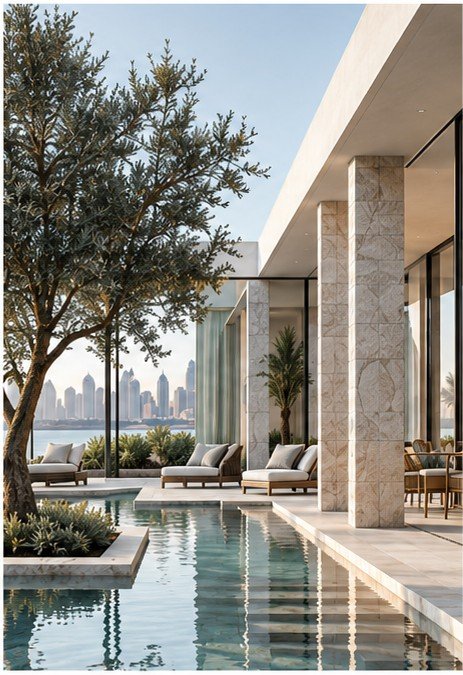
Symmetry, Craft, Warm Wood and Timeless Proportion
Traditional interior design creates a composed, timeless home through symmetry, balanced furniture, architectural moulding, warm wood, layered textiles, refined lighting and pieces with lasting character. Bella adapts those principles for Abu Dhabi homes by making the rooms formal where they should be formal, comfortable where family life happens, and technically suited to local light, cooling, maintenance and privacy—so the result feels established and elegant rather than like a reproduction period set.
Your traditional interior can be warm English-inspired, French-influenced, new traditional, darker and wood-rich, or lighter and more contemporary. We define how much architectural detail, pattern, antique character and formality the property can support, then connect that language to storage, lighting, furniture and actual daily use.

What Traditional Interior Design Means
Traditional interior design is rooted in classical European design traditions, especially English and French interiors of the eighteenth and nineteenth centuries, and is recognised through symmetry, polished or warm wood, moulding, wainscoting, chandeliers, layered textiles and furniture with established silhouettes. Bella uses those principles as a framework rather than a costume: the first paragraph of your brief is always the same question—how should this home function now—then we decide which traditional elements genuinely improve the architecture and atmosphere.
The style can feel formal, but it does not need to feel stiff. A current traditional home can pair paneled walls and an antique console with a cleaner sofa, or use a classic dining table under a more restrained chandelier. This is where 2026's new-traditional direction is useful: it keeps craftsmanship, proportion and history while allowing bolder colour, contemporary lighting, modern comfort and a more relaxed mix of old and new.
Traditional is also different from Classic and Arabic interior design. Classic design often refers more broadly to formal, timeless composition and classical references, while Traditional tends to feel more furnished, layered and residential. Arabic design is driven by regional hospitality, privacy, majlis planning and local craft. A traditional Abu Dhabi home can include a majlis or guest salon, but the style language on this page is primarily symmetry, panelling, warm wood, rugs, drapery, upholstered furniture and timeless detailing.
If you want a traditional home designed around modern Abu Dhabi life rather than assembled from decorative pieces, our Interior Design Services Abu Dhabi approach can connect the style to layouts, architectural detailing, furniture, lighting, fit-out and final installation.
The Traditional Design Logic
Traditional rooms have visual order. We use proportion, symmetry and material continuity first, then layer pattern, art and decorative detail.
Matching or balanced seating, paired lamps, centered artwork and aligned architectural elements give the room order. We use exact symmetry in formal spaces and looser balance in everyday family rooms.
A correctly scaled cornice, panel moulding, sofa or chandelier has more effect than adding extra decoration. Traditional interiors fail when details are too small, too ornate or unrelated to the room's ceiling height and volume.
Wall panelling, skirting, door profiles and built-ins establish the room's background. Furniture can then be traditional or more current, but it should respect the architecture's scale and level of formality.
Timber, stone, wool, linen, velvet, brass and layered rugs age more gracefully than trend-driven decorative finishes. We use richer materials where they will be touched and seen most.
Florals, stripes, damask, checks and oriental-style rugs can coexist when their scale and colour families are controlled. A traditional room feels layered because patterns relate to one another.
Current upholstery, improved seat depth, hidden technology and better lighting allow traditional rooms to support family life. The goal is a home that looks established but still works in 2026.
Traditional Interior Design Directions
Traditional design is a broad family. We identify the version that best fits the property's architecture and your tolerance for pattern, ornament and formality.

Warm woods, patterned rugs, florals or checks, antique or vintage furniture, comfortable upholstery and collected art create a room that feels established rather than newly staged.

Classical moulding, symmetry and timeless furniture are mixed with cleaner upholstery, stronger colour, contemporary art or simpler lighting. This is the most flexible direction if you want character without period formality.

Boiserie-style panelling, curved furniture, marble, chandeliers, gilt or aged-brass detail and a softer palette create a more decorative traditional interior. We simplify the detailing where the architecture is contemporary.

Dark timber panelling, leather, wool rugs, built-in bookcases and warm lamps create a more tailored, library-like atmosphere. This direction works particularly well in studies, offices, formal lounges and larger villas.
Traditional Home Interior Design Layouts
We use symmetry and furniture groupings to make rooms feel composed while preserving comfortable circulation, television viewing, family use and hosting.
Two sofas or a sofa with paired chairs can face one another around a central table, with a fireplace, artwork or panelled wall as the focal point. This supports conversation and creates the balanced composition associated with traditional design.
A more formal guest room can use balanced sofas, side tables, rugs and decorative lighting while maintaining the family's privacy and guest circulation. If the brief calls for specifically Emirati or Arabic regional planning, we deepen that layer through the Arabic Interior Design direction.
A dining table, chandelier and console or artwork can align around one centerline. Clearances around the chairs remain generous so formality does not reduce usability.
Built-in bookcases, a desk, reading chair and rug can form a more enclosed traditional room. We integrate power, data, display lighting and ventilation into the joinery instead of treating the study as purely decorative.
Everyday living can retain balanced furniture and repeated lamps without using exact matching pairs. Sectional or modern seating can be introduced if its proportions work with the architectural background.
The bed becomes the primary axis, supported by paired bedside lights and balanced storage. Upholstery, curtains and one rug create softness while circulation remains clear around the furniture.
Traditional Interior Materials
We select materials for touch, longevity and maintenance, then decide where decorative detail is worth the extra cost.
Timber can appear in flooring, doors, cabinets, tables and panelling. Darker wood creates greater formality; painted or lighter timber can make traditional detailing feel more current.
Architectural detail creates traditional proportion. We size panel fields, rails and cornices around wall height and furniture rather than applying stock moulding without a setting-out plan.
Stone suits fireplace surrounds, consoles, bathrooms, entry floors and selected kitchen surfaces. We use veining and polish levels that support the room rather than overpowering furniture and rugs.
Traditional interiors gain warmth from curtains, rugs, upholstered seating and cushions. Patterns can be richer than in modern styles, but performance and cleaning still matter in family homes.
Metal appears in chandeliers, wall sconces, handles, furniture and bathroom fittings. We normally choose one dominant finish and allow a secondary finish only where it looks intentionally collected.
Herringbone or straight timber floors and Persian- or oriental-inspired rugs can anchor traditional furniture. In UAE homes with stone or porcelain floors, rugs also improve acoustics and softness.
Traditional Interior Design Colours
These HEX values are digital references, not paint specifications. Current new-traditional and English-inspired interiors are using warm creams, olive, burgundy, brown, blue and richer wood tones alongside timeless neutrals.
A warm light base for panelled walls, ceilings and larger upholstered pieces.
A mid-neutral for walls, curtains, rugs and upholstery.
A timber-reference tone for doors, furniture, floors and built-in joinery.
A classic earthy green for libraries, cabinetry, upholstery or patterned fabrics.
A deep accent for rugs, chairs, cushions or dining rooms.
A restrained blue for painted joinery, bedrooms, dining rooms or textiles.
A metal-reference tone for chandeliers, sconces, handles and furniture details.
A deep grounding brown for studies, furniture and formal joinery.
A brighter neutral for rooms where the traditional architecture needs more lightness.
Traditional Interior Design Room by Room
We use more symmetry and architectural detail in formal spaces, then soften family rooms and bedrooms so the home remains livable.
A fireplace, artwork or panelled wall can anchor paired sofas or chairs. Rugs, lamps and curtains create layering while television and storage are integrated discreetly.
The dining room benefits from a strong centerline, comfortable chair spacing, a rug if practical and one art or mirror focal point. We avoid overfilling the perimeter with decorative cabinets.
A central bed, paired lights, upholstered or timber headboard, simple moulding and layered curtains create a traditional bedroom that still supports rest.
Traditional kitchens can use painted or timber-framed cabinetry, stone worktops and brass or nickel hardware while integrating modern appliances, pantry storage and task lighting. The look should never compromise workflow.
A timber or painted vanity, framed mirror, wall sconces and restrained marble create a traditional bathroom. Waterproofing, drainage and maintenance access stay contemporary.
A traditional study can carry darker colour and richer wood than the rest of the home. We integrate concealed power, data, AV and AC access into the panelled architecture.
Traditional Interior Design Across Abu Dhabi
These are design scenarios rather than fixed packages. We adapt the level of panelling, timber, colour and formality to the actual architecture.
A Saadiyat residence can use quiet wall panelling, pale stone, one or two antique or vintage pieces and contemporary upholstered seating so art and daylight remain dominant. The traditional layer should frame the collection rather than compete with it.
Best suited to: premium apartments and villas where timeless architecture should support art and modern comfort.A Khalifa City villa can support a paneled formal reception or majlis, centered dining room, classic staircase details and more relaxed family living. Repeating timber, moulding proportions and metal finishes keeps the large home coherent.
An established Al Bateen home may already contain good stone, timber, doors or architectural proportions. We can retain those elements, repair where needed and introduce new upholstery, lighting and storage rather than replacing the property's character.
Best suited to: established villas and apartments where selective intervention is more valuable than total replacement.Cream panelling, pale upholstery, warm oak or walnut and heritage blue accents can bring traditional character without blocking the waterfront atmosphere. Low furniture and well-planned curtains preserve the view.
A Yas home can use classic cabinet profiles, warm timber, framed art and patterned rugs with more relaxed sofas and performance fabrics. The result keeps traditional character while supporting children, guests and daily family use.
In an Al Reem apartment, full boiserie and oversized furniture can feel heavy. We would use one paneled focal wall, a classic armchair, framed art, a rug and tailored curtains while keeping storage and main seating cleaner.
A Corniche apartment can use paired lamps, a classic console, tailored upholstery, a framed rug and refined moulding while keeping furniture profiles low enough to preserve sea and skyline views.
An MBZ City villa can achieve a traditional look through locally fabricated panel moulding, framed cabinetry, timber furniture, rugs and lighting without specifying imported bespoke work throughout. Budget can be concentrated in the formal rooms.
Traditional Design for Smaller Spaces
Traditional style can work in apartments when the architecture is edited. We choose fewer details and lighter furniture so the room remains balanced.
A single moulded focal wall behind the sofa, dining table or bed can create traditional proportion without reducing the visual width of a compact room.
A smaller rolled-arm or tailored sofa, one classic chair and legged side tables can give the room traditional character while leaving more floor visible.
Two lamps or a centered artwork can create balance without needing duplicate cabinets, chairs and accessories.
A rug that is too small makes a compact room feel more fragmented. One correctly scaled rug can connect mixed traditional furniture and visually enlarge the seating group.
Built-in storage can use simple framed fronts or panel detail so it reads as part of the architecture rather than another freestanding cabinet.
Cream, stone and soft blue or green can keep traditional detail visible without making a smaller apartment feel dark.
Traditional Interior Design Cost in Abu Dhabi
A traditional interior can be achieved through paint, furniture, curtains, rugs and selected moulding in an existing property, or it can become a high-spec fit-out with boiserie, custom doors, built-in libraries, marble, parquet, bespoke cabinetry and imported furniture. Current 2026 Abu Dhabi market references make it important to separate professional design fees from the physical fit-out and furniture budget.
The figures below are external 2026 planning references, not Bella fixed prices. Confirm whether moulding, panelling, bespoke joinery, stone, flooring, furniture, curtains, appliances, approvals, delivery and VAT are included before comparing quotations.
Space planning, traditional style direction, materials, furniture and architectural-detail concept without full implementation management.
Adds developed room visuals and more resolved panelling, furniture, lighting, colour and material direction.
A broader design appointment from concept toward implementation coordination. Exact drawings, procurement and site services still need to be defined.
Paint, selected moulding, curtains, rugs, lighting and furniture where the existing layout and main services remain.
New finishes, fitted cabinetry, lighting, moulding and some layout change using mostly straightforward local fabrication.
Boiserie, veneered joinery, parquet, natural stone, feature ceilings, altered layouts, upgraded services and custom furniture.
Planning example using AED 200–300/m² before construction, furniture, approvals or VAT.
Planning example where the layout stays and the style comes mainly through paint, moulding, curtains, rugs, lighting and furniture.
Planning range using AED 800–1,800/m². Loose FF&E, antiques and imported decorative lighting may sit outside depending on the quotation.
Current Abu Dhabi guidance places made-throughout work from AED 3,500/m² upward. Full-height boiserie, custom doors, libraries, parquet, imported stone and made-to-measure furniture can move the project into this level.
Traditional Design Built for Abu Dhabi
Traditional design has many layered materials, so technical coordination determines whether the result feels refined or simply decorative.
Dark woods, patterned rugs, curtains and upholstery can fade near large glazing. We coordinate UV-conscious fabrics, window treatment and furniture placement before final selection.
Panel layouts need to account for thermostats, switches, sockets, grilles, access panels and doors. We set out the wall architecture before those services are fixed.
Traditional rooms often use fuller curtains, but UAE glazing and ceiling conditions vary. Tracks, automation, blackout lining and AC airflow should be planned together.
Veneer, solid timber and painted cabinetry should use appropriate substrates, edge details and finishes for cooled interiors and strong external heat.
Large villas can tempt clients to fill every wall and corner. We protect circulation and view lines so the traditional home still feels generous and comfortable.
DMT has specific building and villa regulations, and some modifications, extensions, service annexes or majlis works require compliance beyond interior styling. We confirm the relevant approval path before site changes begin.
Traditional Interior Design Timeline
Programme depends on property size, approval requirements, amount of custom joinery and whether you are refreshing an existing home or undertaking a complete renovation.
We document the property, ceiling heights, existing doors, stone, timber, furniture worth keeping and the required level of traditional formality.
Furniture axes, moulding strategy, colour, timber, rugs, curtains and lighting are developed into one coherent direction.
Key rooms, panelling, built-ins, ceilings, doors, lighting and material transitions are resolved enough for accurate pricing and fabrication.
Joinery shop drawings, timber/paint samples, stone, curtain fabrics, chandeliers and imported furniture can become long-lead decisions.
A furniture-and-moulding refresh can be shorter; a large villa with panelling, new floors, bathrooms, kitchens and custom cabinetry takes longer. The final programme should follow the actual scope.
Traditional Interior Design References
Each image demonstrates one useful traditional principle: balanced living, formal dining, centered bedroom, framed bathroom vanity, dark study or Shaker-style kitchen. Replace them later with Bella-owned or appropriately licensed photography while keeping descriptive image metadata.
Matching sofas, a central fireplace, built-ins and chandelier create formal balance while the palette remains calm.

A carved timber table, upholstered chairs, chandelier and wood panelling show how one centered composition can create ceremony.
A centered upholstered bed, paired lamps, chandelier and patterned rug show how symmetry can make a bedroom feel composed rather than busy.

Timber cabinetry, framed mirror, brass sconces and marble demonstrate how a compact room can carry traditional character through proportion and materials.
Dark timber, built-in detailing, leather and a patterned rug create a tailored workspace with strong traditional character.
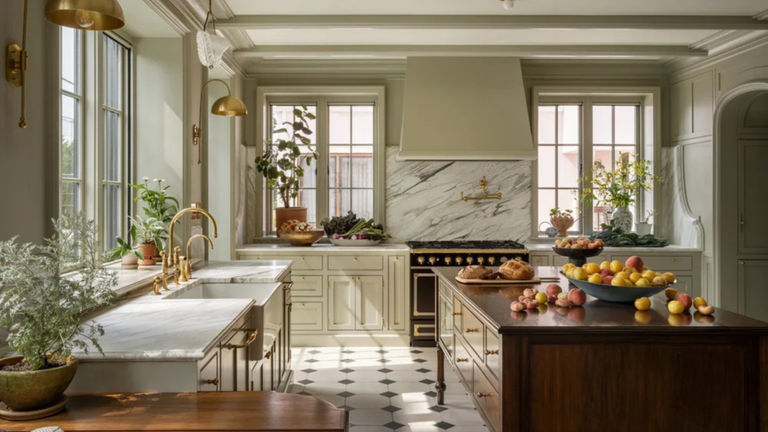
Cream framed cabinetry, marble, brass and a dark timber island combine timeless detailing with a serious working layout.
Temporary external reference images are included for design direction only. Replace them with Bella-owned or appropriately licensed photography before using them as permanent portfolio proof.
Compare Related Interior Design Styles
These directions share some traditional ingredients but change the historical, cultural or material emphasis.
Choose Classic when symmetry, proportion and timeless architectural order should lead more strongly than the layered residential character of Traditional.
Explore style →
Choose Eclectic when antique or traditional pieces should mix more freely with modern, Art Deco, contemporary or other periods.
Explore style →
Choose Arabic when majlis planning, privacy, screens, arches and Gulf regional craft should lead more strongly than European traditional references.
Explore style →
Choose Luxury when material quality, bespoke craftsmanship and high specification matter more than maintaining a traditional historical language.
Explore style →
Choose Contemporary when current furniture, softer forms and trend-aware material should dominate while traditional references remain secondary.
Explore style →
Choose Art Deco when geometry, fluting, marble, velvet and polished metal should create a more recognisable decorative language than traditional residential layering.
Explore style →Turn Traditional Style Into a Buildable Home
Traditional interiors can be furnishing-led or deeply architectural. These services let us match the appointment to the actual level of change.
For apartments, villas and private homes where traditional proportion, furniture and materials need to stay coherent across multiple rooms.
For formal guest rooms, dining, family living, kitchens, bedroom suites and larger-scale traditional architectural detailing.
For panelling, openings, built-ins, ceiling design, doors and room relationships where traditional style becomes part of the architecture.
For libraries, cabinets, panelled walls, vanities, bars and custom furniture made around the proportions of the property.
For sofas, dining furniture, rugs, curtains, lighting, art and accessories where most of the traditional character is in the furnishing layer.
For chandeliers, sconces, picture lighting, task light and dimming scenes integrated with moulding, ceilings and furniture.
For properties where floors, kitchens, bathrooms, ceilings or existing joinery need updating while good traditional character is retained.
For clients who want design, fit-out, joinery, sourcing, furniture installation, curtains, lighting and final styling coordinated as one wider scope.
Traditional Interior Design Questions
These answers focus on the decisions clients actually make: what traditional design means, how it differs from classic and transitional styles, what it costs and how it should be adapted to Abu Dhabi.
Traditional interior design is a timeless residential style rooted mainly in eighteenth- and nineteenth-century European design traditions. It uses symmetry, warm wood, moulding, chandeliers, layered textiles, rugs and furniture with established silhouettes.
Traditional home interior design applies those principles across daily residential spaces—living, dining, bedrooms, kitchens and studies—while adapting them to modern comfort, storage, technology and family routines.
The terms overlap, but traditional interiors often feel more furnished, layered and residential, while classic design can be broader and more architectural, focusing on proportion, symmetry and timeless formal composition.
New traditional design keeps craftsmanship, classical proportions and heritage references but mixes them with cleaner upholstery, bolder colour, contemporary art, modern lighting and more relaxed furniture. It is a useful 2026 direction for clients who want character without rigid period formality.
Yes. Current 2026 design coverage identifies 'new traditionalism' as a growing direction, driven by demand for character, craftsmanship, history and more personal interiors after years of generic ultraminimalism.
No. Walnut and mahogany are classic options, but painted joinery, lighter oak, cream upholstery and pale stone can make traditional architecture feel much lighter and more suitable for apartments or waterfront homes.
Warm cream, taupe, walnut brown, olive, burgundy, heritage blue, ivory and aged brass all work well. The palette can be lighter or darker depending on the room size, daylight and level of formality.
Timber, marble or limestone, wool rugs, linen, cotton, velvet, brass or bronze, framed cabinetry, moulding and quality upholstery are common. The style looks strongest when those materials are well proportioned rather than simply ornate.
Yes. We can add proportion through panelling, doors, built-ins, rugs, curtains, chandeliers and furniture without making a new villa look artificially old. New traditional is particularly effective for contemporary villa shells.
Yes. Use selective moulding, one classic chair or console, tailored curtains, a correctly scaled rug and restrained lighting rather than full-height heavy panelling and oversized furniture.
Current 2026 Abu Dhabi references place residential concept design around AED 150–250/m², concept plus 3D around AED 200–300/m² and broader full-service design around AED 300–500/m². Physical work can range from roughly AED 400–800/m² for a refresh to AED 800–1,800/m² standard and AED 1,800–3,500+/m² for higher-spec work.
Full panelling, custom doors, libraries, parquet, natural stone, built-in cabinetry, chandeliers, curtains and made-to-measure furniture require more fabrication and installation than a simple cosmetic scheme. The expensive layer is craftsmanship, not the style name.
Yes. Existing pieces often strengthen a traditional interior. We assess dimensions, condition, comfort and restoration needs, then decide whether to retain, reupholster, refinish or relocate them.
Yes. Lighting control, motorised curtains, climate controls, AV and security can be integrated discreetly into joinery, ceilings and wall panels so technology supports the home without dominating the traditional character.
It depends on the work, not the aesthetic. DMT's simplified minor-works process covers qualifying non-structural interior modifications, maintenance and interior finishes, while structural, MEP, fire/life-safety, common-property or developer-controlled changes can require additional approval.
Send the Abu Dhabi area, property type, floor plan or dimensions, current photos, furniture or architectural elements to retain, traditional references you like, approximate budget and target date. Also tell us whether you need furnishing only, renovation, fit-out or full turnkey delivery.
Create a Traditional Interior That Feels Established, Not Recreated
Share your Abu Dhabi location, floor plan, current photos, furniture you want to keep, preferred traditional references, approximate budget and target date. We can then decide whether the right route is a furniture-led refresh, new-traditional room design, selected renovation or full design and fit-out with panelling, joinery, lighting and complete installation.