2026 Interior Design Guide
Interior Design Trends 2026
Interior design trends in 2026 are moving away from sterile, one-style-fits-all rooms and toward warmer, more tactile, more personal interiors that are designed to last. The strongest directions are natural stone and character-rich timber, earthy colour, curved forms, handcrafted detail, biophilic and wellness-led planning, hospitality-inspired comfort, flexible commercial infrastructure and technology that is useful without dominating the room. For UAE homes and commercial spaces, the practical lesson is not to copy every trend: choose the ideas that improve comfort, function, maintenance and long-term relevance for your property, then adapt the colour, material and detail level to the architecture, climate, budget and way the space will actually be used.
This guide separates durable 2026 design shifts from short-lived styling moments, shows how current home interior design trends translate into villas, apartments, offices and customer-facing spaces, and explains where a trend can create unnecessary cost or maintenance. It also looks at Dubai and wider UAE design conditions so you can decide what is worth adopting rather than building a room around a trend label.
The 2026 Direction
The biggest trend is a move from visual novelty to interiors that feel warmer, more useful and more individual.
Across current 2026 design reporting, the same broad shift keeps appearing: clients still want beautiful spaces, but they are questioning finishes and layouts that look impressive for a photograph yet age quickly, feel impersonal or are difficult to live with.
Warmth over sterility
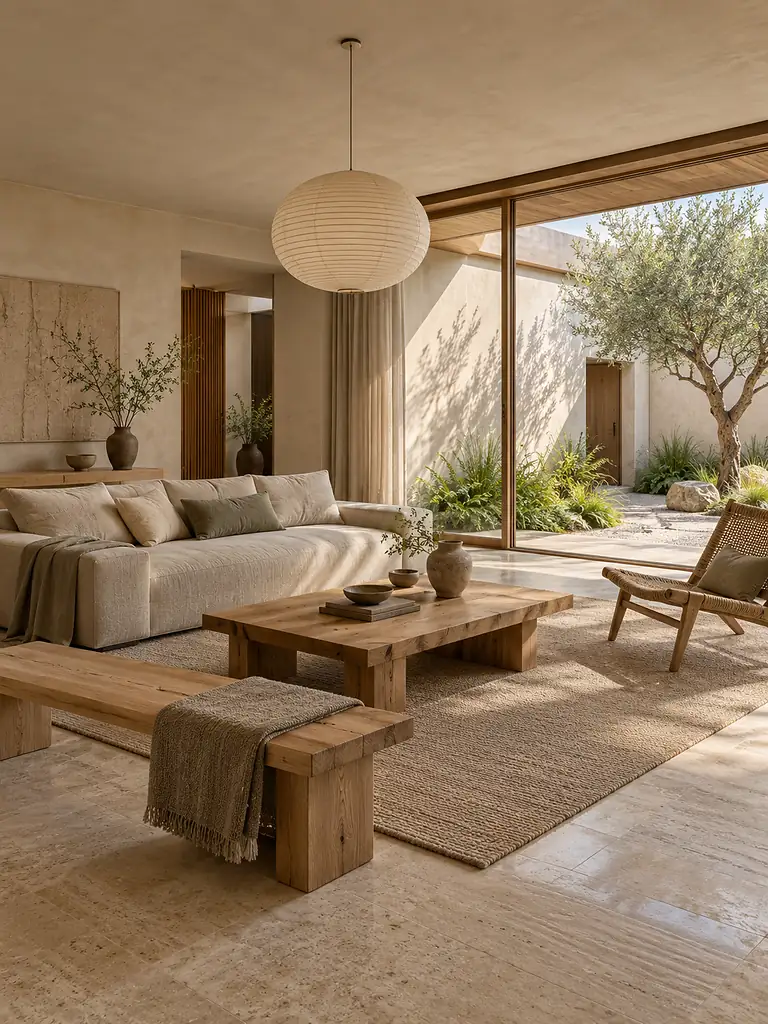
Warm woods, cream, taupe, brown, rust, muted green and deeper accent colours are replacing cold white-and-grey schemes as the automatic default.
Tactile natural materials
Stone, timber, plaster, linen, textured wall finishes and crafted surfaces are being used for depth and permanence rather than as isolated decorative accents.
Curves with purpose
Rounded islands, softer furniture and arched or eased architectural details are reducing visual rigidity, but they work best when they also improve movement or comfort.
Collected, personal rooms
Interiors are becoming less catalogue-perfect and more layered through art, vintage pieces, craft, books, objects and furniture that reflects the people using the space.
Wellness + biophilia
Daylight, views, natural texture, planting, acoustic comfort, rest spaces and better sensory control are becoming design decisions rather than decorative add-ons.
Flexible infrastructure
Commercial interiors increasingly need layouts, power, data and furniture systems that can adapt as teams, technology and operating models change.
Invisible technology
Smart controls, security, charging and audiovisual systems are becoming more capable while the visual trend is to integrate them quietly into the architecture.
Longevity as luxury
Clients are paying more attention to durability, maintenance, repairability and whether a material or layout will still feel relevant after the trend cycle moves on.
Before the List
How to Read Interior Design Trends Without Designing a Room That Dates Quickly
A trend is useful when it helps you notice a broader change in how people want to live or work. It becomes risky when the trend itself replaces the brief. Warm wood, curved furniture or a textured wall is not automatically good design because it appears in a 2026 forecast; it has to solve something in your property or strengthen an already coherent direction.
The most durable trends usually have a reason behind them. Warmer colours respond to fatigue with cold minimalist interiors. Tactile materials answer a desire for spaces that feel physical and crafted. Biophilic design responds to wellness and connection with nature. Flexible workplaces respond to changing headcount, technology and hybrid patterns. Those underlying needs can last even after the visual expression changes.
Use trend reports as a filter, not a shopping list. Ask whether the idea improves function, comfort, atmosphere, maintenance or long-term value. Then decide how strongly it should appear. A trend can be expressed through one piece of furniture, one material family or one room rather than applied to the entire property.
| Question | A stronger reason to use it | A warning sign |
|---|---|---|
| Does it improve function? | The idea makes circulation, storage, comfort or operation better. | It is being added only because it is fashionable. |
| Does it suit the property? | Scale, light, architecture and room proportions support it. | The reference image comes from a completely different property type. |
| Can you maintain it? | The finish, fabric or detail fits the actual level of use and cleaning. | It needs care the household or business will not realistically provide. |
| Can it age well? | The underlying material or form is strong even after the trend label fades. | The effect depends on an instantly recognisable fad combination. |
| Can you afford the whole detail? | Budget covers the proper fabrication, substrate, lighting or junctions. | The project can afford only a visual imitation that weakens the result. |
Trend 01
Warmth Is Replacing Cold Minimalism as the Default
One of the clearest current home interior design trends in 2026 is a move away from flat white, cool grey and highly uniform minimalist rooms. Houzz's 2026 search reporting points toward warm earthy colour, while Architectural Digest and Vogue are highlighting deeper wood tones, browns, richer colour and more individual rooms. The result is not necessarily maximalism; it is a warmer baseline.
For a home, that can mean cream instead of bright white, mushroom or taupe instead of cool grey, medium or darker timber instead of pale washed wood, and selected areas of rust, burgundy, olive, ochre or deep brown to add weight. The trend works because these colours sit comfortably with natural stone, timber, linen, leather and warmer lighting.
The mistake is to assume 'warm' means every surface should be beige or brown. A successful palette still needs contrast. Darker timber can sit against quiet plaster. A warm neutral sofa can be lifted by green, blue or burgundy. Stone can add cooler mineral variation. The goal is depth, not one-colour saturation.
Trend 02
Natural Materials Are Becoming More Textural, More Visible and More Important
Natural and character-rich materials are moving from accent status into the structure of the room. Current 2026 reporting repeatedly highlights timber, stone, plaster, clay, linen, textured wall finishes and crafted surfaces. What is changing is not simply the material list; designers are allowing more grain, pores, variation and hand-finished character to remain visible.
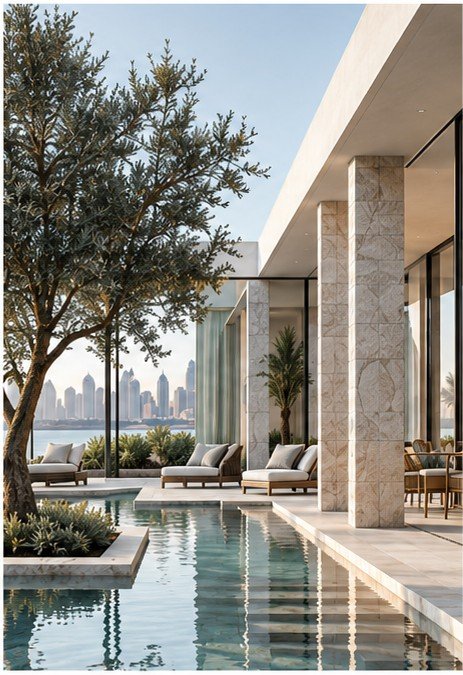
Stone is a strong example of this direction. Beige limestone, expressive marble and travertine marble can introduce warmth, mineral texture and natural variation into floors, walls, bathrooms, vanities or feature elements. Travertine is technically a form of limestone rather than marble, but the commercial term is widely used. The important design decision is not the name: it is the actual slab or tile, finish, pore treatment, jointing, edge detail, slip requirement and how the stone meets timber, metal or plaster.
In UAE interiors, this material-led approach can be particularly effective because stone and mineral finishes feel visually grounded against strong daylight. But natural material should not be chosen only for appearance. Some stones need sealing and careful maintenance; dark timber can show dust differently from pale finishes; textured plaster can be difficult to patch invisibly. The more authentic the material, the more important it becomes to understand its real behaviour.
This is also where good detailing matters. A large stone wall with poor corner treatment, random cuts or badly placed electrical accessories can feel less refined than a much simpler painted wall. Material-led design puts more responsibility on setting out, samples, fabrication and installation because there are fewer decorative layers available to hide weak execution.
Trend 03
Curves and Soft Geometry Are Moving From Furniture Into Architecture
Curved sofas and rounded tables have been visible for several years, but 2026 trend data shows soft geometry moving further into architectural elements: rounded islands, curved peninsulas, arched openings, softened joinery corners and more sculptural stairs. The appeal is easy to understand—curves reduce visual hardness and can make a space feel more relaxed.
The best use of curves is often functional. A rounded kitchen island can improve circulation around a tight corner. An eased joinery end can remove a sharp obstruction in a corridor. A curved sofa can hold conversation better than a rigid linear arrangement in some living rooms. When geometry improves how people move or sit, the trend has a reason to survive.
Curves become expensive when they are treated casually. Radius joinery, stone fabrication, curved glass, specialist plasterwork and bespoke furniture can all cost more than straight-line alternatives. Before committing, decide which one or two curved elements deserve the budget and let simpler surfaces support them.
Kitchen
A rounded island end can soften the transition between the kitchen and circulation route without forcing the entire kitchen into a curved concept.
Living room
A curved sofa or pair of rounded lounge chairs can create a more conversational centre while the surrounding joinery remains disciplined and straight.
Hallway
Eased wall, console or joinery corners can remove visual and physical sharpness where movement is tight.
Commercial reception
A curved reception counter can guide arrival and queuing, but its technical details and durable finish need to be resolved early.
Trend 04
The Latest Interior Design Is Becoming More Collected, Crafted and Personal
Another strong shift in 2026 is away from rooms that look purchased as one complete set. Houzz, Architectural Digest and Middle East design commentary are all pointing toward interiors with more craft, narrative, vintage influence, personal objects and a sense of having evolved rather than being installed overnight.
That can show up as one antique console in a modern apartment, handmade ceramic pieces, an inherited rug, art collected over time, a custom dining table, a locally made feature or a piece of furniture with visible patina. The objective is not to make every room eclectic. It is to give the interior enough specificity that it could not belong to anyone.
For a designer, this trend changes the brief. Instead of replacing everything because it does not belong to a single style family, we can identify what already has meaning and build around it. That approach can create a richer result and can also avoid unnecessary replacement.
Trend 05
Biophilic Design and Wellness Are Moving Beyond Decorative Greenery
Biophilic design is no longer useful if it means only adding potted plants to a finished room. Current 2026 Middle East commentary describes a more integrated approach: daylight, views, natural materials, sensory variation, airflow, acoustic comfort, planting, water, shade and spaces that support recovery or calm.
In a UAE villa, that might mean aligning family living with a garden view, using filtered daylight rather than heavy blackout treatment everywhere, creating shaded indoor-outdoor transitions and selecting natural materials that feel calm under strong light. In an apartment, the intervention may be smaller: one well-planned planted balcony, linen or timber textures, an uncluttered view line and better control of glare.
Wellness is also influencing room planning. Bedrooms are being treated as quieter retreats, bathrooms as more restorative spaces, and homes are accommodating exercise, reading, meditation or low-stimulation areas where the property allows. These ideas have more staying power when they support an actual routine rather than existing only for the visual effect.
Trend 06
Homes Are Borrowing Hospitality Comfort Without Needing to Look Like Hotels
Across the GCC, residential interiors are increasingly borrowing from hospitality: better arrival sequences, layered lighting, more considered bedrooms, hotel-like bathroom organisation, integrated coffee or refreshment points, upholstered details and a stronger emphasis on atmosphere.
The useful part of this trend is service and comfort, not copying a hotel room. A primary bedroom can feel more restorative because the bedside lighting is well controlled, the dressing route is organised and the headboard wall has acoustic softness. A villa entrance can feel more composed because storage, seating and lighting are planned around arrival. A guest suite can be easier to use because luggage, charging and bathroom access are considered.
In larger UAE homes, this also overlaps with traditions of hospitality. Formal reception, majlis, family living and guest accommodation may need different degrees of privacy and presentation. The design opportunity is to combine that cultural logic with contemporary comfort rather than treating hospitality as a styling theme.
Trend 07
Commercial Interiors Are Being Designed for Change, Not One Fixed Layout
Workplace design in 2026 is increasingly about adaptability. Teams change size, desks become shared, technology moves, meeting patterns shift and businesses do not want every reconfiguration to require disruptive construction. This is pushing designers to think more carefully about modular furniture, movable partitions, flexible power and data distribution, acoustic zoning and service access.
In larger offices, control rooms, technical workplaces and some data-heavy commercial environments, a raised floor can support this flexibility by creating an accessible void beneath the finished floor for power, data and other services. It is not automatically the correct solution for every office, but where frequent reconfiguration or technical infrastructure matters, it can reduce surface cabling and make later changes easier.
The trend is therefore less about a particular furniture style and more about designing the building layer and the interior layer together. A visually beautiful workstation layout becomes expensive if there are no practical routes for power and data. A flexible meeting room is not flexible if the lighting, AV or acoustic strategy only supports one configuration.
Trend 08
Interior Design Innovations Are Becoming More Integrated and Less Visually Obvious
Smart-home and commercial technology continues to expand, but the visual direction is increasingly toward integration. Clients want better control of lighting, curtains, temperature, security, charging, audio and audiovisual systems without the room looking like a technology showroom.
That affects interior design early. Curtain pockets need enough space for tracks and motors. Lighting control should be coordinated with circuits and scenes. TV and speaker locations affect joinery depth, ventilation and cable routes. Wireless charging and discreet power need furniture or joinery decisions. Security devices need sightlines but can often be positioned more carefully.
AI is also influencing design workflows through visualisation, research and option generation, but it does not remove the need to verify dimensions, codes, product availability, material performance or contractor information. The most useful interior design innovations reduce friction in the project or improve daily use; technology added only because it is new usually becomes another system to maintain.
Trend 09
Longevity, Maintenance and Material Intelligence Are Becoming Part of the Luxury Conversation
One of the most important GCC design shifts in 2026 is the move from trend relevance toward long-term performance. Regional design commentary is emphasising material quality, craftsmanship, durable finishes, local sourcing where practical, maintenance efficiency and the way a space will age.
That changes what 'luxury' can mean. A highly polished finish that scratches immediately may be less luxurious in real use than a honed material that develops gracefully. A bespoke piece with replaceable hardware may be more valuable than a visually elaborate item that cannot be repaired. A timeless floor material can justify more budget than a decorative surface that will be replaced when the trend cycle changes.
Sustainability becomes more credible when it is connected to those decisions. Keeping a good existing floor, refinishing timber, using durable upholstery, selecting efficient lighting, reducing unnecessary demolition and specifying materials for longer service life can matter more than adding a single product marketed as 'green' while the rest of the project remains disposable.
UAE Context
Dubai Interior Design Trends and UAE Trends Need to Be Adapted to the Property
Dubai interior design trends often become visible quickly because the city has a high concentration of new residential towers, villas, hospitality, branded residences, offices and customer-facing commercial spaces. You can see current directions—warmer natural materials, hospitality influence, sculptural forms, richer colour and biophilic elements—across very different project types. But the correct application changes by location and property.
A Dubai Marina apartment may need to protect views and floor area, so a trend toward heavier furniture or deep colour has to be controlled. An Emirates Hills villa can support larger-scale joinery, layered stone and more formal reception areas. A Business Bay office may take the flexibility trend into acoustic meeting spaces, adaptable workstations and service distribution rather than residential materials.
The same principle applies in Abu Dhabi. If you are moving from trend research into an actual project, our interior design Abu Dhabi page explains Bella's residential and commercial approach in its home market. The trend article helps you decide what is changing; the homepage shows how those ideas sit inside a real local service, project and property context.
Ajman, Sharjah and other Emirates can show many of the same visual directions, but local property type, building age, landlord conditions, project scale and budget can change how far a trend should go. Searching for 'Ajman modern interior design trends' or 'interior design trends Ajman' should therefore lead to the same question: which trend improves this property rather than which trend is most visible online.
Practical Examples
How Current Interior Design Trends Translate by Room and Property Type
A trend becomes useful when it can be translated into a real decision. The examples below show how the same 2026 directions can be applied differently without making every room look identical.
Living room
Use warmer timber, one sculptural curved piece and layered art or objects rather than replacing every item. Keep circulation and conversation layout more important than the trend.
Bedroom
Cocooning forms, upholstered headboards, softer lighting, natural textiles and deeper colour can support rest. Avoid overfilling the room with heavy trend furniture if clearances are tight.
Kitchen
Warm wood, natural stone, textured finishes and selective stainless steel can create contrast. Use curved island details only where they improve movement or become a justified focal element.
Bathroom
Tactile stone, warmer neutrals, integrated niches and layered lighting can feel current without relying on a fashionable tile pattern that may age quickly.
Villa
Larger homes can combine natural material, craft and hospitality trends across formal and family zones, but the same palette needs enough variation to avoid repetition across multiple floors.
Office
The most relevant trends are flexibility, acoustics, human-centric lighting, adaptable technology and spaces for different work modes—not residential styling transferred into a workplace.
What Is Changing
Which Older Interior Design Trends Are Losing Momentum?
Trend forecasts are more useful when they explain what is becoming less relevant. In 2026, the broad direction is moving away from cold, highly uniform minimalism, all-grey interiors, generic furniture packages, high-gloss surfaces used without restraint and spaces that photograph as perfect but reveal little about the people using them.
That does not mean white, grey, minimalism or gloss are suddenly 'wrong.' A white gallery-like apartment can still be excellent when the architecture and client want that clarity. A high-gloss lacquer can still create a deliberate contrast. The issue is automatic use: applying the same formula regardless of light, property type, maintenance or personality.
Older searches such as 'home interior design 2023' or 'modern neoclassical interior design 2024' can still contain useful ideas, but the date label should not decide whether the idea belongs in a 2026 project. Neoclassical proportion, timber, stone, arches and decorative detail have existed far longer than trend cycles. The better question is whether the interpretation feels appropriate now and can age with the property.
Cost + Maintenance
Which 2026 Trends Cost More, and Which Can Be Added Without Rebuilding the Room?
Not every trend requires a full renovation. Colour, textiles, art, smaller furniture and decorative lighting can change the atmosphere with relatively limited construction. Natural stone walls, curved joinery, specialist plaster, bespoke furniture, integrated smart systems and reworked ceilings require more design, fabrication and site coordination.
The cost question should therefore be tied to the level of intervention. If your existing layout works, introducing warmer paint, timber furniture, curtains, a textured rug and selected art may deliver the 2026 direction without changing the built shell. If the project is already under construction, that may be the moment to integrate curves, service infrastructure, ceiling lighting or more permanent natural-material elements.
| Trend | Lower-intervention route | Higher-intervention route | Main maintenance question |
|---|---|---|---|
| Warm colour | Paint, rugs, cushions, art | Full material palette and joinery | Will the colour work in your actual daylight? |
| Natural materials | Furniture, side tables, decorative stone pieces | Stone floors/walls, timber panelling, bespoke joinery | Sealing, staining, scratching and repair |
| Curves | Loose furniture and lamps | Curved stone, joinery, walls or stairs | Specialist fabrication and replacement |
| Biophilia | Plants, natural textiles, improved view lines | Landscape integration, courtyards, major glazing/shading work | Plant care, irrigation, moisture and daylight |
| Smart technology | Plug-in or wireless devices | Integrated controls, AV, blinds and security | Compatibility, upgrades and access |
| Flexible office | Modular furniture | Demountable partitions, adaptable services, access-floor systems | Access, spare capacity and future changes |
Common Mistakes
Interior Design Trend Mistakes That Make a Project Look Older Faster
Using every trend in one room
Curves, fluting, travertine, coloured ceilings, chrome, vintage furniture and dark timber do not become stronger simply because they are all current. Choose a hierarchy.
Copying a reference property
A high-ceiling villa image can mislead an apartment project. Scale, window size, circulation and ceiling height change how the same idea performs.
Treating material character as permission for poor execution
Natural variation is beautiful; random setting out, weak joints and badly aligned accessories are not.
Ignoring maintenance
A porous stone, pale fabric or specialist wall finish can be correct for one household and completely impractical for another.
Making curves where straight lines work better
Curved fabrication can add cost and complexity. Use it where it softens movement, supports furniture or creates a deliberate focal point.
Following colour forecasts without checking light
A warm brown or olive seen online can change dramatically under UAE daylight, warm evening lighting and reflective stone floors.
Buying trend furniture before planning
A sculptural sofa that looks current can still block circulation or leave no useful place for side tables, sockets and lighting.
Calling a trend timeless
Nothing is guaranteed to be timeless. The safer aim is strong proportion, useful planning, durable material and enough personality to remain enjoyable after the label changes.
Bella Project Insight
What 2026 Trends Look Like When the Project Problem Comes First
Bella's existing project studies are more useful than a trend mood board because each one begins with a challenge. The same current directions—warmth, comfort, hospitality, flexible planning and better atmosphere—only become meaningful when they improve the specific project.
Open Living, Connected Spaces
A generous living and dining zone needed to feel connected enough for family life and entertaining, while still giving each activity a clear place and keeping movement through the room effortless.
We used furniture zoning, a restrained material palette and strong architectural sightlines to define living, dining and circulation without adding visual barriers. Lighting and joinery were treated as part of the layout so the room feels composed from every approach.
City Views, Better After Dark
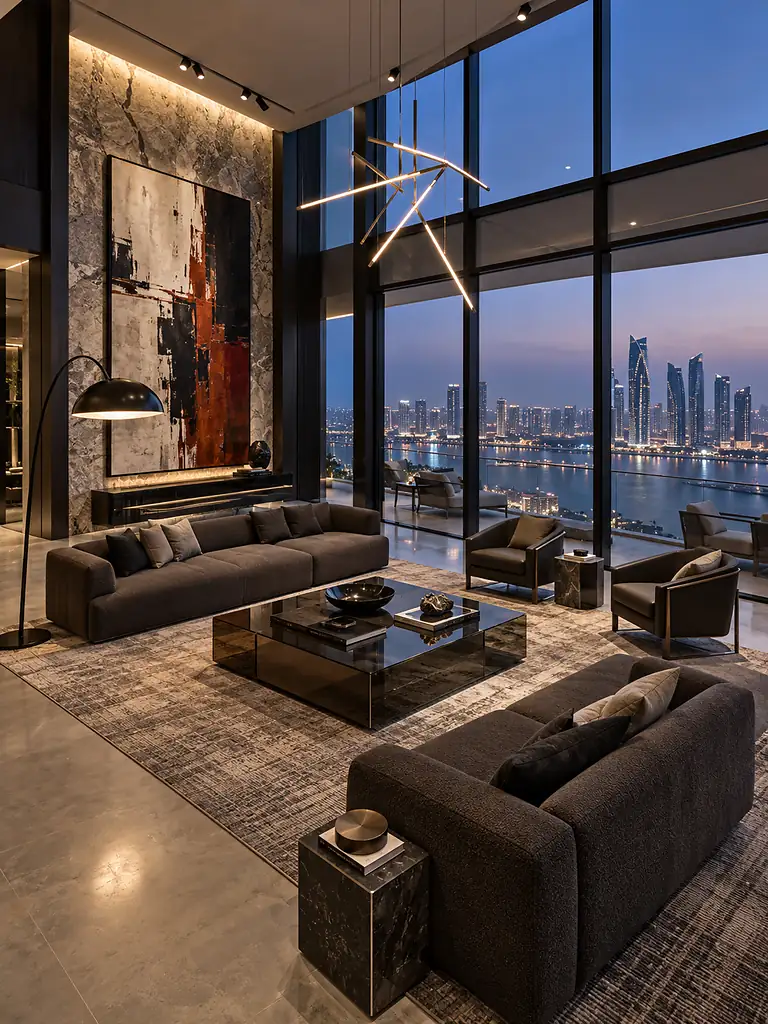
The main living volume needed to make the most of panoramic glazing while remaining warm, legible and visually balanced at night, when reflections and artificial light become more prominent.
We layered architectural and decorative lighting, used deeper timber and stone tones to give the room visual weight, and treated the stair and vertical volume as part of the composition rather than background circulation.
A Boardroom That Works Quietly
The meeting environment needed a strong executive presence without becoming visually heavy, while keeping the table, presentation zone and movement around the room comfortable for longer sessions.
We kept the material palette controlled, organised lighting around the table rather than the room perimeter, and allowed clear circulation behind the seating. Furniture, finishes and visual focus were coordinated so the space reads professionally without feeling overdesigned.
Decision Framework
How to Use Interior Design Trends 2026 in Your Own Project
Start by identifying the two or three qualities you actually want: warmer, calmer, more expressive, more natural, easier to maintain, more flexible, more private or more social. Then choose trends that support those qualities. That approach keeps the project centred on your brief instead of the date on the article.
Define the outcome
Write what should feel or work differently in the finished space before selecting a visual trend.
Separate permanent from replaceable
Use the most durable ideas for floors, ceilings, stone and joinery; keep more fashion-sensitive ideas in paint, furniture, textiles or accessories where appropriate.
Test the material in real light
View timber, stone, paint and fabrics in the property whenever possible. UAE daylight and artificial lighting can change colour and texture significantly.
Check the maintenance reality
Choose surfaces and upholstery for the people, pets, customers, cleaning methods and intensity of use the space will actually experience.
Coordinate the technical layer early
If the trend affects ceilings, lighting, stone fabrication, smart controls, power, data or services, resolve those interfaces before site work or orders are locked.
Leave room for personality
Do not make every object part of the trend. Art, books, travel pieces, family objects or existing furniture can stop the space feeling like a showroom.
The Takeaway
The Best Interior Design Trend for 2026 Is a Space That Still Makes Sense After 2026
The strongest 2026 trends—warmth, natural material, tactile finish, soft geometry, craft, wellness, flexibility and longevity—are valuable because they address how interiors feel and perform, not because they create one prescribed look. That gives you freedom to apply them to Modern, Contemporary, Classic, Arabic, Minimalist, Biophilic or other design languages without making every project look the same.
If you remember one rule, use trends to refine the brief rather than replace it. A well-planned room with the right scale, light, material and maintenance strategy can absorb changing furniture and colour over time. A poorly planned room remains difficult no matter how current its finishes are.
Continue Learning
Related interior design guides
Only guides already published in the database will appear here; future planned guides stay hidden until their own page goes live.
What Is Interior Design?
What is interior design? Learn its meaning, scope, process, difference from decoration, FF&E, costs, common mistakes and practical UAE examples.
→ Start HereInterior Design Concepts
Interior design concepts explained: turn a brief into layout, materials, lighting and furniture with practical home, café, commercial and UAE examples.
→ Materials & DetailsInterior Design Materials
Compare interior design materials including stone, timber, metal, glass, porcelain, fabrics and countertops by use, maintenance and UAE conditions.
→ Trends & InspirationInterior Design Themes
Interior design themes explained with forest, desert, coastal, gallery, hospitality and wellness ideas, plus practical material and UAE examples.
→Frequently Asked Questions
Interior Design Trends 2026 — FAQs
What are the biggest interior design trends in 2026?
The strongest 2026 directions include warmer earthy colour, richer timber and natural stone, tactile surfaces, curved forms, collected and personalised rooms, integrated biophilic and wellness design, more flexible commercial interiors, discreet smart technology and a stronger focus on durability and long-term value.
What colours are trending in interiors in 2026?
Warm neutrals, taupe, cream, mushroom, chocolate and espresso browns, rust, burgundy, ochre, muted green and selected softer blues are appearing frequently in 2026 reporting. The right colour still depends on the room's daylight, artificial lighting, materials and desired atmosphere.
Are grey and white interiors out of style?
No. What is fading is the automatic use of cold grey and stark white as the default for every project. White and grey can still work well when the architecture, light and client want clarity; 2026 interiors are simply showing more warmth, texture, colour and personality.
Are curved interiors still trending in 2026?
Yes. Curves are expanding from loose furniture into islands, joinery, arches and other architectural details. They are most successful when the curve improves circulation, comfort or spatial softness rather than being added only as a fashion feature.
Is biophilic design still a trend in 2026?
Yes, but it is increasingly understood beyond indoor plants. Biophilic design can include daylight, views, natural materials, sensory comfort, planting, shade, acoustic quality and planning that strengthens a person's connection to nature and well-being.
What are Dubai interior design trends in 2026?
Dubai projects are showing many global 2026 directions—warm natural materials, hospitality influence, richer colour, sculptural forms, biophilic elements and highly integrated technology—but the application changes between apartments, villas, offices, retail and hospitality. Property type and context remain more important than the trend label.
What are the current home interior design trends?
Current home interior design trends favour rooms that feel warmer, more tactile and more personal: natural wood and stone, layered textiles, softer geometry, richer colour, well-being spaces, collected objects and furniture, and layouts designed for real routines rather than showroom perfection.
Which 2026 interior design trends are most likely to last?
Ideas linked to function and material quality generally have the strongest staying power: better space planning, natural materials, durable finishes, comfortable lighting, flexible layouts, good storage and personal objects. Highly specific colour or decorative combinations are easier to change as preferences evolve.
Should I renovate my home just to follow interior design trends?
Usually not. If the layout and built elements work well, many current trends can be introduced through paint, lighting, curtains, rugs, art and selected furniture. Renovation makes more sense when there are functional, technical or maintenance problems to solve at the same time.
How can I use trends without making my home date quickly?
Keep permanent elements—layout, flooring, major joinery and technical systems—focused on function, quality and longevity. Use more fashion-sensitive ideas in layers that are easier to update, and choose only the trends that genuinely suit the property and the way you live.
References
Sources & further reading
Professional definitions and specialist references used to support or verify specific points in this guide.
Applying These Ideas to a Real Property?
Send us the property and the decisions you are trying to make—not just the trend images.
If you already have a villa, apartment or commercial space in mind, share the location, floor plan or approximate area, current photos, the trends or references you like, what needs to work better, target timing and budget range if known. Bella can then help separate the ideas that suit the property from the ones that will add cost without improving the result.