
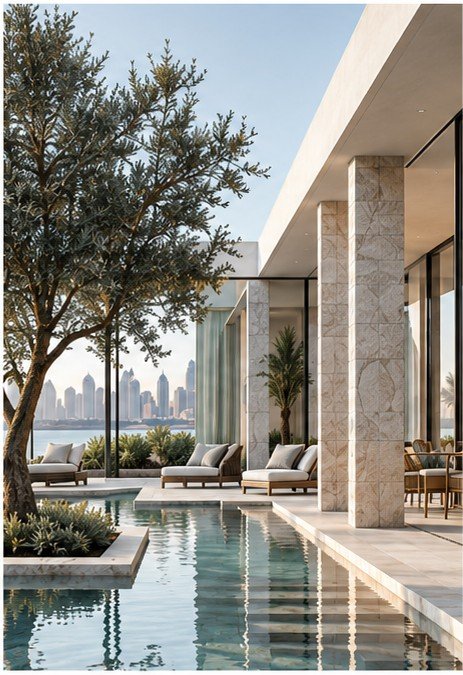
Interior Design Guide
Interior Design Themes
Interior design themes are organising ideas that give a space a recognisable atmosphere and narrative—such as forest-inspired, desert-mineral, coastal, gallery-led, hospitality, heritage or wellness—but a successful theme must influence real design decisions rather than rely on decorative symbols. The theme should guide colour, material, lighting, furniture, artwork and selected architectural details while still respecting the property's layout, users, climate, maintenance and budget. The strongest themed interiors therefore feel coherent without becoming literal: a forest theme can use natural timber, layered greens, filtered light and tactile stone without filling the room with leaf prints, while a desert theme can use warm mineral colour, textured plaster and stone without turning the space into a staged set.
This guide explains the difference between a theme, style, concept and mood board, how to choose a theme that belongs to the property, how to translate themes into practical material and lighting decisions, and how different ideas work across villas, apartments, bedrooms, living rooms, cafés, restaurants, offices and customer-facing spaces.
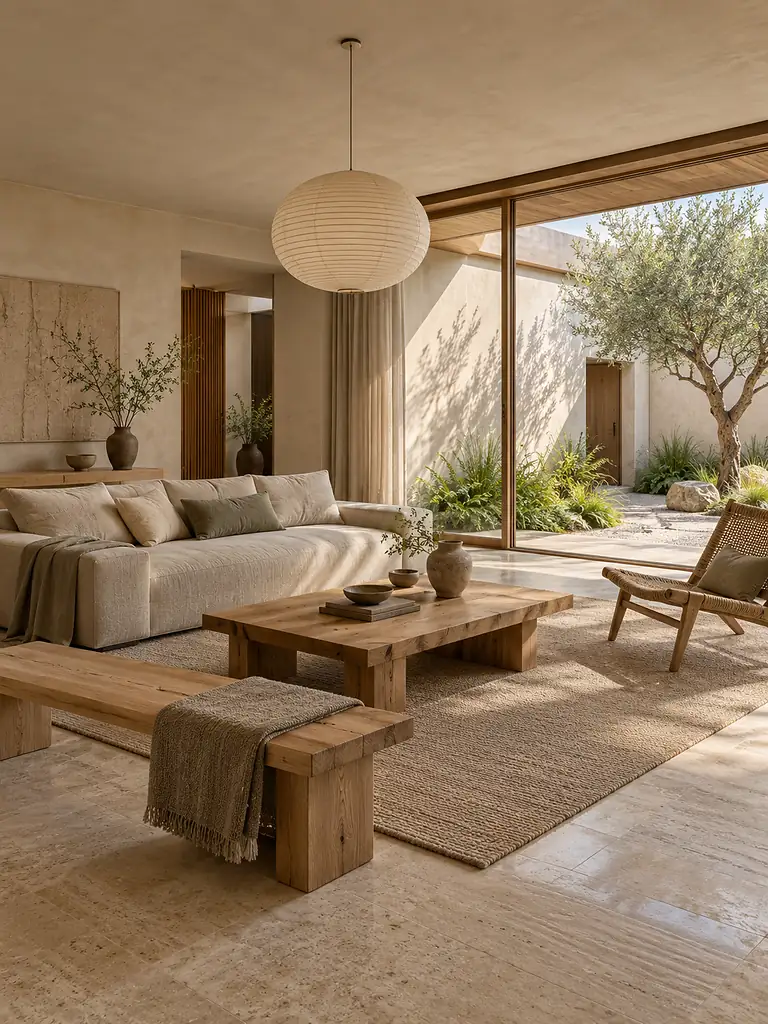
Themes in One Minute
A theme should influence the room's design logic—not become a collection of matching decorations.
Choose a theme because it supports the desired experience of the space. Then translate it into a small number of repeatable decisions so the room feels intentional even when individual products change.
Narrative
A theme gives the room a recognisable idea or atmosphere, such as forest retreat, desert calm, urban gallery or boutique hospitality.
Palette
Colour should express the theme through dominant and supporting tones rather than literal matching across every surface.
Materials
Stone, timber, metal, glass, plaster and textiles make the theme physical and should be chosen for real performance as well as appearance.
Lighting
The theme should influence brightness, contrast, shadow, focal lighting and the way materials are experienced through the day.
Furniture + art
Shape, scale, upholstery, artwork and objects should reinforce the atmosphere without turning the space into a stage set.
Restraint
The more literal the theme becomes, the faster it can feel temporary. Strong themes usually rely on material, proportion and mood before decorative motifs.
Definition
What Is an Interior Design Theme?
An interior design theme is a unifying idea or narrative used to give a space a recognisable character. It may come from nature, place, culture, activity, atmosphere or brand—for example forest retreat, desert landscape, coastal calm, modern majlis hospitality, art gallery, urban workshop or wellness sanctuary.
A theme becomes useful when it helps the designer decide what belongs and what does not. If the theme is 'quiet desert retreat,' warm mineral colour, honed stone, woven textiles and filtered light may support it, while bright chrome, glossy black lacquer and highly saturated pattern may work against it.
The theme should not replace function. A forest-inspired restaurant still needs durable floors, service routes, acoustic comfort and cleanable surfaces. A coastal bedroom still needs the correct bed clearances, wardrobe storage and lighting. The theme sits on top of a functioning plan; it does not excuse poor planning.
Know the Difference
Interior Design Theme vs Style, Concept and Mood Board
A single project can use all four layers. A villa may use a Contemporary style, a 'desert garden' theme, a concept centred on hospitality and indoor-outdoor connection, and a mood board that shows warm limestone, darker timber, olive textiles and filtered light.
| Term | What it does | Example | Common mistake |
|---|---|---|---|
| Theme | Creates a narrative or recognisable atmosphere | Forest retreat, desert calm, urban gallery | Making the idea too literal through decorative motifs |
| Style | Provides a broader visual language | Modern, Contemporary, Classic, Arabic, Art Deco | Assuming style alone solves the project brief |
| Concept | Explains the project-specific design logic | Layer formal and family zones around a shared warm material language | Using vague adjectives that do not guide decisions |
| Mood board | Shows the visual direction | Images, palette, stone, timber, fabric, lighting and furniture references | Treating reference images as final product approvals |
Selection
How to Choose an Interior Design Theme That Belongs to the Property
Start with the property and people rather than the theme name. A theme should emerge from how the space is used, what the architecture already offers, which atmosphere the client wants and what can realistically be maintained.
A garden-facing villa with generous daylight may support a forest or biophilic theme naturally because views, planting and material can connect. A compact city apartment may benefit more from an urban gallery or quiet hotel theme that uses controlled colour, concealed storage and selected art without adding visual clutter.
- Property type: villa, apartment, office, restaurant, retail, salon or hospitality space.
- Architecture: ceiling height, glazing, views, proportions, existing finishes and structural character.
- User: family routines, guest patterns, staff/customer behaviour, privacy and maintenance expectations.
- Atmosphere: calm, social, dramatic, restorative, artistic, formal, playful or another clearly defined quality.
- Material opportunity: what real stone, timber, textile, metal, plaster or existing finishes can support the idea.
- Lighting: how daylight and artificial light can reinforce the theme instead of fighting it.
- Budget: whether the theme can survive value engineering without becoming a cheap imitation.
- Longevity: whether the idea will still feel appropriate after fashionable accessories are changed.
Theme 01
Forest Theme Interior Design: Nature Without Turning the Room Into a Jungle
Forest theme interior design works best when it is built from the qualities of a forest rather than copied through literal decoration. Think layered greens, natural timber, mineral texture, filtered light, uneven organic forms, quieter acoustics and views toward planting—not leaf print on every wall.
The palette can begin with timber and warm neutral walls, then add olive, moss, fern or deeper green through upholstery, artwork or selected joinery. Stone can represent the mineral layer, while linen, wool and textured fabrics provide softness. Plants should be chosen for the actual light and care available rather than added only to complete the image.
Lighting is important. Forest-inspired rooms often feel strongest with layered light, softer contrast and concealed or reflected sources rather than uniformly bright ceilings. A stronger pool of light can highlight art, planting or textured wall material while the surrounding room remains calmer.
For UAE properties, the theme can be adapted through indoor-outdoor connection. A villa may align family living with garden views, use shaded glazing and continue natural material between interior and landscape. An apartment can create the same atmosphere at smaller scale through timber, planting, woven texture, warm stone and a controlled view line.
Theme 02
Desert and Mineral Themes: Warmth, Shadow and Natural Stone
A desert theme does not need sand-coloured everything. The most convincing versions use a mineral base—cream, beige, clay, taupe, stone grey and warm brown—then create depth through shadow, texture and changes in finish.
Textured plaster, linen, woven rugs, timber, bronze-toned metal and natural stone can work together because they share an earthy material logic. The design can still include dark accents or green planting; contrast often makes the warm palette feel richer rather than breaking the theme.
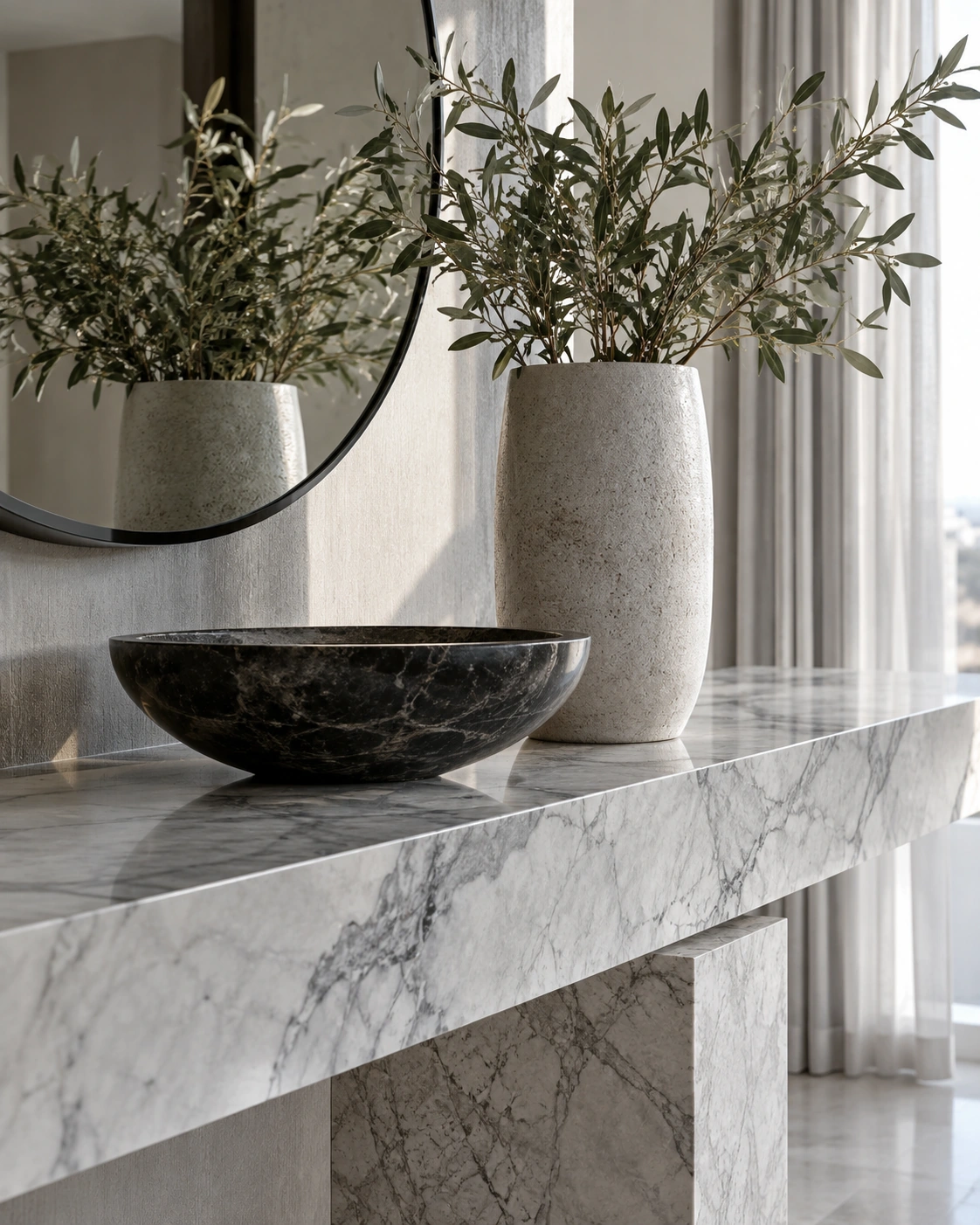
A stronger grey-brown stone such as silver travertine can shift a desert-mineral theme away from pale beige and toward a more architectural look. Its linear mineral character can work on a feature wall, floor, console or fireplace, but the surrounding plaster, timber and furniture should be calmer so the stone remains intentional rather than becoming one more competing pattern.
Use natural stone with realistic expectations. Travertine has natural pores and variation, and the selected finish, filling, sealing and maintenance strategy should suit the application. The theme should celebrate material character without treating every irregularity or installation issue as 'natural.'
Theme 03
Coastal Theme: Light, Texture and Air Without Nautical Clichés
A sophisticated coastal theme is about lightness, movement and natural texture, not anchor motifs and blue-and-white stripes. Pale timber, limestone, linen, woven fibre, soft blue-grey or sea-glass tones and furniture with lighter visual weight can create the atmosphere more naturally.
Keep surfaces relatively matte and tactile. Excess high gloss can make the room feel more glamorous than coastal. Use blue selectively; warm sand, off-white, driftwood brown and muted green can communicate the theme just as effectively.
In waterfront UAE apartments, the actual view should remain the strongest coastal element. Avoid heavy wall decoration and tall furniture that competes with glazing. Curtain design, furniture height and the position of reflective surfaces can matter more than decorative accessories.
Theme 04
Boutique Hospitality Theme: Bring Hotel Comfort Home Without Copying a Hotel Room
A hospitality theme works when it borrows the service logic of good hotels: composed arrival, layered lighting, comfortable seating, considered bedside functions, organised storage and materials that feel complete from multiple viewing angles.
For a bedroom, that can mean an integrated headboard, bedside controls, reading lights, blackout curtains, luggage space and a calm material palette. For a villa entrance, it can mean seating, concealed storage, a clear focal point and lighting that changes from daytime arrival to evening hospitality.
The mistake is to copy hotel sameness into a private home. A residence still needs personal art, family objects and furniture that reflects how the client lives. Use hospitality to improve comfort and sequence, then let the home remain personal.
Theme 05
Gallery and Art-Led Themes: Let the Collection Establish the Interior
An art-led theme treats walls, lighting and furniture as a supporting environment for a collection. The palette is often restrained so artwork can change over time without forcing the entire room to be redesigned.
Wall space, hanging height, picture lighting, circulation and sightlines should be considered before large furniture is purchased. Sculpture may need floor clearance and 360-degree viewing; photography behind glass needs glare control; works on paper may require more careful light exposure.
The interior does not need to be all white. Darker walls can make selected artwork more dramatic, timber can add warmth and rugs can improve acoustics. The theme succeeds when the art feels integrated rather than added after every other wall has already been occupied.
Theme 06
Heritage and Arabic-Inspired Themes: Use Proportion, Craft and Hospitality Before Ornament
Arabic-inspired interior themes can draw from hospitality, geometry, material craft, screening, textile, arch forms and regional proportion without covering the space in literal motifs.
A majlis may use a more formal seating rhythm, richer fabric, stone or timber detail, controlled symmetry and lighting that supports conversation. Mashrabiya-inspired screening or geometric detail can be used selectively where privacy, light filtering or spatial separation gives it a functional reason.
The strongest heritage themes combine references with contemporary use. Furniture height, electrical access, air-conditioning, acoustics and easy maintenance should remain current even when the visual language connects to tradition.
Theme 07
Wellness and Spa Themes: Design for Calm Through Sensory Control
A wellness theme is most convincing when it changes sensory conditions: softer acoustic response, controlled lighting, natural texture, uncluttered views, comfortable temperature and spaces that support rest or recovery.
Stone, timber, plaster, linen and planting can all support the theme, but they should not be applied mechanically. A bathroom may use warmer stone, integrated niches and low-glare lighting; a bedroom may prioritise blackout, acoustic softness and fewer visible objects; a reading room may use daylight, tactile upholstery and one quiet view.
Avoid making every wellness space beige. Calm can also come from deep green, muted blue, charcoal or darker timber when lighting and texture are balanced.
Theme 08
Urban and Industrial Themes: Edit the Rawness Instead of Copying a Warehouse
Industrial themes often use concrete, exposed services, metal, brick, darker timber and utilitarian furniture, but a comfortable interior needs more control than an actual industrial building.
Use raw elements selectively and balance them with acoustics, upholstery, warm lighting and precise detailing. A restaurant may expose selected ductwork while keeping the main ceiling visually organised. An office may use black metal and concrete-toned surfaces but introduce carpet, acoustic panels and planting where people work for long periods.
The theme should not become an excuse for unfinished workmanship. Deliberately exposed structure and genuinely incomplete work are not the same thing.
Theme 09
Dark and Cinematic Themes: Control Reflection, Contrast and Comfort
Dark interiors can feel intimate, dramatic and highly refined, especially in media rooms, restaurants, lounges and evening-focused living spaces. The theme depends less on black paint than on controlled contrast.
Use several dark values rather than one flat colour: charcoal plaster, dark timber, deep olive or burgundy textile, bronze metal and selected stone can produce more depth. Lighting should create focal pools and reveal texture instead of flooding the room uniformly.
Reflective surfaces need control. Large polished stone, glass and mirrors can create unwanted highlights around screens or views. The darker the palette, the more important it becomes to test how the room works during the day as well as after sunset.
From Theme to Material
How to Translate a Theme Into Real Materials Without Losing the Idea
The theme should first define material qualities rather than exact products. A forest theme may need 'warm timber, soft mineral stone, woven natural textile and dark green accent' before deciding which oak, limestone or fabric supplier to use.
Once products are shortlisted, check performance and fabrication. A natural-stone theme may depend on continuous floor or wall surfaces, which means slab sizes, joints, substrate, levels, edges and installation method become part of the design.
Where a Dubai project relies heavily on stone floors, stairs, walls or bookmatched features, specialist marble installation in dubai becomes relevant to the design outcome because the intended theme can be weakened by poor leveling, slab alignment, vein setting-out, joints or edge finishing. The installation destination itself covers marble floors, walls, staircases and statement spaces; the interior designer's role is to keep those execution decisions aligned with the approved material concept.
This principle applies to every theme. The theme is not complete at mood-board approval; it has to survive technical drawings, samples, procurement and installation.
Lighting
Lighting Is One of the Fastest Ways to Make a Theme Feel Convincing—or Artificial
A forest theme under bright uniform white light will lose much of its depth. A gallery theme without art lighting will feel unfinished. A hospitality theme without layered evening light will look like a furniture showroom.
Translate the theme into lighting behaviours: filtered daylight, low-glare ambient light, focal spots, wall washing, grazing, decorative pendants, table lamps or concealed lighting. Then coordinate those behaviours with the actual ceiling, electrical and control plan.
Colour temperature should support the palette, but one number does not solve the whole room. Material reflectance, dimming, daylight and contrast between sources all change perception.
Room Examples
How Interior Design Themes Change by Room
Living room — Desert Gallery
Warm mineral floor, quieter plaster walls, one strong artwork, darker timber and low-contrast upholstery. Keep the stone and art as the main visual hierarchy.
Bedroom — Forest Retreat
Timber, moss or olive accents, textured fabric, filtered light and minimal decorative motifs. The room should feel restorative rather than themed.
Dining room — Boutique Hospitality
One sculptural light, tactile chairs, a refined wall or art piece, and stronger evening contrast. Use the theme to make dining feel intentional without reducing comfort.
Bathroom — Mineral Spa
Warm stone, controlled joints, simple vanity, low-glare mirror lighting and tactile accessories. Performance and waterproofing remain more important than visual styling.
Home office — Urban Gallery
Quiet background, ergonomic desk, selected art, focused task lighting and controlled shelving. Avoid turning every wall into display.
Majlis — Contemporary Heritage
Formal seating rhythm, richer textile, selected geometric or crafted detail, balanced symmetry and hospitality-led lighting without overusing motifs.
Commercial Interiors
Interior Design Themes for Cafés, Restaurants, Offices and Retail
Commercial themes need to support brand and operation. A café theme should influence counter design, queue, seating, lighting and cleaning—not only wall graphics. A restaurant theme should work with service flow, acoustic comfort, table turnover and evening atmosphere.
Office themes are usually most successful when they express company values through material and spatial behaviour. A technology business may value flexibility and clarity more than futuristic decoration. A professional services firm may need calm, privacy and material quality rather than generic corporate blue.
Retail themes should support product presentation. Strong interiors can be memorable, but the merchandise remains the reason customers are there. Use adaptable display and lighting systems so seasonal or campaign changes do not require rebuilding the theme.
| Project | Theme example | Operational translation |
|---|---|---|
| Café | Craft workshop | Visible preparation, robust counter material, communal table, warm task/focal lighting |
| Restaurant | Night garden | Planting, dark mineral surfaces, acoustic softness, controlled low-level light |
| Office | Calm intelligence | Clear planning, acoustic meeting rooms, restrained material, integrated technology |
| Retail | Product gallery | Quiet backdrop, flexible display, focused lighting, clear circulation |
| Salon / spa | Soft ritual | Privacy, flattering light, tactile finish, concealed storage, easy-clean service zones |
| Hotel / hospitality | Local contemporary | Regional material references, comfortable arrival, durable guest-room details |
UAE Context
How Interior Design Themes Should Adapt to Abu Dhabi and UAE Properties
UAE projects can support a wide range of themes, but strong daylight, large villa footprints, formal hospitality, high-rise views, air-conditioned interiors and access to international materials all change how those themes should be interpreted.
If the theme is moving from inspiration into an actual local property, our interior design Abu Dhabi homepage shows how Bella applies residential and commercial design in its home market. The connection is contextual: this article helps define the narrative and design direction, while the homepage shows how that direction sits inside real project scope, process, services and Abu Dhabi delivery.
A forest theme in a villa can connect directly to landscape and shaded outdoor space; in a tower apartment it may depend more on timber, planting and filtered window light. A desert theme can respond naturally to regional mineral colour, but it still needs contrast so the entire property does not become one beige surface.
For commercial projects, landlord, fire, acoustic or authority requirements may limit certain decorative systems. The theme should adapt to those constraints rather than promising a look that cannot be delivered safely or compliantly.
Budget
How to Keep an Interior Design Theme Strong When the Budget Changes
A robust theme should survive substitution. If the theme depends entirely on one rare marble, imported chandelier or fully bespoke furniture collection, a budget change can collapse the whole design.
Identify which qualities actually carry the theme. A forest theme may depend more on timber warmth, green layering and filtered light than on one particular imported wall panel. A gallery theme may need clean wall space and art lighting more than an expensive floor.
Protect permanent decisions first: layout, lighting infrastructure, floor transitions and key built-in elements. Use furniture, paint, textiles, art and accessories for theme layers that may change more easily over time.
- Write the theme in qualities, not only product names.
- Identify one or two concept-defining material moments that deserve budget priority.
- Keep secondary materials simpler rather than replacing premium products with weak imitations.
- Use art, textiles and loose furniture for stronger narrative elements where future change is useful.
- Protect technical quality—substrates, waterproofing, electrical safety, access and proper fixing—even if decorative scope is reduced.
Decision Criteria
How to Test Whether an Interior Design Theme Is Strong Enough
| Test | Strong theme | Weak theme |
|---|---|---|
| Brief | Responds to the property, users and desired experience | Could be applied to any project without change |
| Plan | Influences zoning, furniture and circulation where relevant | Exists only in decoration |
| Material | Uses a coherent family with deliberate contrast | Relies on obvious motifs or printed imagery |
| Lighting | Has a clear daylight and evening atmosphere | Uses generic ceiling lighting |
| Furniture | Scale and form support the theme and function | Furniture is selected only because it matches the colour |
| Budget | Survives sensible product substitutions | Collapses if one expensive item is removed |
| Longevity | Still works when accessories change | Depends on fashionable props and literal décor |
| Communication | Client and project team can explain the same idea | Everyone interprets the theme differently |
Common Mistakes
Interior Design Theme Mistakes That Make Spaces Feel Like Sets
Making the theme too literal
Forest does not require leaf prints everywhere; coastal does not require anchors; industrial does not require fake exposed brick.
Choosing theme before understanding the room
The architecture, users and function should shape the theme rather than being forced to fit an image.
Using every related colour
A theme needs palette hierarchy. Desert does not mean every surface must be beige, rust and brown at the same time.
Ignoring furniture scale
Themed furniture can still block circulation or overwhelm the room. Layout remains the first filter.
Buying decorative motifs instead of building material logic
Real timber, stone, textile and light usually create a stronger theme than printed symbols.
Treating each room as a separate theme park
A whole property can vary by room while retaining shared materials, colour or architectural language.
Forgetting maintenance
Plants, textured finishes, natural stone and fabrics need care. Choose a theme the client can realistically maintain.
Confusing Instagram impact with long-term design
A dramatic photograph may depend on one angle. The room must still work from every seat and throughout the day.
Bella Project Insight
How a Theme Should Support the Project Response
Bella's published project studies begin with a challenge and response rather than a decorative label. That is the right hierarchy for themes too: the theme should help express the solution, not become the reason the plan is compromised.
A Majlis Built Around Conversation
The room needed generous hospitality seating while protecting privacy, maintaining comfortable circulation and keeping the courtyard connection present without turning the majlis into a passage space.
We organised the seating around face-to-face conversation, kept primary circulation to the perimeter and used screened openings to filter views and sunlight. The result is a room that supports both larger gatherings and quieter everyday use.
City Views, Better After Dark
The main living volume needed to make the most of panoramic glazing while remaining warm, legible and visually balanced at night, when reflections and artificial light become more prominent.
We layered architectural and decorative lighting, used deeper timber and stone tones to give the room visual weight, and treated the stair and vertical volume as part of the composition rather than background circulation.
A Restaurant Planned Around the Guest Journey
The dining room needed enough character to feel memorable while protecting comfortable table spacing, clear staff routes and an atmosphere that remains consistent from daytime service into evening dining.
We used warm timber rhythm, focused pendant lighting and reflective surfaces to build depth without crowding the room. The layout keeps guest seating visually connected while allowing service movement to happen around it rather than through it.
Practical Workflow
A Step-by-Step Process for Building an Interior Design Theme
Start with the brief
Identify users, activities, property conditions, problems, budget and desired atmosphere before naming a theme.
Choose one narrative
Use a clear phrase such as forest retreat, desert gallery or boutique hospitality rather than combining many unrelated themes.
Define three to five qualities
Examples: tactile, filtered, calm, crafted, formal, energetic, layered or light.
Translate into space
Decide how openness, privacy, circulation, seating and focal points should express the theme.
Build the material palette
Select material families that support the idea and suit the actual performance requirements.
Define lighting behaviour
Set daylight, ambient, focal and decorative-lighting principles before choosing fixtures.
Choose furniture + art
Use shape, scale, texture and objects to reinforce the theme without turning it into literal decoration.
Test the theme without accessories
If the architecture, material and lighting still communicate the idea, the theme is strong enough to survive future styling changes.
The Takeaway
The Best Interior Design Themes Are Felt Before They Are Explained
A successful theme gives the room identity without requiring labels. Forest can feel natural and layered without obvious botanical prints. Desert can feel mineral and grounded without becoming monochrome beige. Hospitality can feel composed and generous without making a home look like a hotel.
Start with the experience, translate it into material, light and space, and keep decorative motifs secondary. When the theme can survive product substitutions, changing accessories and daily use, it becomes a durable design framework rather than a temporary visual trend.
Continue Learning
Related interior design guides
Only guides already published in the database will appear here. Planned pages remain hidden until their own Blog Detail record is published.
Interior Design Concepts
Interior design concepts explained: turn a brief into layout, materials, lighting and furniture with practical home, café, commercial and UAE examples.
→ Planning & ProcessInterior Design Mood Board
Learn how to make an interior design mood board with the right colours, materials, furniture and lighting, then turn it into real project decisions.
→ Materials & DetailsInterior Design Materials
Compare interior design materials including stone, timber, metal, glass, porcelain, fabrics and countertops by use, maintenance and UAE conditions.
→ Trends & InspirationInterior Design Trends
Interior design trends 2026: warm natural materials, curves, richer colour, biophilic design and flexible spaces, with practical UAE examples.
→Frequently Asked Questions
Interior Design Themes — FAQs
What is an interior design theme?
An interior design theme is a unifying narrative or atmosphere that guides colour, materials, lighting, furniture, art and selected architectural details. Examples include forest retreat, desert-mineral, coastal, gallery, heritage, hospitality or wellness themes.
What is the difference between an interior design theme and style?
A style is a broader visual language such as Modern, Classic, Contemporary or Arabic. A theme is a more specific narrative or atmosphere such as forest retreat or desert gallery. One style can support many different themes.
What is forest theme interior design?
Forest theme interior design uses qualities associated with a forest—natural timber, layered green, mineral texture, planting, filtered light and organic forms—to create a nature-led atmosphere without relying on literal leaf or tree motifs.
How many themes should one home have?
Most homes benefit from one overall narrative or design language with room-specific variations. Using completely unrelated themes in every room can make circulation and material transitions feel fragmented.
Can a theme be modern and traditional at the same time?
Yes. A project can use contemporary planning and furniture while drawing thematic influence from regional craft, hospitality, pattern or material. The key is deciding which elements are references and which remain modern.
How do I choose an interior design theme?
Start with the property, users, desired atmosphere, architecture, maintenance and budget. Choose a theme that strengthens those conditions, then translate it into a small number of material, lighting and furniture rules.
What interior design themes work well in UAE villas?
Many themes can work, including contemporary heritage, desert-mineral, forest/biophilic, gallery-led, hospitality and wellness themes. The right choice depends on guest patterns, family use, views, daylight, landscape and the architecture of the specific villa.
How can I stop a themed room looking childish or theatrical?
Use the theme through material, colour, light and form first. Keep literal motifs, printed symbols and decorative props limited. The room should still communicate the atmosphere when accessories are removed.
Does a theme affect space planning?
It can. A hospitality theme may change arrival and seating; a wellness theme may prioritise quiet zones and views; a gallery theme may preserve wall space and sightlines. Function remains the first requirement, but the theme can influence how the plan expresses it.
Can I change an interior design theme later?
Yes, especially when the permanent architecture and materials are relatively timeless and stronger theme elements sit in paint, textiles, furniture, art and accessories. Themes become harder and more expensive to change when every permanent surface is highly literal.
References
Sources & further reading
Professional definitions and specialist references used to support or verify specific points in this guide.
Have a Theme but Not a Clear Design?
Send us the property and the atmosphere you want—not only the theme name.
If you already have a villa, apartment, office, café, restaurant or other commercial space in mind, share the location, floor plan or approximate area, current photos, themes or references you like, how the space needs to function, target timing and budget range if known. Bella can then help decide which parts of the theme should influence layout, material, lighting and furniture—and which parts are better left as inspiration.